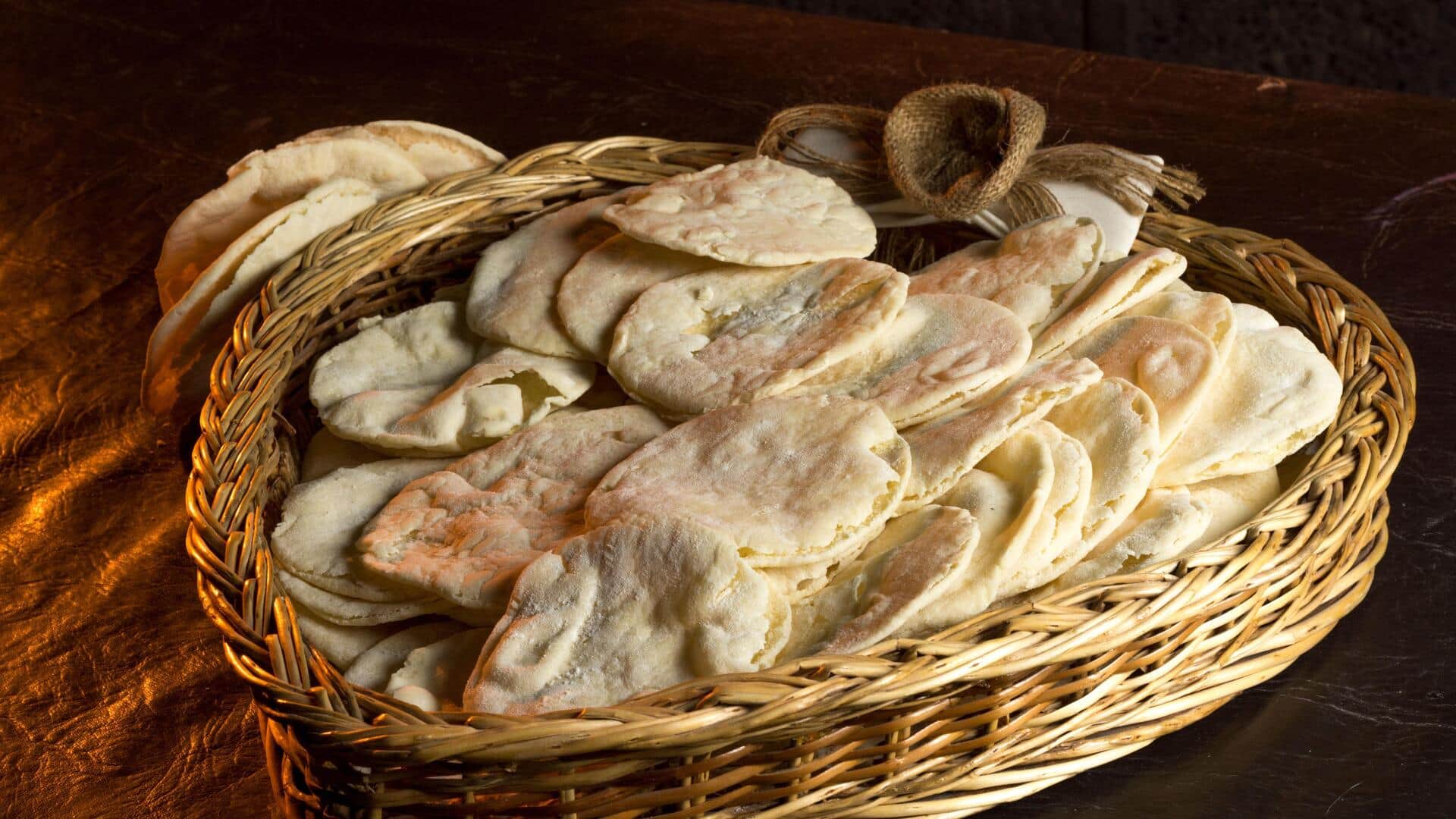
The fascinating journey of pita bread
What's the story
Pita bread, the staple of Mediterranean cuisine, has a rich history that dates back thousands of years. This flatbread, known for its pocket-like structure, has been a part of the diets of many ancient civilizations. Its simple ingredients and unique baking process have made it a timeless favorite. From ancient Egypt to modern-day kitchens, pita bread has evolved but still retains its traditional charm.
#1
Ancient origins in Egypt
The history of pita bread dates back to ancient Egypt, where it was first made.
The Egyptians used basic ingredients like flour, water, and salt to make this flatbread.
The dough was baked on hot stones or in clay ovens, producing the signature pocket that pita bread is known for.
This method was revolutionary for the time, making it easy to store and transport.
#2
Greek influence on pita bread
In Greece, pita bread became a staple of the local diet and was adopted by other Mediterranean cultures.
The Greeks used pita as an accompaniment to many dishes.
This period also saw the introduction of different types of pita bread with variations in thickness and texture, depending on regional preferences.
#3
Roman adaptations spread across Europe
The Romans played a key role in spreading pita bread across Europe during their conquests.
They introduced the concept of flatbreads to different regions, where local ingredients were used to create new variations.
The Roman adaptations often included herbs or spices that reflected local tastes, while keeping the essence of traditional pita.
#4
Modern-day popularity worldwide
Today, pita bread is loved all over the world for its versatility and ease of use.
It is used as wraps or served with dips like hummus or tzatziki sauce.
The global demand has led to the availability of pre-packaged pitas in supermarkets across continents.
These are made with the same traditional techniques but adapted for mass production without compromising quality.