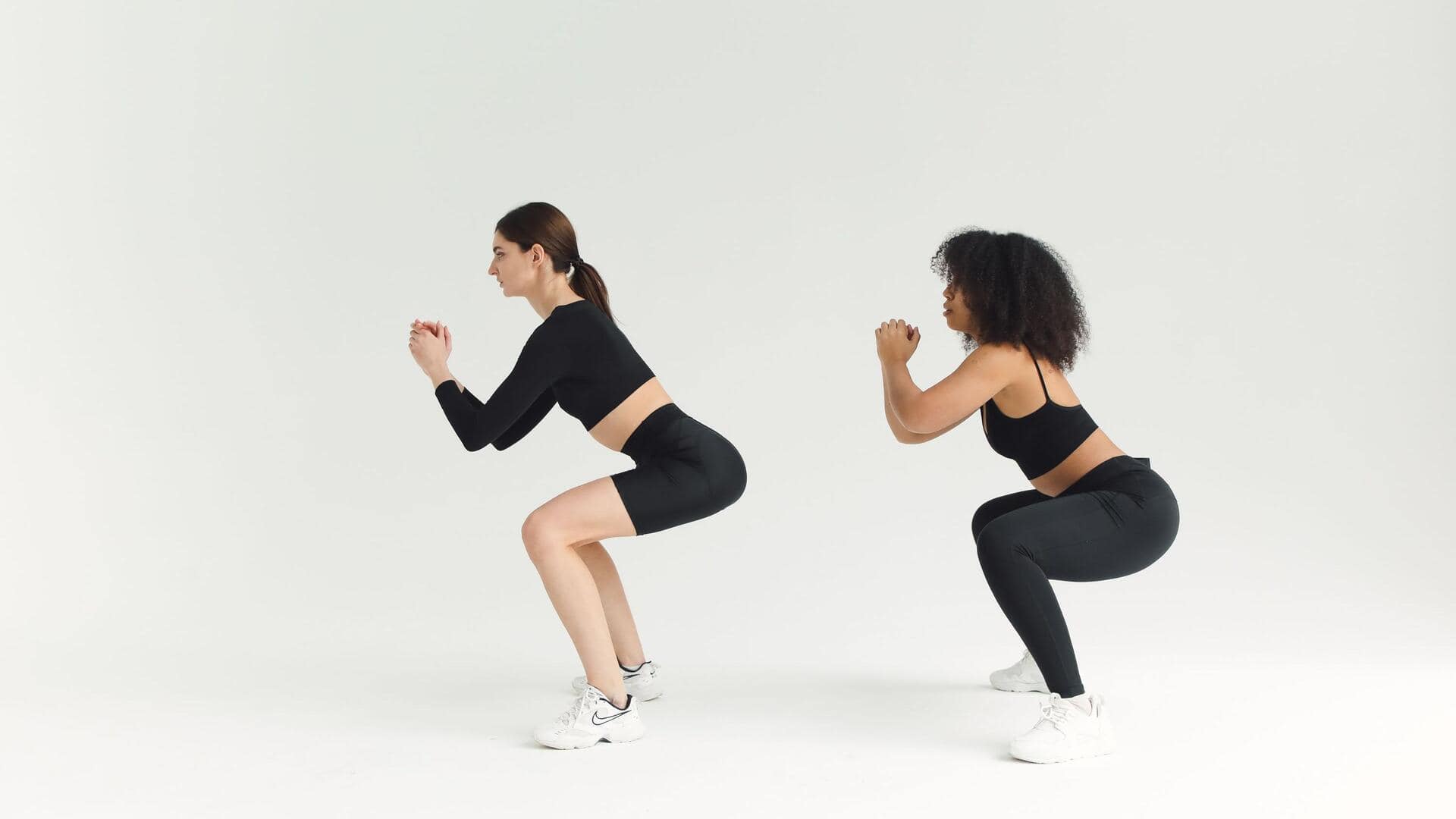
Primal squats can help build balance and strength
What's the story
Primal squats are a natural movement pattern that can help improve your balance and stability. By mimicking the way humans used to move before modern conveniences, these squats focus on flexibility, strength, and coordination. They are great for anyone looking to enhance their physical performance or just maintain their mobility as they age. Here's how primal squats can help you.
#1
Understanding primal squats
Primal squats are deep squats that require you to keep your heels on the ground while going down.
This movement pattern engages multiple muscle groups, including the quadriceps, hamstrings, calves, and core muscles.
By working these muscles together, you can improve your overall body control and balance.
Primal squats also promote better posture by encouraging proper alignment of the spine and pelvis.
#2
Benefits for balance
Doing primal squats regularly can greatly improve your balance by enhancing proprioception, which is the body's ability to sense its position in space.
This exercise improves your coordination by engaging stabilizing muscles in the ankles and hips.
With time, you will notice a marked improvement in your ability to maintain equilibrium during daily activities or sports.
#3
Enhancing stability through practice
To reap the benefits of primal squats for stability, consistency is key.
Start with a few reps each day, gradually increasing as your strength improves.
Focus on form over quantity, and ensure that each squat is performed with controlled movements to avoid injury.
Incorporating variations like holding weights or performing them on uneven surfaces can further challenge your stability.
Tip 1
Tips for beginners
For beginners, mastering the basic form of primal squats is essential before moving on to advanced variations.
Use a wall or chair for support if needed until you feel confident enough to perform them unaided.
Wearing appropriate footwear that provides good grip will help prevent slipping during the exercise.