
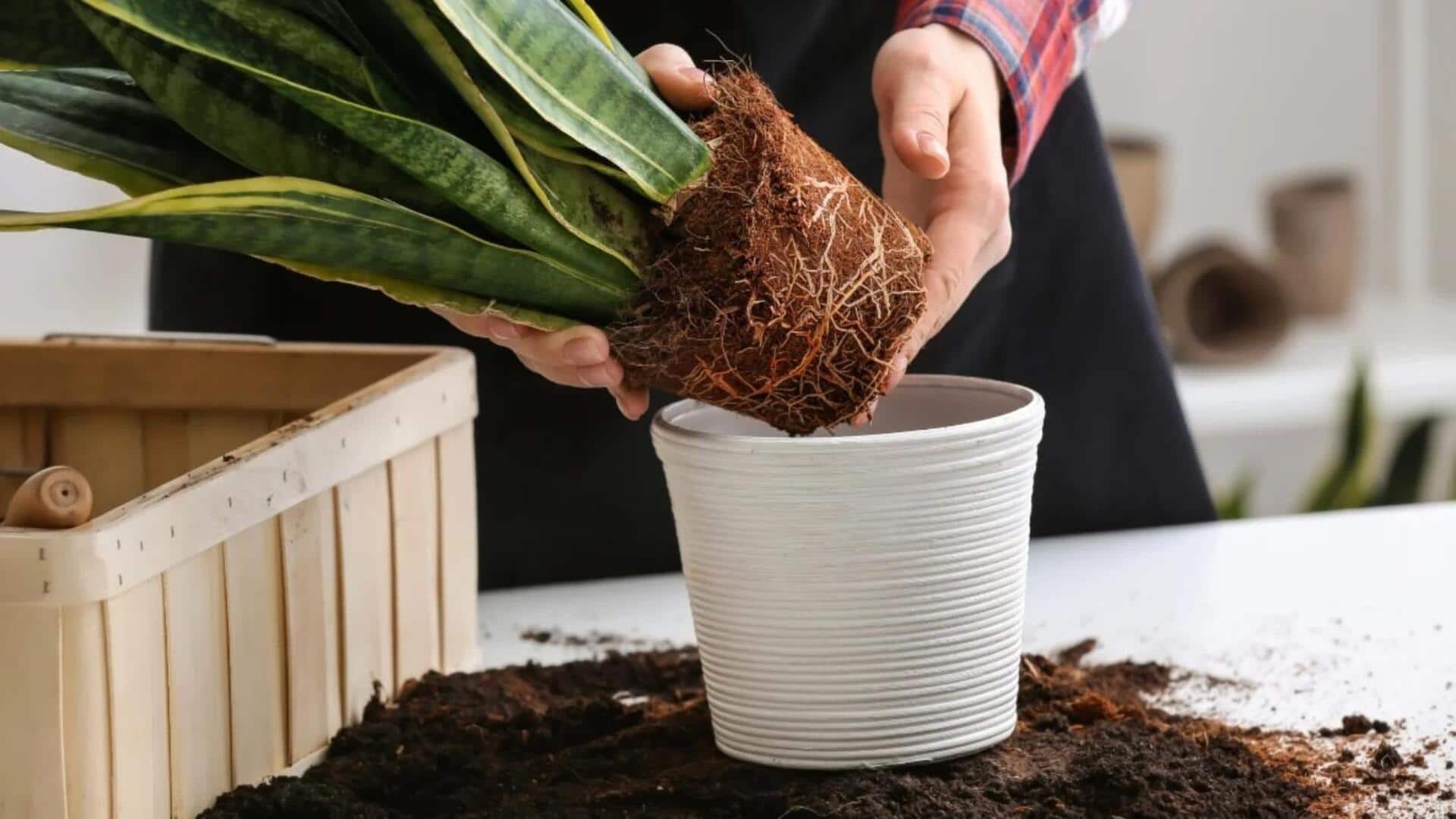
Repotting houseplants? Avoid these mistakes
What's the story
Repotting houseplants can be a tricky affair, but it's important for their growth and health. If you don't do it right, you can end up stressing your plants or even killing them. Knowing the common mistakes can help you avoid them and keep your plants thriving. Here are some practical tips to help you repot your houseplants like a pro and keep them healthy.
Tip 1
Choosing the wrong pot size
Choosing the wrong pot size is a common mistake many make while repotting houseplants. A pot too big can retain excess moisture, leading to root rot, while a small one can restrict growth. Ideally, choose a pot one size bigger than the current one to allow enough room for roots to grow without overwhelming them.
Tip 2
Ignoring drainage needs
Proper drainage is key to keeping houseplants healthy post-repotting. Pots with no drainage holes trap water at the bottom, causing roots to suffocate and rot. Always ensure that your pot has adequate drainage holes and use a well-draining soil mix to keep moisture levels balanced.
Tip 3
Not preparing soil properly
The right soil mix is essential when repotting houseplants. Using garden soil or not mixing in amendments like perlite or peat moss can make the soil compact and poorly draining. This, in turn, affects root health. Always use a potting mix suited for your plant's needs, and amend it with perlite or peat moss to promote aeration and drainage.
Tip 4
Overwatering after repotting
Overwatering is a common mistake after repotting, as many believe that newly potted plants require more water. However, overwatering can stress roots that are already recovering from the change. Water sparingly until new growth indicates that the plant has adjusted to its new environment.
Tip 5
Handling roots carelessly
Careless handling of roots while repotting can damage them, leading to poor plant health. Gently tease apart any circling roots instead of cutting them aggressively, which could lead to infection or shock. This careful approach ensures that your plant's root system remains intact and healthy, promoting better growth and resilience in its new potting environment.