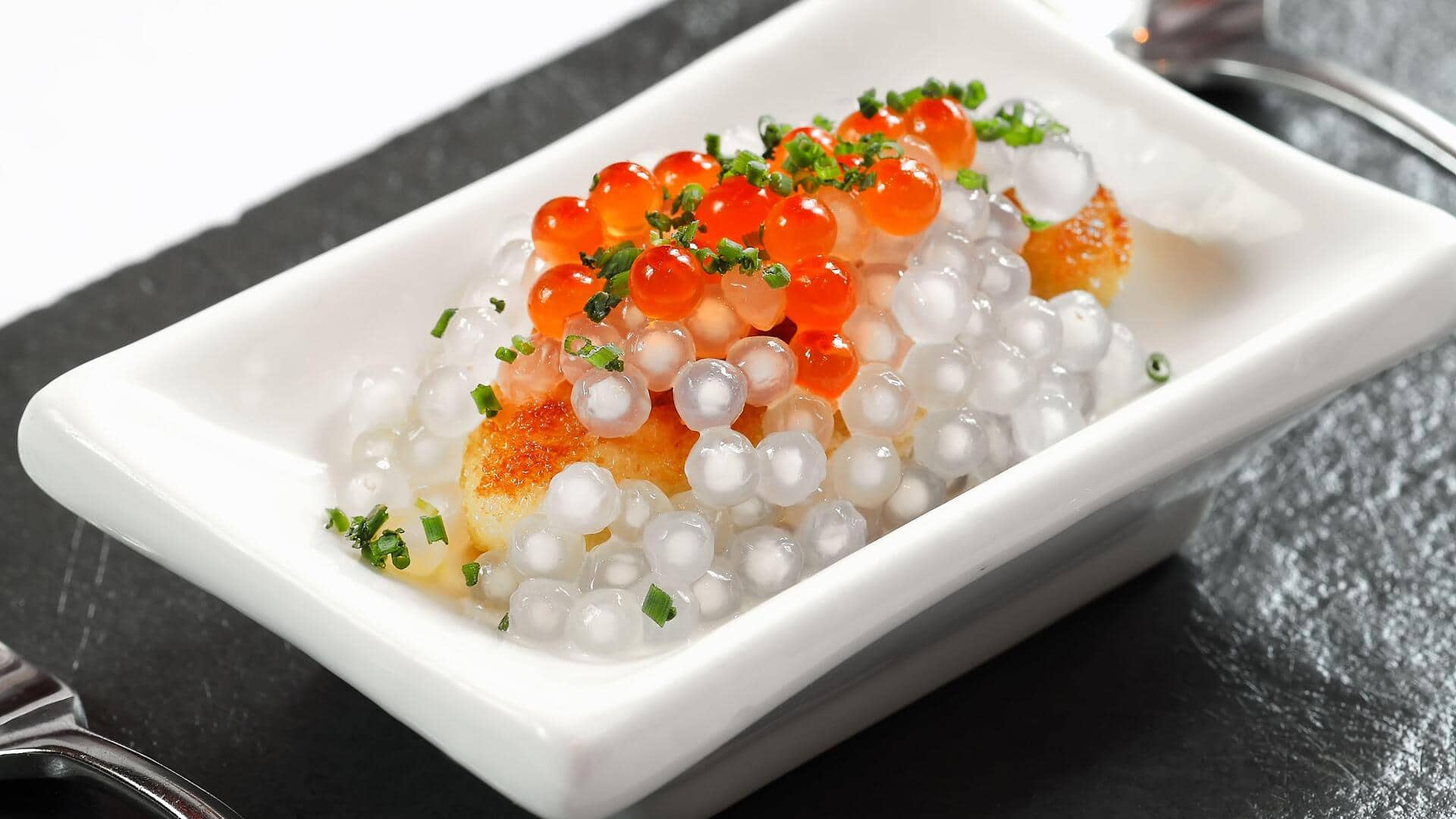
Why sago pearls are so popular in India
What's the story
Sago pearls, the tiny starch balls that are commonly used in Indian kitchens, have an interesting history. Originally from the tropical regions, these pearls have traveled a long way to become an integral part of Indian cuisine. From being a staple food in some cultures to an exotic ingredient in others, sago pearls have adapted to different culinary traditions. Here's how sago pearls became a kitchen staple in India.
#1
Origins and journey of sago pearls
Sago pearls are derived from the pith of sago palms, which are mostly found in Southeast Asia.
The extraction process involves washing and drying the starch granules into small beads.
These beads were initially consumed as a staple food by indigenous communities. Over time, trade routes helped spread sago pearls to different parts of the world, including India.
#2
Nutritional value and benefits
Sago pearls are mostly made of carbohydrates, making them an excellent source of energy.
They are also gluten-free and easy to digest, making them ideal for those with dietary restrictions or digestive issues.
The low protein and fat content makes them a light food option.
Sago can also be beneficial during fasting periods due to its high energy content without being too heavy on the stomach.
#3
Culinary uses across India
In India, sago pearls are used in a variety of dishes across different regions.
In Maharashtra, sabudana vada is a popular snack during fasting days.
In Kerala, sabudana payasam is a sweet dessert made with milk and jaggery.
These regional variations highlight the versatility of sago pearls in adapting to local tastes and ingredients.
#4
Economic impact on local communities
The cultivation and trade of sago palms have a positive impact on local economies in Southeast Asia and India.
Growing these palms requires few resources and provides income to farmers.
The processing units also provide jobs to many people in rural areas, contributing to community development.