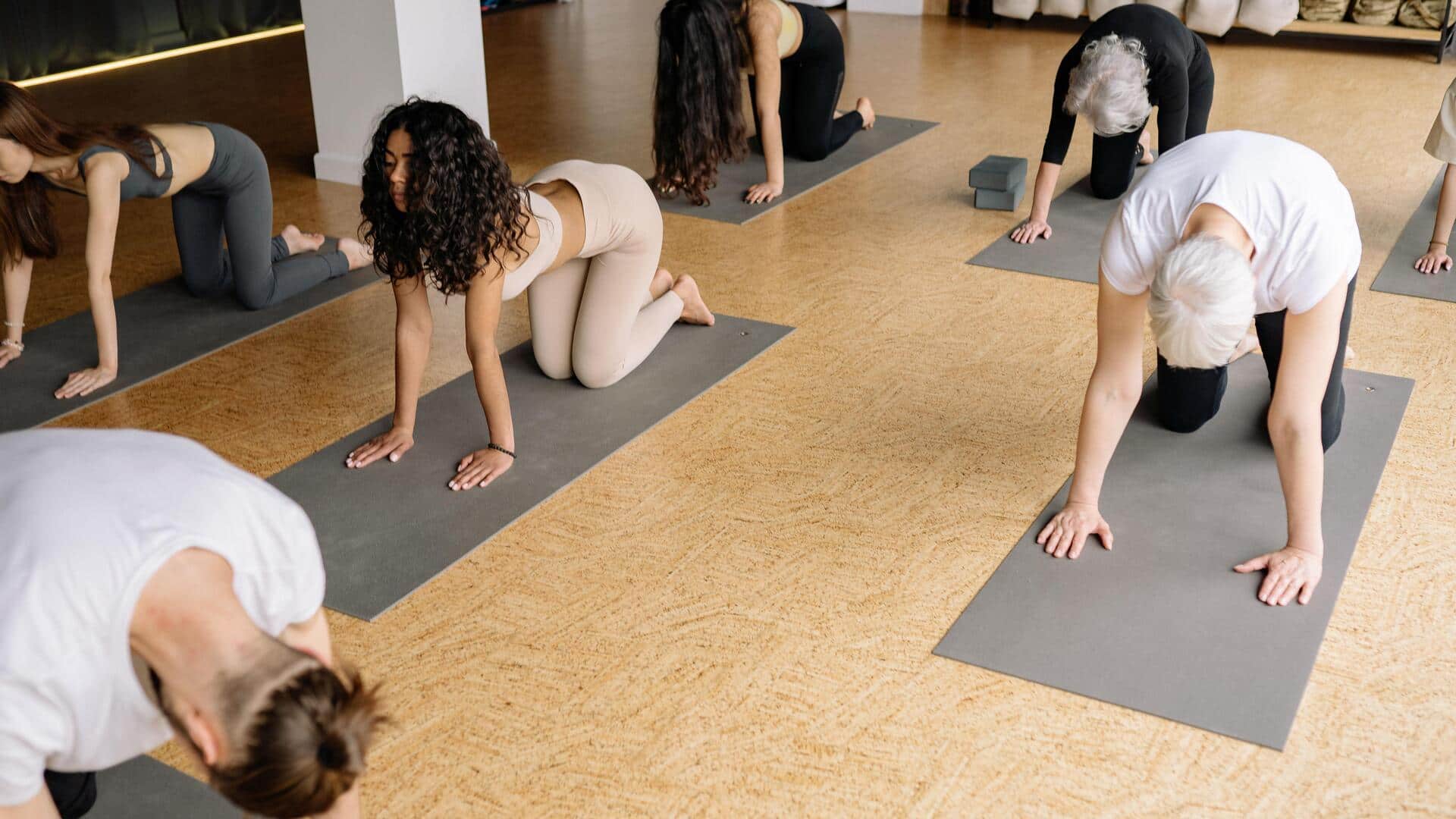
5 tips to improve your cat-cow stretch
What's the story
The cat-cow pose is a staple in yoga, providing a gentle way to warm up the spine. It enhances flexibility and relieves tension in the back. However, many practitioners struggle with achieving the correct form, which is essential for maximizing benefits and avoiding injury. Here are five tips to help you master this pose, ensuring proper alignment and effective practice.
Tip 1
Focus on breath control
Breath control is key to executing the cat-cow pose correctly.
Inhale deeply as you arch your back (cow position), and exhale slowly as you round your spine (cat position).
This rhythmic breathing not only helps in maintaining a smooth transition between poses, but also aids in relaxation and concentration during practice.
Tip 2
Engage your core muscles
Engaging your core muscles is crucial for stability and support during the cat-cow pose.
By activating these muscles, you can maintain better balance and alignment throughout the movement.
This engagement helps protect your lower back from strain and enhances the overall effectiveness of the pose.
Tip 3
Maintain neutral spine alignment
Keeping a neutral spine alignment is key to reaping the benefits of the cat-cow pose.
Make sure your head is in line with your spine, neither drooping nor craned upwards.
This alignment will ensure that you are evenly distributing the stretch across your back, avoiding unnecessary strain or discomfort.
Tip 4
Use props for support
If you are having a hard time balancing or aligning yourself in the cat-cow pose, props like yoga blocks or cushions can be really helpful.
Placing blocks under your hands, or cushions under your knees, can provide extra support, making it easier to maintain proper form without straining any part of your body.
Tip 5
Practice regularly with mindfulness
Regular practice combined with mindfulness enhances your ability to perform the cat-cow pose correctly.
By focusing on each movement, and being aware of any tension or discomfort in your body, you can make necessary adjustments while practicing.
This way, you ensure that each session contributes positively towards improving both flexibility and strength in your spine.