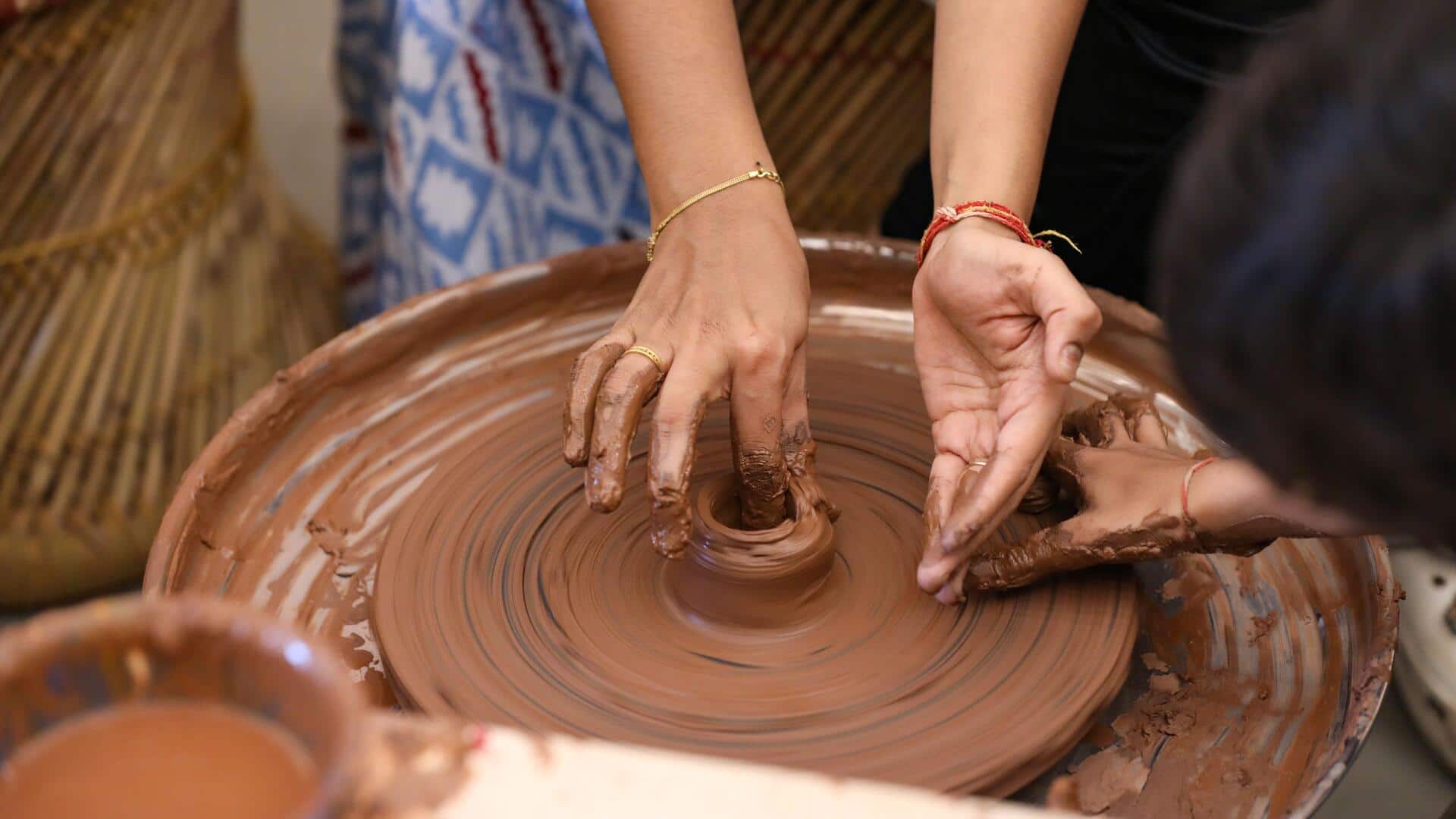
Surprising health benefits of pottery-making classes
What's the story
Pottery making classes can be a fun and fulfilling way to explore your creativity. But did you know that these classes can also bring several unexpected health benefits? From reducing stress to improving hand-eye coordination, pottery making can be a holistic activity for your mind and body. Here are five surprising health benefits of joining pottery-making classes.
#1
Enhances hand-eye coordination
Pottery making involves a lot of precision and focus, which improves hand-eye coordination.
As you mold clay and shape it, you develop better control over your hand movements.
This improved coordination can also translate into other daily activities requiring fine motor skills, making it a practical benefit beyond the pottery studio.
#2
Reduces stress levels
Engaging in pottery making is also a great way to reduce stress levels.
The repetitive motions involved in shaping clay have a meditative effect that calms the mind.
The concentration required during the process helps divert attention from daily stressors, resulting in lower anxiety levels and a sense of relaxation.
#3
Boosts self-esteem
Creating something tangible out of raw materials like clay can be very rewarding.
Pottery making allows you to express yourself creatively and see tangible results of your efforts.
This sense of accomplishment boosts self-esteem and confidence as you master new techniques and create unique pieces.
#4
Improves cognitive function
Pottery making is not just about creativity, it also involves problem-solving skills and critical thinking.
Deciding how to shape clay or fix something that went wrong requires cognitive effort.
This mental engagement can improve cognitive function over time by keeping the brain active and challenged.
#5
Encourages social interaction
Joining pottery-making classes also provides an opportunity to meet new people with similar interests.
The group setting encourages social interaction, which can lead to friendships and a sense of community.
Engaging with others in a creative environment promotes communication skills and provides emotional support from peers who share similar experiences.