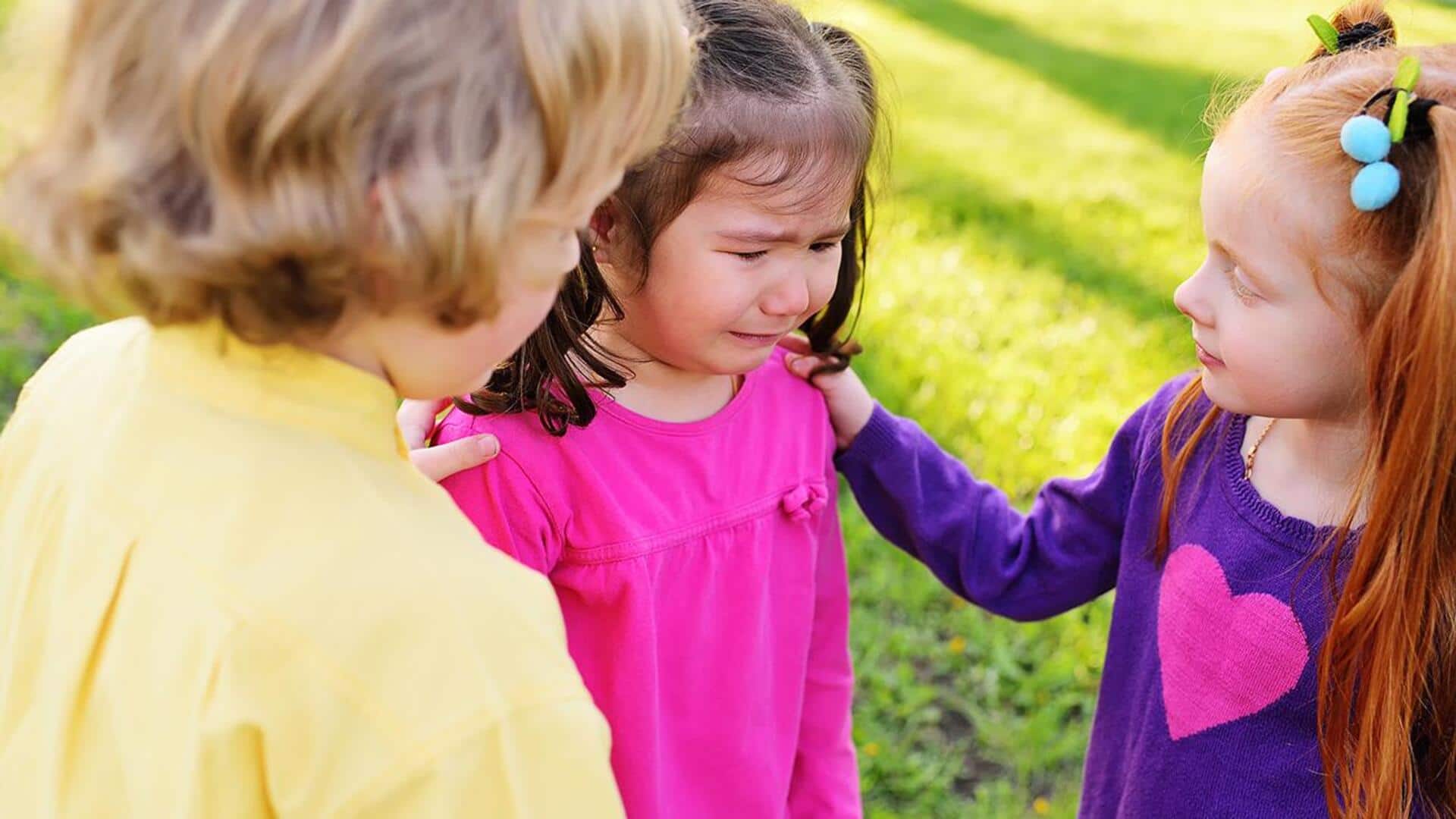
These games teach kids the magic of empathy
What's the story
Perspective-taking games are a great way to teach kids empathy and social skills. These activities encourage children to step into someone else's shoes, understand different viewpoints, and respond with kindness. By playing these games, kids learn how to communicate better, resolve conflicts, and build strong relationships with their peers. Here are five effective perspective-taking games that can help develop empathy in children.
Drive 1
Role-playing scenarios
Role-playing scenarios allow kids to act out different roles in a controlled environment.
This activity encourages them to think from another person's perspective and understand their feelings and motivations.
For example, if kids role-play as a customer and a shopkeeper, they learn about the challenges both roles face.
This game enhances empathy by fostering understanding and compassion for others' experiences.
Drive 2
Emotion Charades
Emotion charades is a fun twist on the classic game of charades, where players act out different emotions instead of words or phrases.
This activity helps kids recognize and express emotions accurately.
By identifying emotions in others, children become more attuned to how people around them might be feeling, which is essential for developing empathy.
Drive 3
Storytelling circles
Storytelling circles involve kids sharing stories from their own lives or creating fictional tales together.
This activity promotes active listening and encourages children to consider multiple perspectives within a story.
As they listen to different narratives, kids learn about diverse experiences and viewpoints, which broadens their understanding of others' lives.
Drive 4
Perspective-taking board games
Board games designed specifically for perspective-taking often include scenarios where players must make decisions based on different character viewpoints.
These games challenge children to think critically about how their choices affect others in the game.
By navigating these scenarios, kids develop an understanding of how actions impact people differently.
Drive 5
Empathy-building discussions
Empathy-building discussions involve guided conversations around specific topics related to feelings or social situations.
During these discussions, facilitators ask open-ended questions that prompt children to reflect on how others might feel in various circumstances.
This practice encourages thoughtful consideration of different perspectives, fostering empathetic responses in real-life situations.