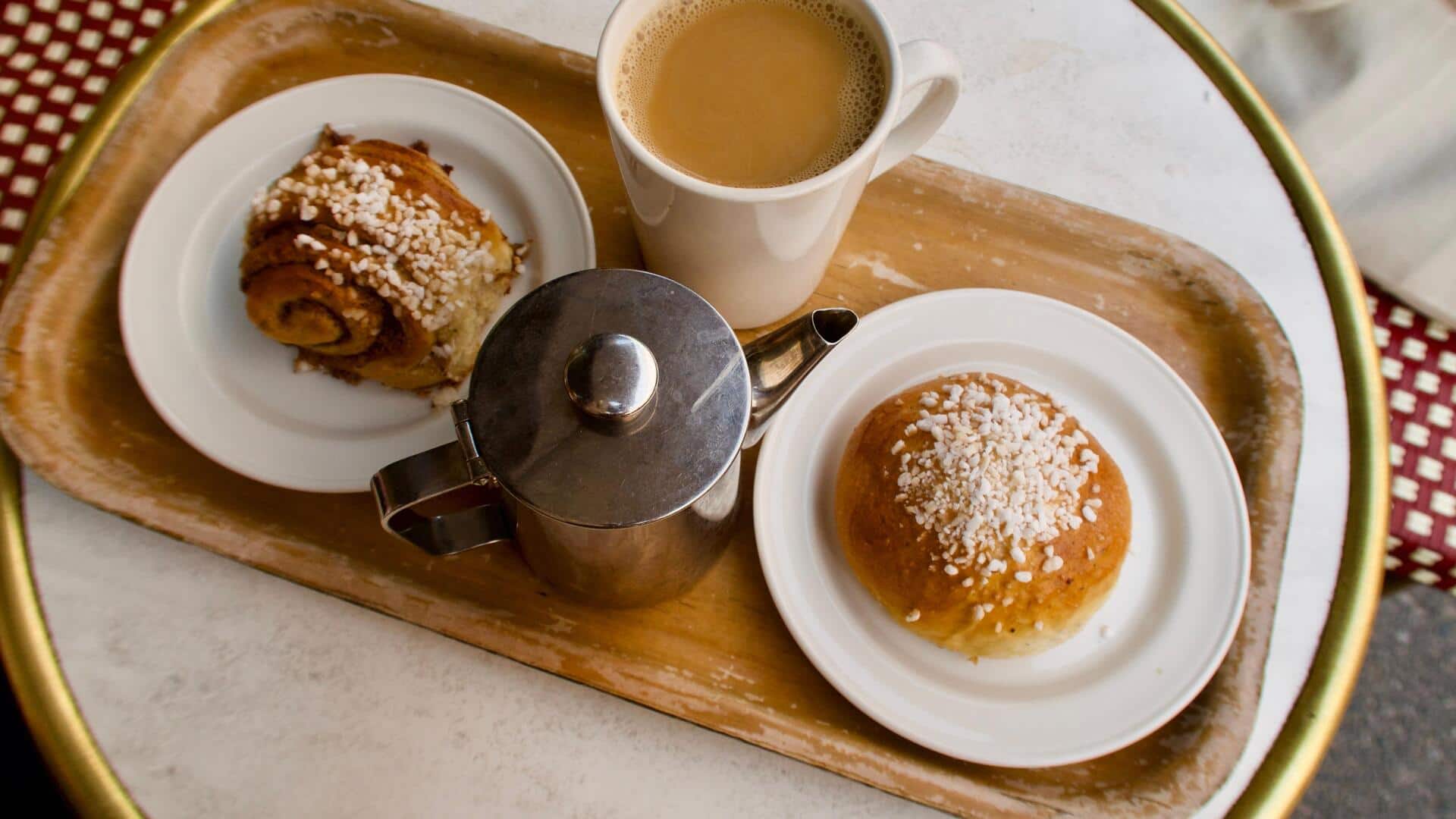
Sweden's fika: The art of mindful coffee breaks
What's the story
Sweden's fika is not just a coffee break, but a cultural institution. It emphasizes pausing the daily grind to enjoy a cup of coffee and some pastries with friends or colleagues. This practice promotes mindfulness and social interaction, making it an integral part of Swedish life. Embracing fika can help you slow down in today's fast-paced world, encouraging you to enjoy the little things in life.
#1
The origins of fika
Fika has its roots in the 19th century when coffee was first introduced in Sweden.
The word itself is a reversal of the letters in "kaffi," the Swedish word for coffee.
Over the years, it evolved from a simple coffee break to a social ritual that includes pastries like cinnamon buns or cookies.
Today, it is observed daily by many Swedes at home and workplaces.
#2
Fika as a social ritual
Fika is all about connecting with people. It allows taking a break from work and chatting with friends or coworkers.
This social aspect makes it more than just having something to drink; it strengthens relationships and builds community.
Many Swedish companies have even incorporated fika into their work culture to promote teamwork and employee well-being.
#3
Mindfulness through fika
The practice of fika encourages mindfulness by asking people to slow down and be present in the moment.
By taking time out for this ritual, one can reduce stress levels and improve focus when returning to work or other tasks.
The simple act of savoring coffee and treats can do wonders for mental health by promoting relaxation.
#4
Modern adaptations of fika
While traditional fika has its roots in coffee and pastries, modern adaptations have included healthier options like fruit or nuts for those who prefer them.
Some even opt for tea over coffee as part of their personal preference, while still adhering to the spirit of the tradition by sharing these moments with others.