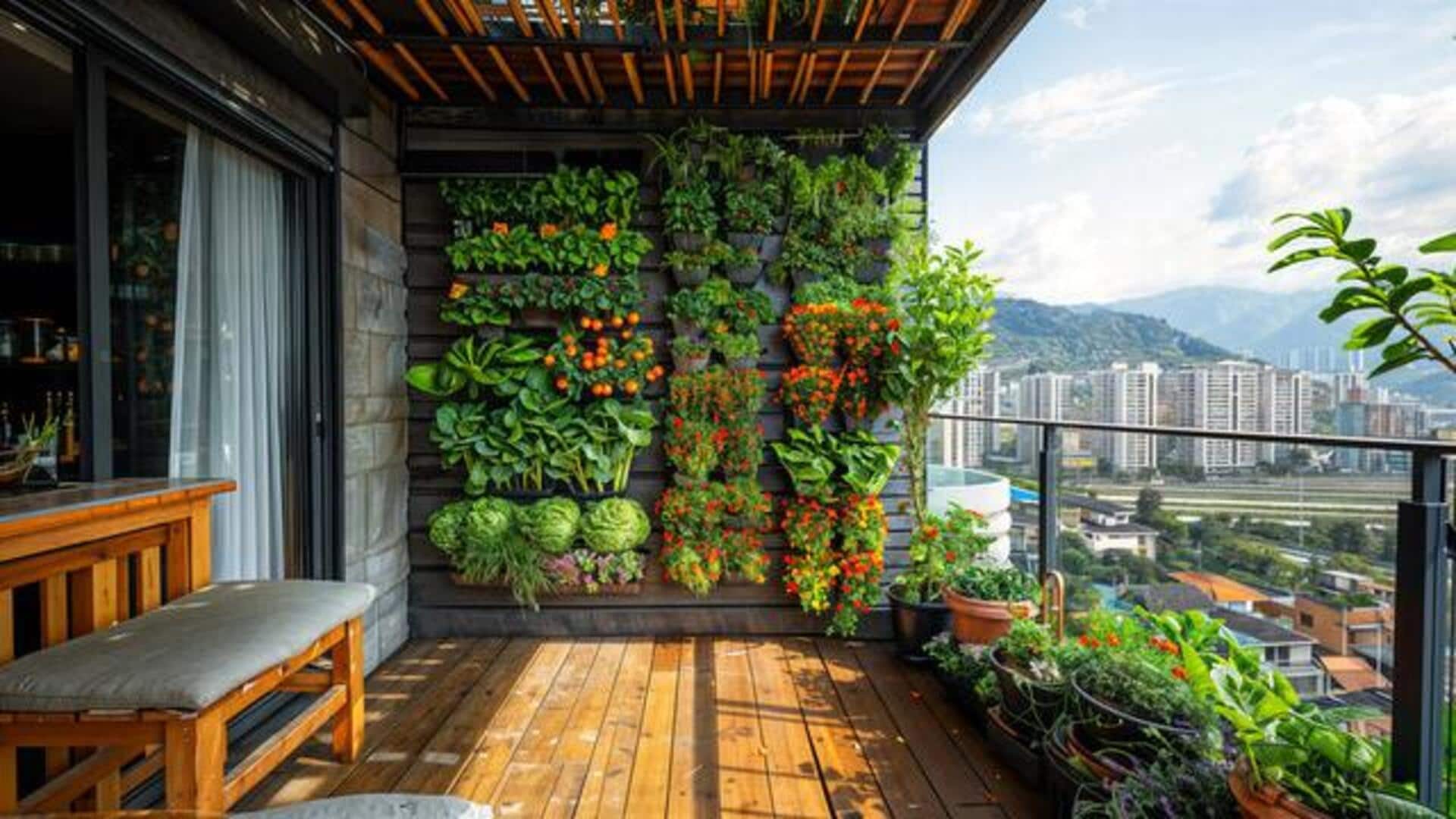
Why vertical gardens are perfect for small spaces
What's the story
Vertical gardens are the latest trend in sustainable living, giving you a chance to grow your own food at home. These gardens are perfect for people with limited space, making them a great option for urban dwellers. By going vertical, you can grow a variety of plants without taking up too much room. This not only promotes self-sufficiency but also contributes to environmental sustainability by reducing the carbon footprint of transporting food.
Tip 1
Choosing the right location
Selecting the right location is key to the success of your vertical garden. Pick a spot that gets enough sunlight, as most edible plants require six to eight hours of direct sunlight each day. If natural light is limited, you can use grow lights to ensure proper plant growth. Also, consider accessibility for watering and maintenance when choosing a location.
Tip 2
Selecting suitable plants
Choosing the right plants is critical for your vertical garden's success. Leafy greens such as lettuce and spinach, herbs such as basil and mint, and strawberries are some of the best options for vertical gardening. These plants have shallow roots and can thrive in limited soil space. Make sure to pick varieties that complement each other in terms of light and water requirements.
Tip 3
Efficient watering techniques
Efficient watering techniques are essential to keep your vertical garden healthy. Drip irrigation systems can save water by delivering it directly to the plant roots, minimizing evaporation and runoff. If you're watering manually, do it early in the morning or late in the evening, when temperatures are cooler, to reduce evaporation losses.
Tip 4
Maintaining soil health
Keeping soil health is key to a productive vertical garden. Use high-quality potting mix enriched with organic matter, like compost or worm castings, to provide essential nutrients to your plants. Regularly check soil moisture levels using a moisture meter or by simply sticking your finger into the soil up to two inches deep; water only when necessary to prevent overwatering.
Tip 5
Pest management strategies
Pest management is key to keeping your vertical garden healthy. Introduce beneficial insects like ladybugs or lacewings that prey on common pests like aphids or spider mites. Use natural deterrents like neem oil or insecticidal soap if needed, while avoiding chemical pesticides that could harm beneficial organisms in your garden ecosystem.