These Uzbek wedding traditions will leave you in awe
What's the story
Uzbek weddings are a colorful affair, filled with age-old traditions that have been passed down through generations. These ceremonies are a reflection of the rich cultural heritage of Uzbekistan, and are marked by a number of unique customs that leave guests in awe. From the traditional attire to the vibrant celebrations, every aspect of an Uzbek wedding is steeped in meaning and history. Here are five unforgettable traditions that make these weddings so special.
#1
The bride's attire
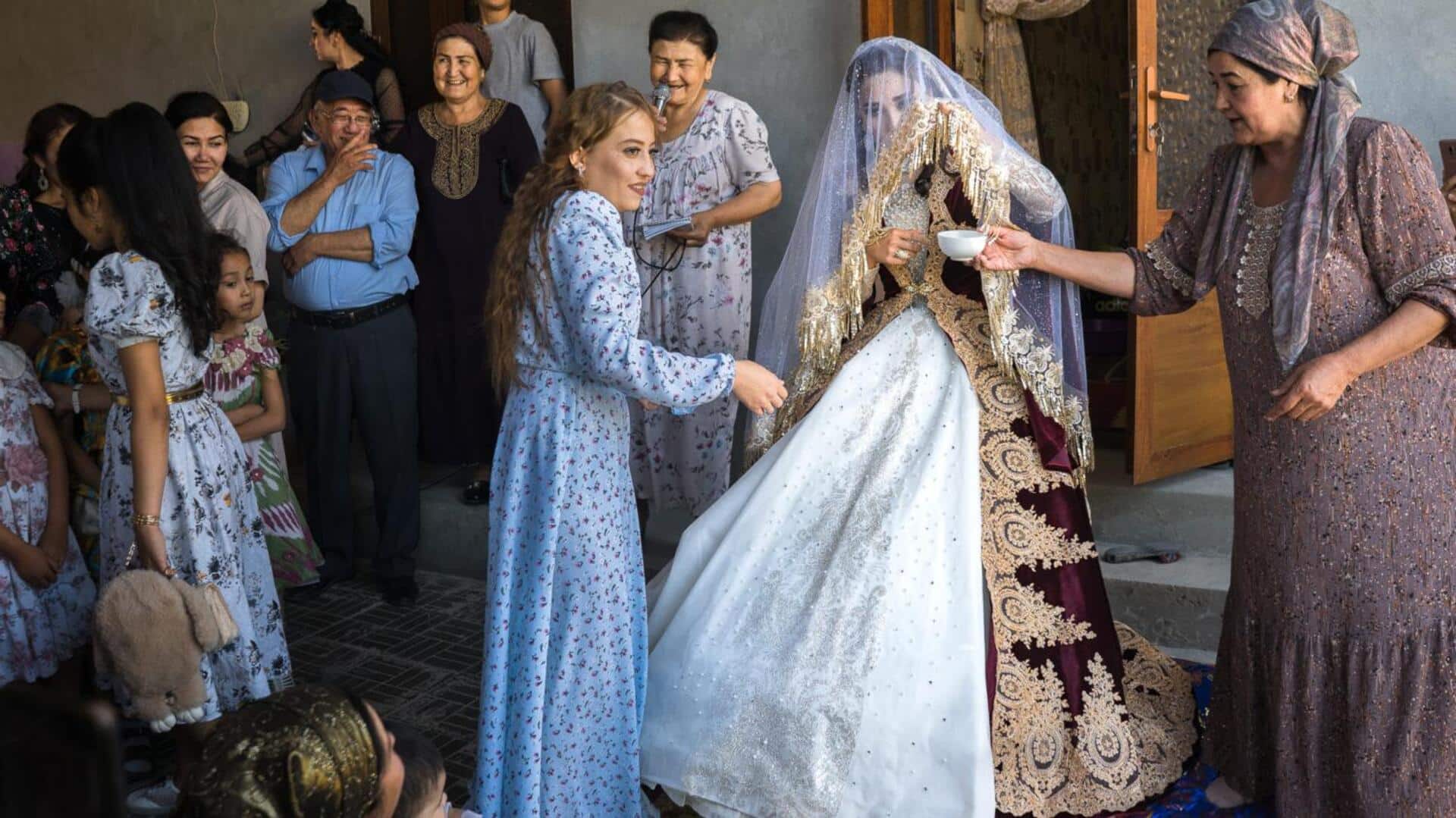
The bride's attire is a sight to behold at Uzbek weddings. She usually wears a dress called a "khalat," which is embroidered with intricate patterns. The headpiece, or "tugma," is equally ornate, often bedecked with jewels and beads. This attire symbolizes beauty and grace, and is a crucial part of the ceremony.
#2
The groom's attire
The groom's attire complements the bride's elegance. He usually wears a "chapan," a long coat, over a "kurta," a tunic, and trousers. His outfit may also include a "doppa," a traditional cap, which symbolizes respect and honor within the community.
#3
Traditional music and dance
Music and dance are integral parts of Uzbek weddings. Traditional instruments such as the "doira" (a frame drum) and "sato," a string instrument, create lively tunes that get everyone dancing. The "lazgi" dance is especially popular, with its fast-paced movements, representing joy and celebration.
#4
The wedding feast
The wedding feast is a grand affair, with an array of dishes that highlight Uzbekistan's culinary diversity. Plov (rice pilaf) is usually the centerpiece, accompanied by salads, bread, and sweets like halva. This feast not only fills the stomach but also brings people together in celebration.
#5
Blessings from elders
Elders play an important role in Uzbek weddings by giving their blessings to the couple. They offer words of wisdom, hoping for a prosperous life ahead. This tradition emphasizes respect for elders and the importance of family in Uzbek culture.