
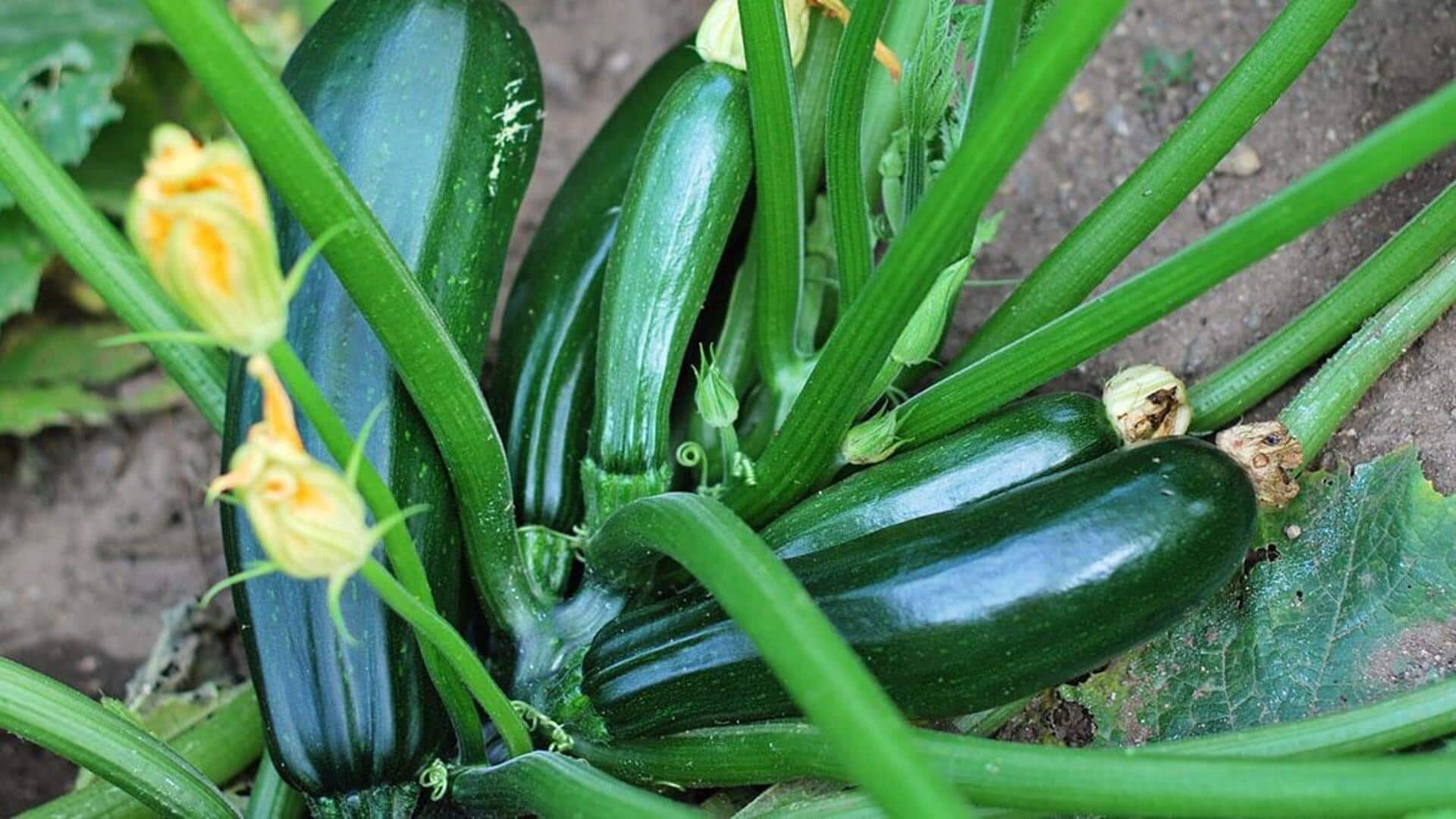
Your guide to growing zucchini at home
What's the story
Growing zucchini at home is a rewarding experience, especially for beginners. This versatile vegetable can be grown in small spaces and requires minimal effort. With the right conditions and care, you can enjoy a bountiful harvest of fresh zucchini. Here are some essential tips to help you get started on your journey to growing zucchini successfully.
Tip 1
Choosing the right location
Selecting the right spot is key to growing zucchini. Pick a place that gets at least six hours of sunlight every day. The soil should be well-drained and rich in organic matter. If your garden space is limited, consider using containers or raised beds. These can also provide better drainage and soil control.
Tip 2
Preparing the soil
Soil preparation is key to healthy zucchini plants. Start by mixing compost or well-rotted manure into the soil to boost its nutrients. Zucchini loves slightly acidic to neutral soil with a pH of six to seven. Make sure the soil is loose enough for roots to grow easily by tilling or turning it before planting.
Tip 3
Planting techniques
You can either sow seeds directly into the ground or start them indoors and transplant later. If planting directly, sow seeds about one inch deep and two feet apart in rows spaced three feet apart. If transplanting, wait until all danger of frost has passed before moving seedlings outdoors.
Tip 4
Watering and maintenance
Zucchini needs regular watering, particularly during dry spells, to keep the soil moist but not waterlogged. Mulching around the plants helps retain moisture and keep weeds at bay. Fertilize every four weeks with a balanced fertilizer to keep the plants healthy and productive.
Tip 5
Pest control measures
Watch out for common pests like squash bugs and cucumber beetles that may attack zucchini plants. Handpick pests when possible or use natural remedies like neem oil spray as an alternative to chemical pesticides. Regularly inspect plants for signs of infestation, and take action promptly to protect your crop.