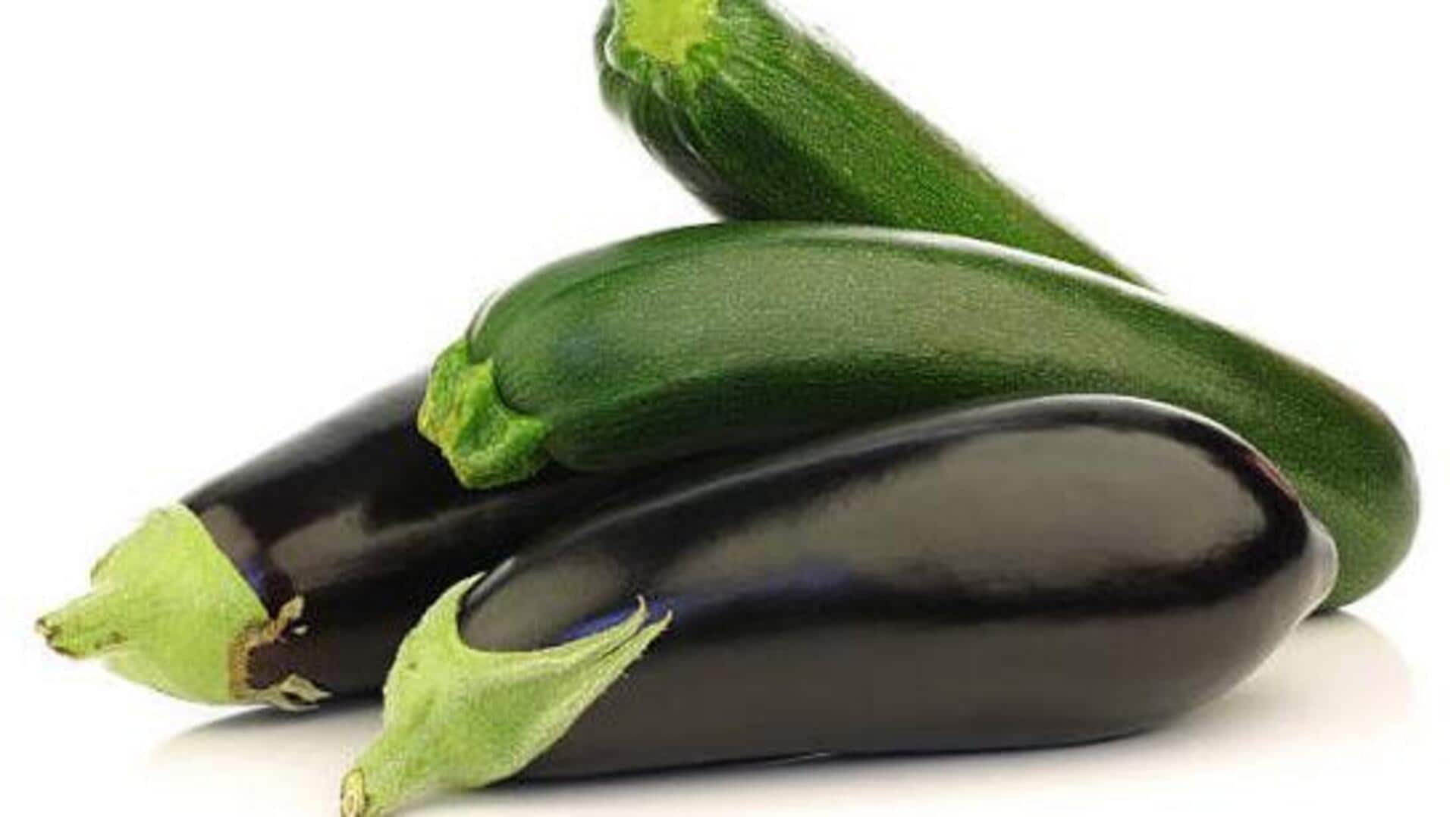
Zucchini v/s eggplant: Comparing their nutrition
What's the story
Zucchini and eggplant are two of the most popular vegetables that are often compared for their nutritional value. Both are low-calorie options that can be included in a healthy diet. While zucchini is known for its mild flavor and versatility, eggplant is famous for its unique texture and taste. Here's a look at the nutritional profiles of these vegetables to help you make informed dietary choices.
#1
Caloric content and weight management
Zucchini has a lower caloric content than eggplant, making it an ideal pick for weight watchers.
A cup of sliced zucchini has about 19 calories, while the same amount of eggplant has around 35 calories.
The difference can be important for those trying to keep their weight in check without compromising on volume in their meals.
#2
Fiber levels for digestive health
Both zucchini and eggplant are good sources of dietary fiber, which is essential for keeping your digestive system healthy.
A cup of zucchini offers about one gram of fiber, while eggplant gives you around two grams per cup.
Eating fiber-rich foods can help you keep your bowel movements regular and lower the risk of constipation.
#3
Vitamins and minerals comparison
Zucchini is a good source of vitamin C, which boosts immunity and skin health. A cup of zucchini gives you around 20% of the daily recommended intake of vitamin C.
Eggplant offers small amounts of vitamins but is particularly rich in antioxidants, such as nasunin, which protects brain cells from damage.
#4
Culinary versatility in cooking
Zucchini's mild taste makes it a versatile ingredient that goes well with a range of dishes, from salads to stir-fries. It can be grilled, roasted, or even spiralized into noodles as a pasta substitute.
Eggplant's unique texture makes it perfect for absorbing flavors in stews or casseroles, and it can be grilled or baked as well.