HC stays adverse remarks against CBI in excise policy case
What's the story
The Delhi High Court has put a stay on the trial court's observations against the Central Bureau of Investigation (CBI) in the Delhi excise policy case. The stay was granted by Justice Swarana Kanta Sharma, who also directed the trial court to defer hearings in the money laundering case until after deciding on CBI's revision plea against the trial court verdict.
Legal proceedings
CBI filed revision petition against trial court's discharge order
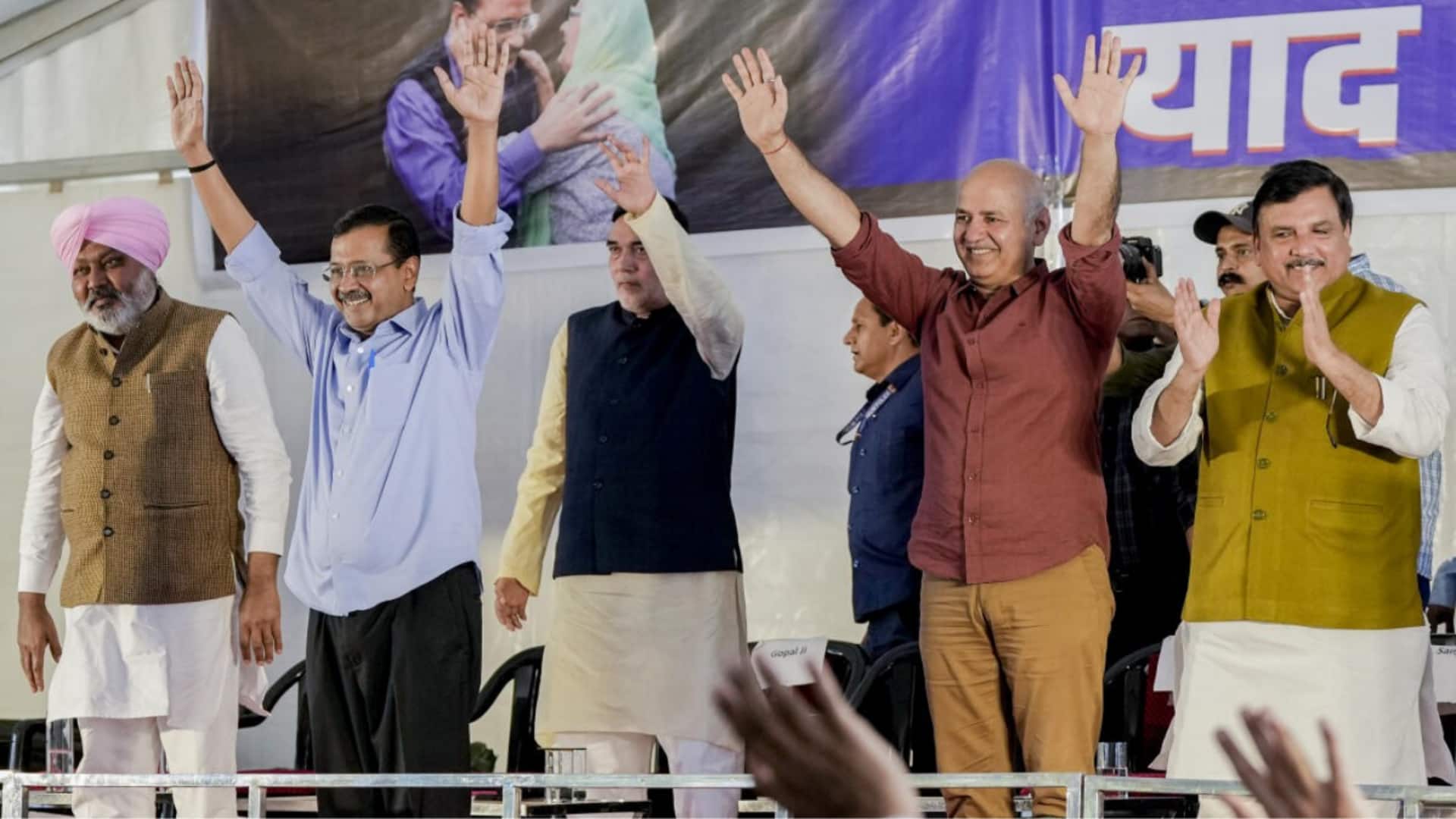
The CBI filed a revision petition against the trial court's February 27 decision to discharge all 23 accused, including Aam Aadmi Party leaders Arvind Kejriwal and Manish Sisodia.
The trial court ruled that the prosecution's case lacked evidence and was based on conjecture.
Solicitor General Tushar Mehta, representing the CBI, argued that while he wasn't seeking a stay on discharges, he wanted assurance that the trial court's verdict wouldn't affect ongoing investigations by the Enforcement Directorate (ED).
Case arguments
'Excise policy scam one of biggest scams in Delhi'
Mehta called the excise policy scam "one of the biggest scams in the history of the capital" and emphasized that scientific investigation had established a conspiracy.
He pointed to witness statements detailing how bribes were paid, and funds were transferred through hawala channels to finance political campaigns.
The CBI alleged that AAP leaders received kickbacks from liquor manufacturers due to manipulated policies, leading to arrests criticized as politically motivated.
Discharge criticism
Trial court criticized CBI for relying on approver statements
The trial court also criticized the CBI for relying on approver statements to build its case.
The judge had said such conduct would violate constitutional principles.
The CBI contended that the judge conducted a mini-trial and ignored material evidence showing the culpability of the accused.
Mehta argued that the discharge order was akin to an acquittal without trial, asserting that evidence collected by investigators was meticulous and didn't require corroboration at this stage.