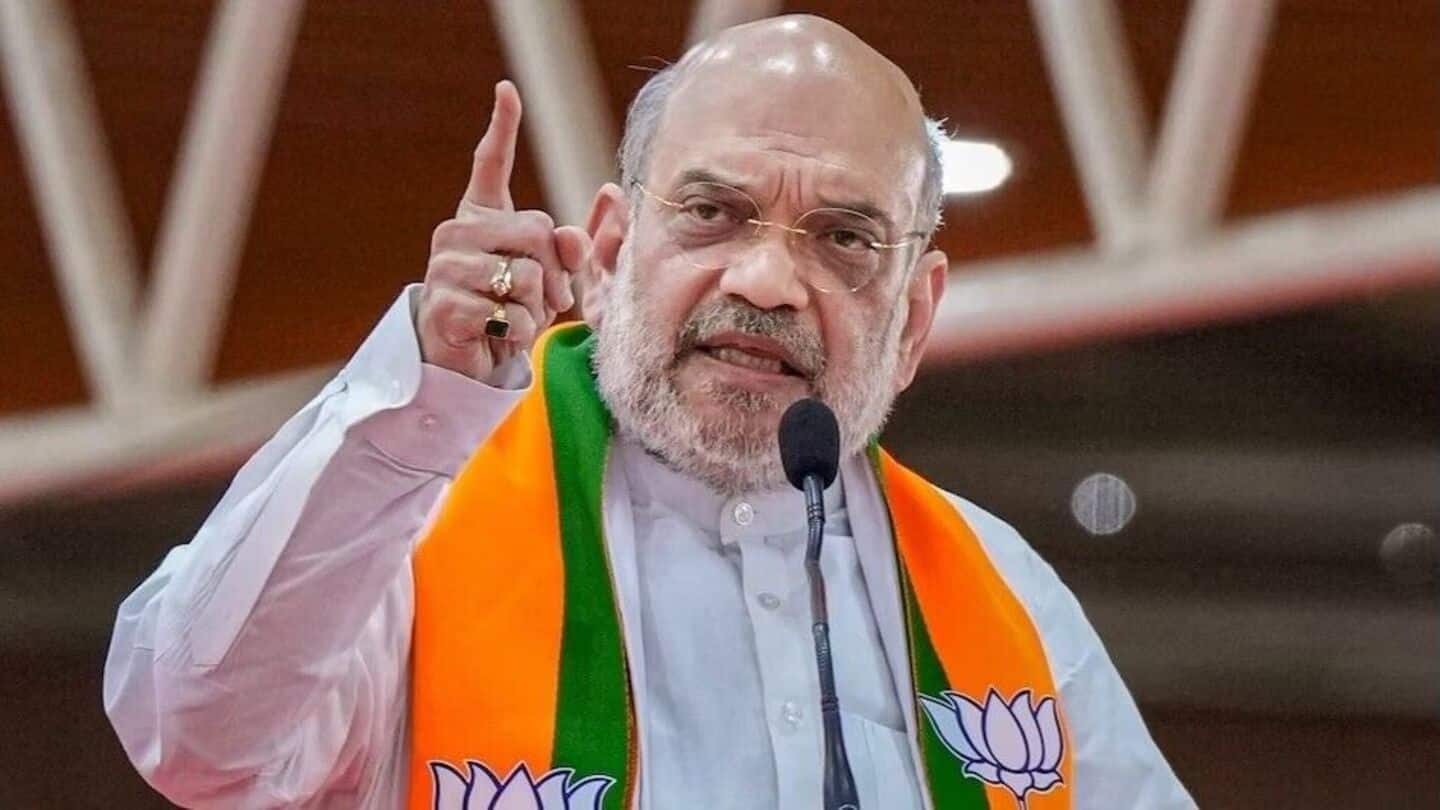
'If Vande Mataram wasn't divided...India wouldn't have been partitioned': Shah
What's the story
Union Home Minister Amit Shah on Tuesday blamed the division of the national song "Vande Mataram" for India's partition. Speaking in the Rajya Sabha during a debate on the 150th anniversary of the song, he said Congress and first prime minister Jawaharlal Nehru divided Vande Mataram into two stanzas for appeasement politics. "When Vande Mataram was limited after it completed 50 years, that is when appeasement started...Had Congress not divided Vande Mataram...the country would not have been divided into two."
Cultural significance
Shah defends relevance of 'Vande Mataram'
"When Vande Mataram completed 100 years, an Emergency was imposed. There was no scope for the glorification of the national song. Indira Gandhi imprisoned those who propagated and raised the slogan of Vande Mataram," he added.
Responding to the Congress for questioning the need for a debate on Vande Mataram now (ahead of Bengal elections), Shah defended Vande Mataram's relevance, saying it was a "mantra" that awakened India's cultural nationalism.
Congress
'We are not the ones boycotting the Parliament'
"Congress MPs are questioning the need for having discussions on Vande Mataram and calling it a political strategy and a way of diverting from the issues. Nobody is scared of discussions on issues. We are not the ones boycotting the Parliament," he asserted.
"If they want to discuss, they need to stop boycotting, and all discussions will take place. We are not scared of or trying to hide anything. We are ready for debate on any issue," he added.
Historical impact
'Vande Mataram' played a key role in India's freedom struggle
He said the song was important when it was written, during the freedom movement, and will remain important today and in 2047 when India achieves Viksit Bharat.
Shah said Vande Mataram was written by Bankim Chandra Chattopadhyay in Bengal and became a rallying cry for India's freedom struggle.
He said it was composed after India suffered "Islamic attacks" and British cultural imposition.
Despite attempts to suppress it, the song resonated with people across India, from Kashmir to Kanyakumari, he added.