This AI-developed catalyst can turn wastewater into fertilizer
What's the story
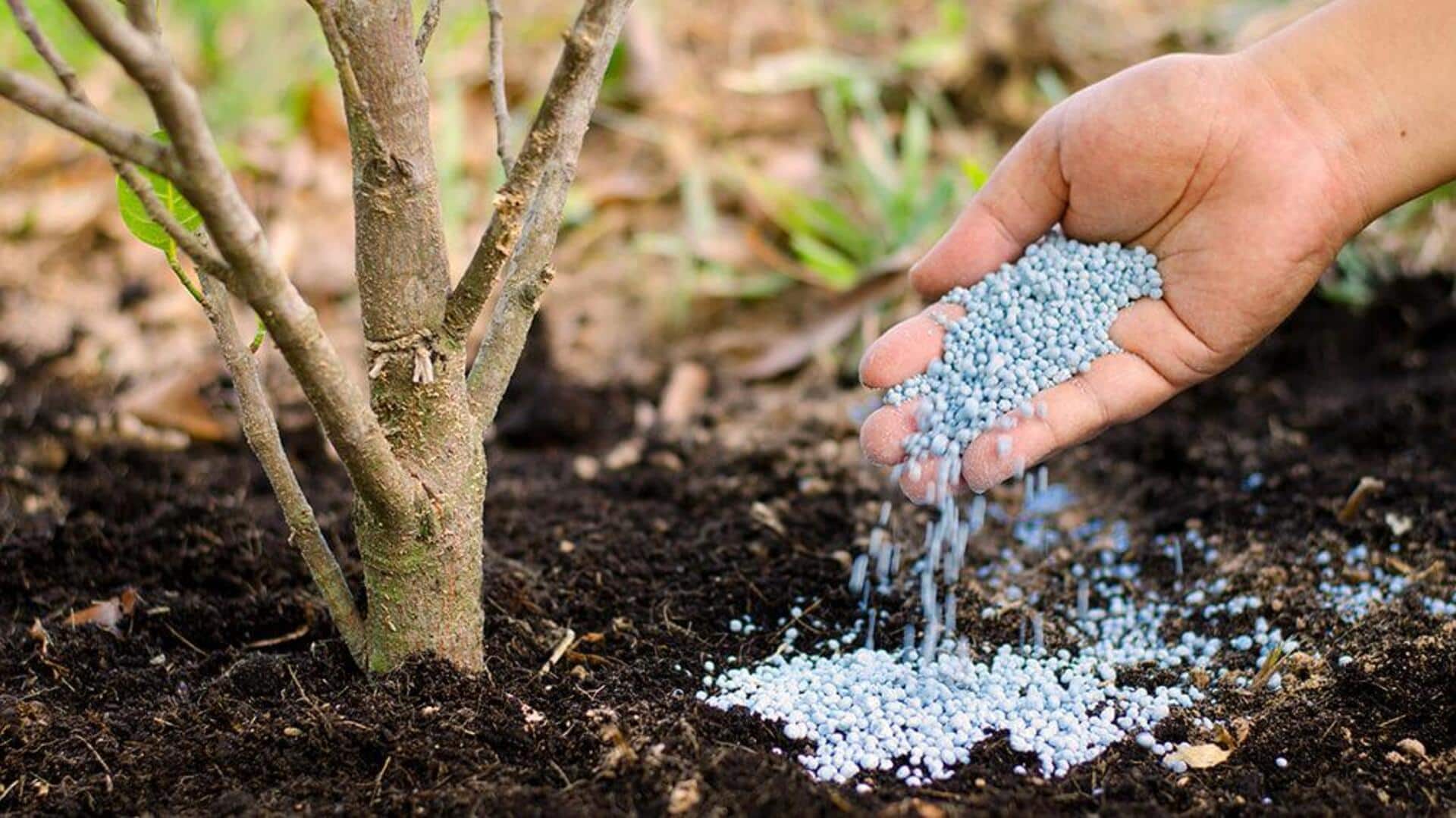
A team of scientists in China has developed a revolutionary catalyst that can convert nitrate pollution from agricultural and industrial wastewater into ammonia. The chemical is a key component in urea fertilizer production. The new method is nearly three times more efficient than traditional catalysts, marking a major breakthrough in the field. The research was published in the Journal of the American Chemical Society.
Innovation
Understanding dual-atom catalysts
The new method relies on dual-atom catalysts (DACs), which are made up of two adjacent metal atoms.
These atoms work together to drive complex and multi-step reactions such as converting nitrate into ammonia or converting carbon dioxide.
However, creating these DACs has been a long and tedious process with little theoretical guidance and low metal loadings.
AI assistance
How AI helped in the process
Han Lili and her colleagues at the Fujian Institute of Research on the Structure of Matter, Chinese Academy of Sciences, used deep learning to train an AI model.
The model was able to identify metal pairs with high pairing rates, those that bond easily.
This innovative approach has greatly simplified the process of creating these highly efficient DACs.
Future implications
Potential impact on agriculture
The new catalyst technology could revolutionize the fertilizer supply chain in China. By providing a low-energy waste-to-resource solution, it opens the door to even more sustainable agricultural practices in the future.