AI may make Nobel Prize-winning discovery by 2027: Anthropic co-founder
What's the story
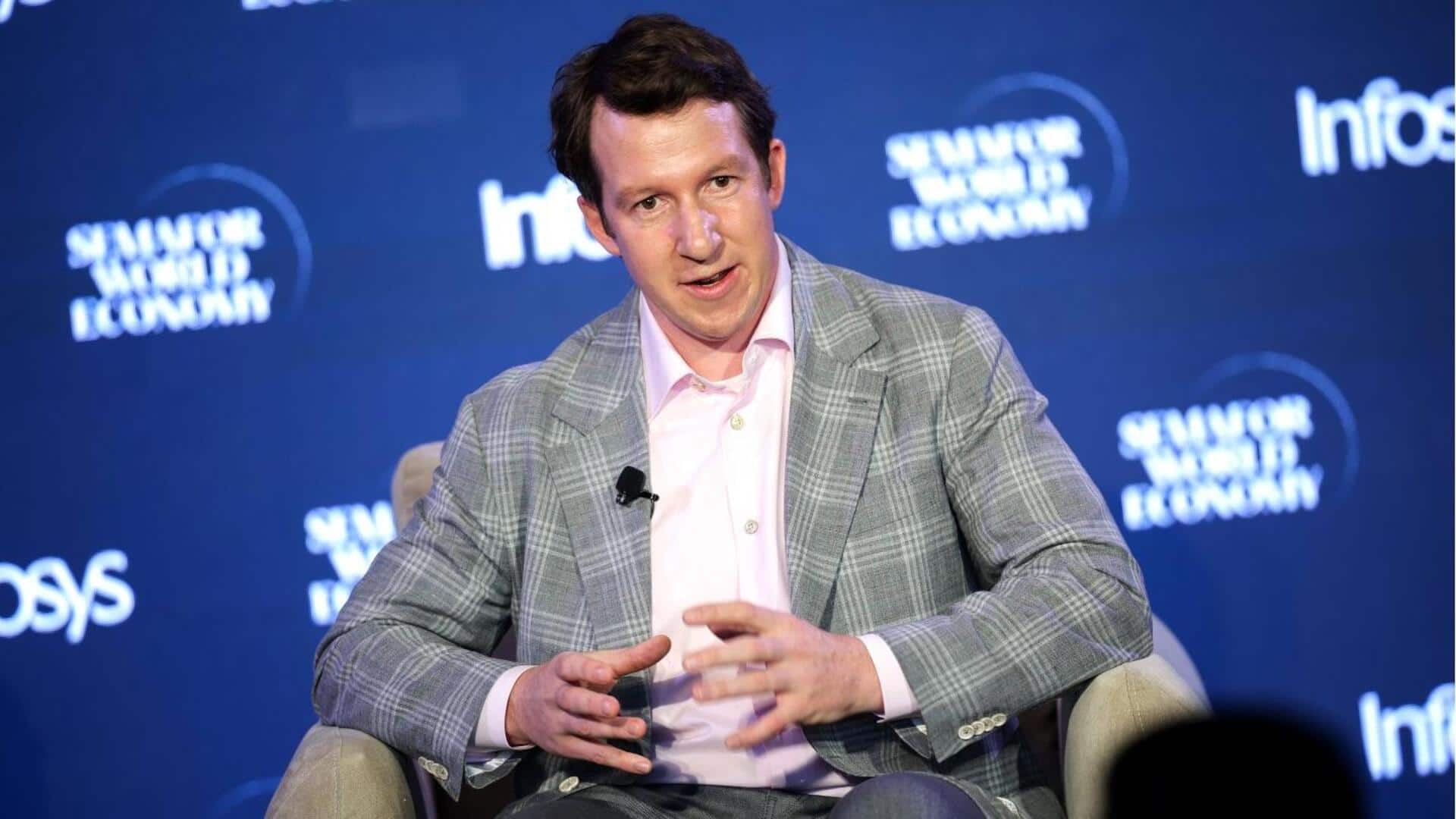
Jack Clark, co-founder of Anthropic, has predicted that an artificial intelligence (AI) system will contribute to a Nobel Prize-winning discovery within the next year. He made this bold prediction during a lecture at Oxford University on Wednesday. Clark also predicted that companies run solely by AIs would be generating millions of dollars in revenue within 18 months.
Future predictions
AI would soon be designing its own successors
Clark also predicted that by the end of 2028, AI systems would be capable of designing their own successors. He described a "vertiginous sense of progress" in the technology and its potential applications. However, he also cautioned about possible scenarios where this same technology could pose a global threat.
AI dangers
Global threat due to AI
Clark said there are plausible scenarios in which the technology has "a non-zero chance of killing everyone on the planet" and that it was "important to clearly state that that risk hasn't gone away." He compared our lack of preparation for AI to our failure to prepare for pandemics like COVID-19, saying, "If we stand by and let synthetic intelligence multiply, then we'll eventually be forced into reactivity."
Cautionary approach
Slow down AI development?
Clark suggested that it would be better if we could slow down AI development to give humanity more time to deal with its implications. He believes this won't happen due to the rapid pace of development by various actors and countries, driven by commercial and geopolitical rivalries. Despite these concerns, Clark remains hopeful about the potential of AI technology in shaping our future economy and society.
Economic impact
Robots could gain cognitive abilities
Clark's most conservative prediction is that "vast swathes of the economy and society will go through profound changes." This could include a decoupling of the machine economy from the human one, robots gaining cognitive abilities, scientific progress without human intervention, and even scientific tools we haven't yet imagined. He admitted some of these predictions may sound "crazy," but they highlight the potential impact of AI on our future.