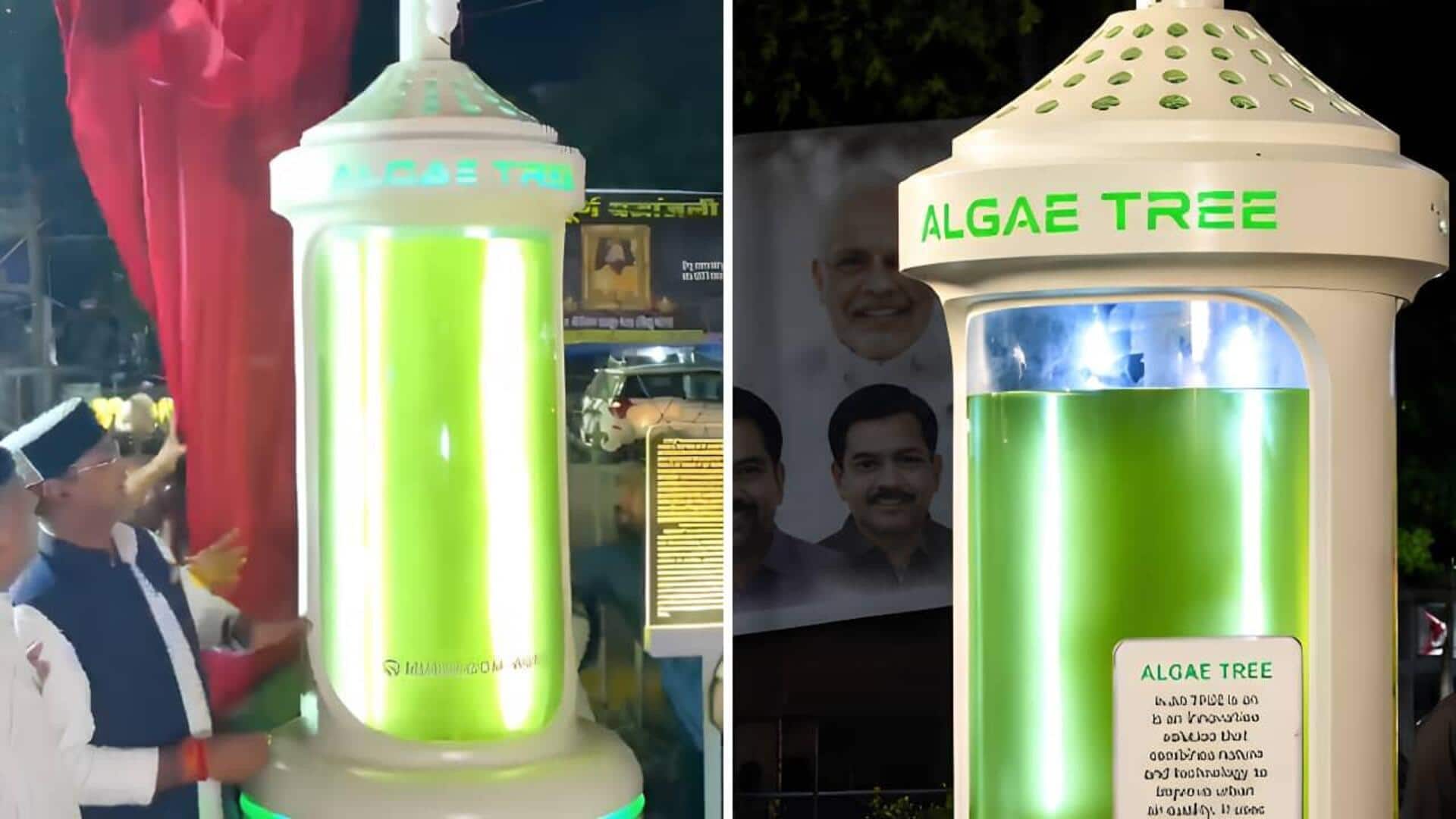
Bhopal gets India's 1st 'Algae Tree': How it works
What's the story
Bhopal has become the first Indian city to install an "Algae Tree," a futuristic carbon-capturing structure. The innovative device, installed at Swami Vivekananda Park under the city's Smart City initiative, can absorb as much carbon dioxide as 25 mature trees, while releasing oxygen back into the atmosphere. The project is already drawing widespread attention online with many users praising it as a creative response to worsening pollution and climate concerns.
Technology
What is an Algae Tree?
The Algae Tree is a product of the Mushroom World Group and uses a microalgae-based system to absorb CO2 from the surrounding air and convert it into oxygen.
The project took almost two years to develop with the help of over 50 researchers, engineers, and specialists.
A single unit can absorb nearly 1.5 tons of CO2 every year, roughly equivalent to the carbon absorption capacity of around 25 mature trees.
Renewable energy
Solar panels allow it to operate using renewable energy
The Algae Tree also comes with solar panels on top of the structure, permitting it to partially operate using renewable energy.
The installation comes at a time when Indian cities are grappling with rising temperatures, worsening air quality, and shrinking green cover.
Supporters of the project believe that such technology could eventually help lower local CO2 levels in crowded urban areas where planting large numbers of trees is difficult.
Tool
A social media talking point
Experts say the idea might not replace traditional green spaces, but it could act as an extra tool for improving air quality in dense cities. For now, the Bhopal installation has become both a technological curiosity and a social media talking point.