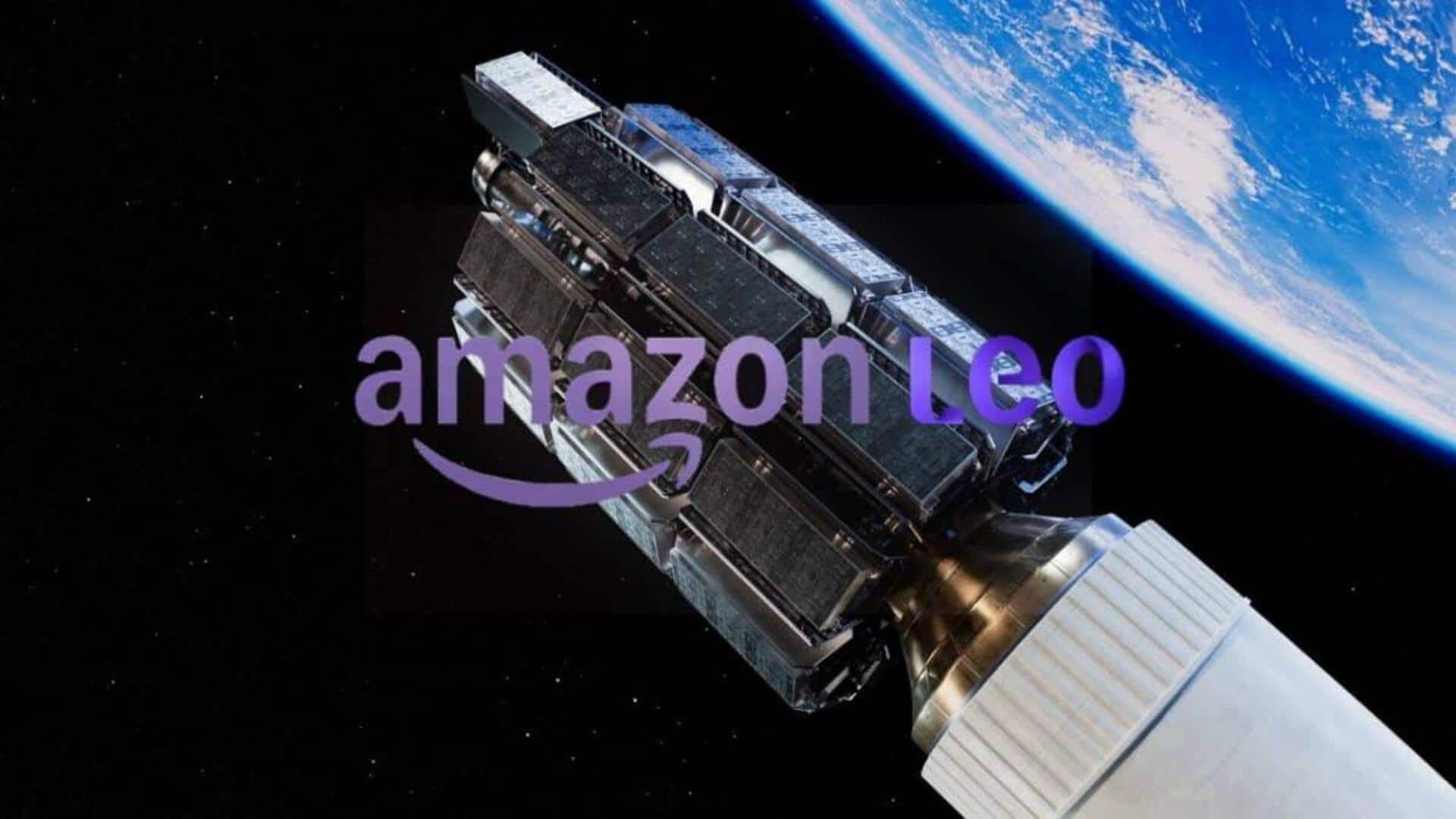
Amazon's Starlink competitor to launch mid-2026
What's the story
Amazon has confirmed the launch of its satellite internet service, Leo, in mid-2026. The announcement was made by CEO Andy Jassy in his annual letter to shareholders. The move marks a major step forward for the tech giant's ambitious project, which aims to compete with SpaceX's Starlink constellation in the low-Earth orbit broadband market.
Target audience
Initial traction with customers
Jassy revealed that the Leo service is already gaining traction with enterprise and government customers.
He highlighted partnerships with airlines like Delta and JetBlue, as well as telecoms and institutions such as AT&T, Vodafone, DirecTV Latin America, and NASA.
The company has also been quietly testing the system with select enterprise customers since late last year to provide high-speed, low-latency connectivity.
Project hurdles
Execution challenges and regulatory hurdles
Despite the progress, Amazon's satellite project has been plagued by execution challenges.
The constellation now has only some 240 satellites, far from the number needed for global coverage.
This shortfall has already forced the company to seek regulatory relief.
Earlier this year, Amazon asked the Federal Communications Commission (FCC) for an extension on a July 2026 deadline requiring at least 1,600 satellites in orbit.
Strategic approach
Commitment to secure launch contracts
In a bid to reassure regulators, Amazon has stressed its long-term commitment and investment in securing launch contracts through early 2029.
The company has also promised to ramp up launches and maximize payload capacity by launching more satellites per mission.
By this date, Amazon Leo also expects to have its customer terminals in the hands of more enterprise and government customers, the company said in its communication with regulators.
Service benefits
Leo's competitive edge in the market
Leo plans to stand out through performance and pricing.
Jassy said the service will offer major improvements in speed, especially for uploads.
First, the performance will be stronger (about six to eight times better on uplink, and two times better on downlink) than what customers have access to now, he said.
Second, this performance will come at a lower cost than alternatives.