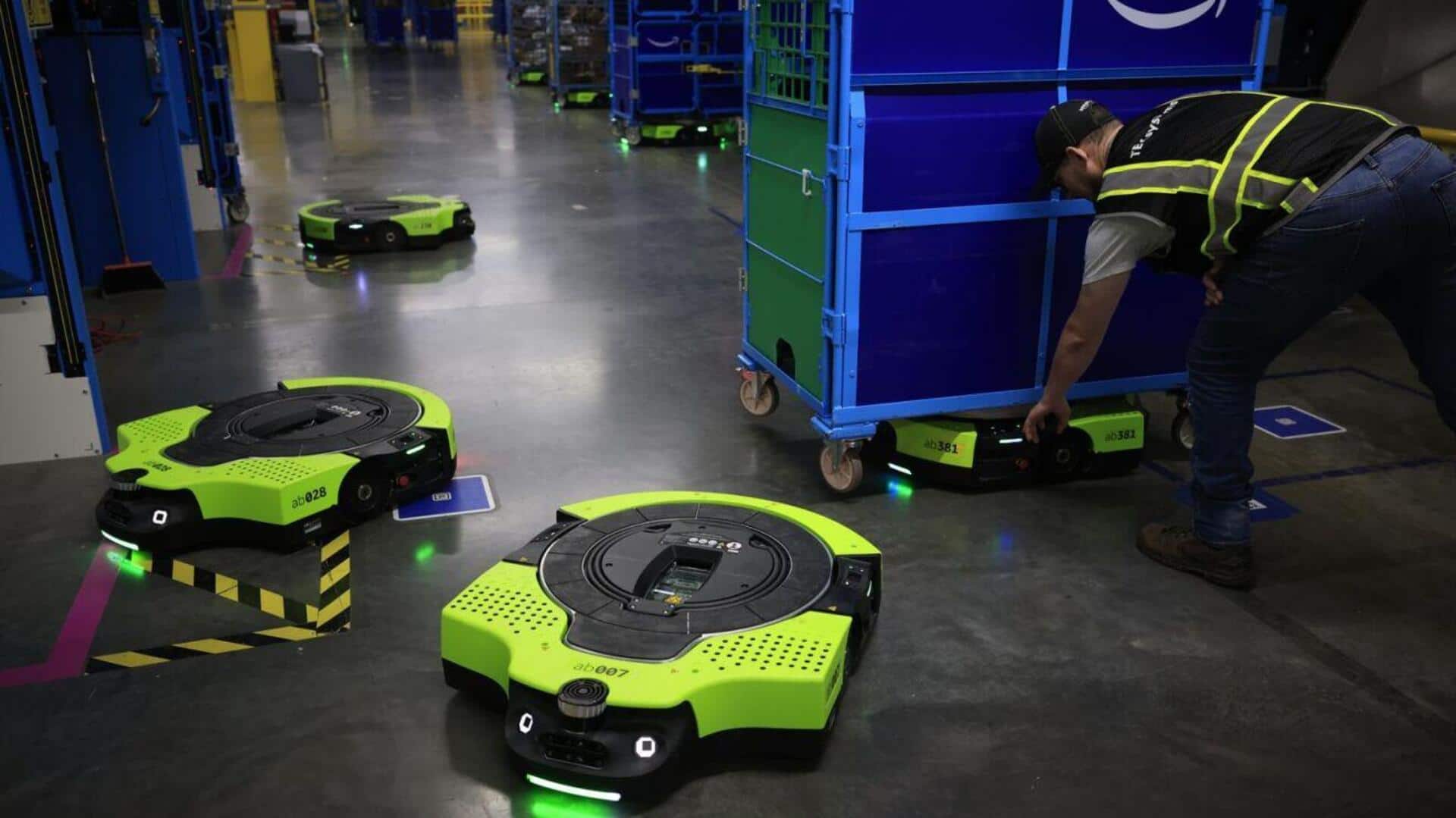
Amazon's next-generation Proteus robot takes on more heavy lifting
What's the story
Amazon has unveiled its next-generation autonomous warehouse robot, Proteus, at the 'Delivering the Future' event in London. The launch is part of a broader €10 billion investment plan aimed at modernizing its fulfillment network and speeding up deliveries across Europe. The new Proteus can move heavy carts and materials within fulfillment centers while responding to natural-language commands from employees.
Automation upgrade
The new Proteus robot can now work across facilities
The new Proteus robot is a major upgrade over its predecessor, which worked in limited dock areas.
The updated version can work across facilities and respond to natural-language commands, making it easier for employees to interact with it conversationally.
Amazon says the goal of this development is to cut down on physically strenuous tasks like moving carts weighing up to 400kg and repetitive lifting within warehouses.
Job creation
Amazon promises to create 25,000 jobs in Europe
In a bid to counter the long-standing criticism that automation replaces jobs, Amazon has announced plans to create 25,000 jobs across European fulfillment centers in the coming years.
The company argues that automation is creating new categories of employment in maintenance, engineering, and reliability functions.
The next-generation Proteus is currently being tested in Amazon's labs and will be deployed across Europe by mid-2027.
Tech expansion
Other robotic systems announced by Amazon
Along with Proteus, Amazon also announced the expansion of Vulcan, its robotic system with a "sense of touch," which can identify and handle objects in tightly packed warehouse environments.
Another system, STARK, a collaborative tote-handling robot that works with employees to reduce repetitive heavy lifting, will be rolled out to 15 European sites by 2027 after being piloted in Barcelona.