Prehistoric crocodile species found in rocks used to make Great-Sphinx
What's the story
Paleontologists have discovered a new crocodilian species from fossilized remains found in the same bedrock that built the Great Sphinx. The Mokattam Formation in northern Egypt, a thick layer of limestone, has preserved prehistoric marine fossils such as fish and early whales. This limestone outcrop also provided raw material for some of ancient Egypt's most famous monuments including the Great Sphinx and pyramids at Giza.
Naming inspiration
New species named after Egyptian god Horus
The newly discovered crocodile species, which lived millions of years before the Egyptians built their iconic structures, has been named Herugavialis cairensis.
The name was inspired by Heru (Horus), the Egyptian god associated with the construction of the mythical creature.
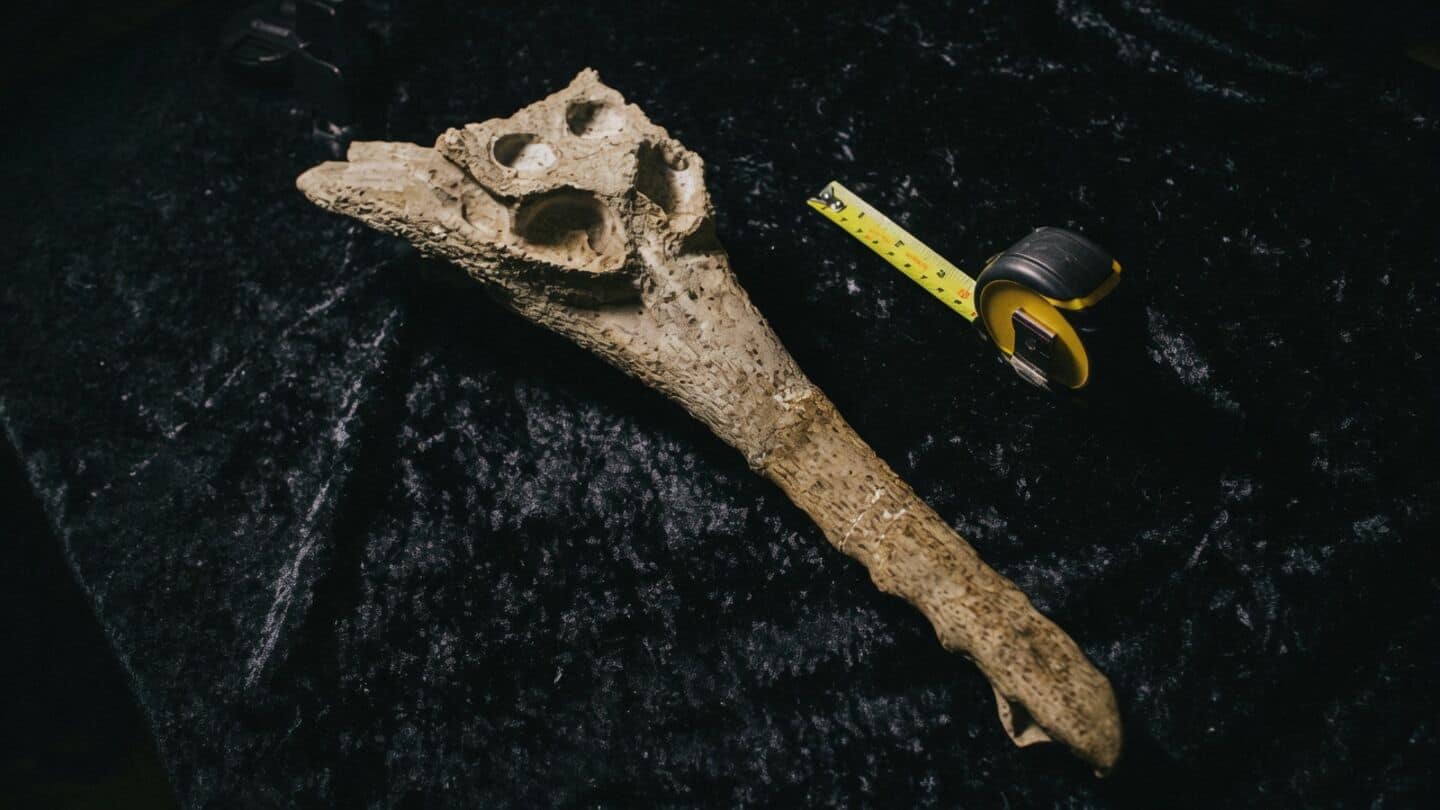
This is because one of the key fossils, a nearly complete skull, bears a striking resemblance to the Sphinx statue itself.
Species characteristics
Herugavialis had razor-sharp, pointed teeth
Herugavialis had razor-sharp, pointed teeth and a long, thin snout that were adapted for catching fish.
The Mokattam Formation, where the remains of this species were found, is home to several species of bony and cartilaginous fish fossils that Herugavialis likely preyed on.
Its eye sockets were raised like a telescope, much like those of the Indian gharial.
Fossil significance
Discovery highlights importance of re-evaluating museum collections
The discovery of Herugavialis from a nearly century-old fossil highlights the importance of re-evaluating museum collections.
There are likely other fossils in similar situations, but time and resources often limit researchers and curators.
The vast fossil collection unearthed from the Mokattam Formation shows the rich ecosystem and wide diversity of species that once lived in prehistoric Egypt.
Ecosystem insights
Findings expand knowledge of ancient Mediterranean ecosystems
The reclassification of this crocodile species "helps paint a better picture of what large predators were like in the region," said Alex Hastings, the Fitzpatrick Chair of Paleontology at Science Museum of Minnesota who was not involved with the study.
He added that it expands our knowledge about these long-snouted crocodylians across the Mediterranean during ancient times, and their influence on ecosystems during the Eocene period (56 million to 34 million years ago).