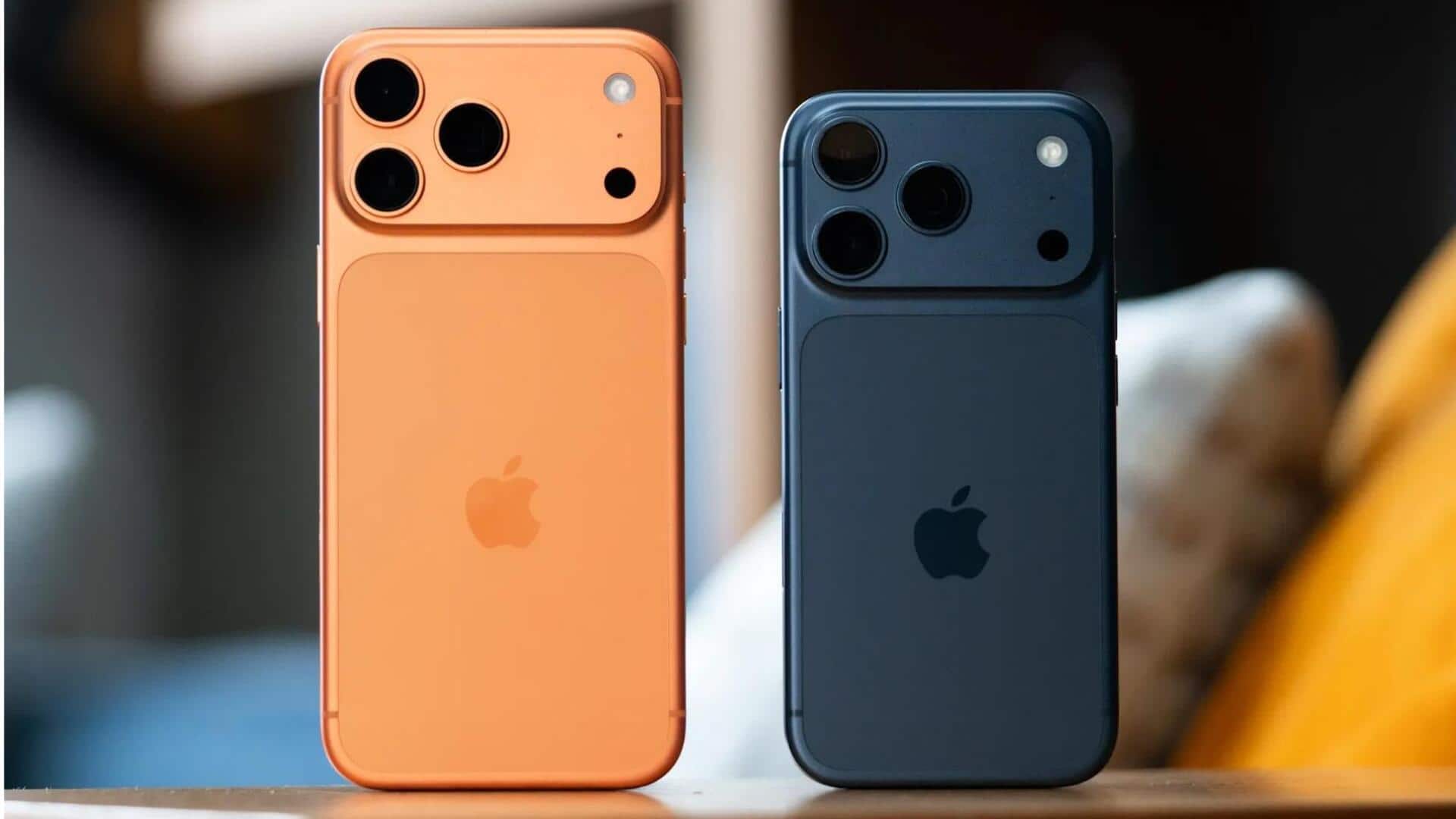
Apple iPhone 18 Pro to get these major design upgrades
What's the story
The upcoming iPhone 18 Pro is expected to come with three major design changes: a cleaner rear panel, a smaller Dynamic Island, and new color options. The changes are aimed at improving the overall look and feel of the device in hand. Despite these upgrades, Apple is likely to keep the prices unchanged from its predecessors.
Design overhaul
Blended rear design for a more premium look
The most significant change is said to be on the back of the phone.
The iPhone 17 Pro's two-tone rear design received mixed reviews due to the contrast between glass and aluminium frame.
Now, according to Weibo tipster Instant Digital, Apple could be ditching this color contrast for a more blended finish with its next model.
This would give it a cleaner and more premium appearance, something many Pro buyers prefer.
Front design
Smaller Dynamic Island on the front
On the front, Apple is said to be shrinking the Dynamic Island instead of switching to a hole-punch camera.
The new version will be around 35% smaller on both iPhone 18 Pro and Pro Max models.
This change is likely because some Face ID components are being moved under the display, making it possible for this reduction without going for a full hole-punch design yet.
Color palette
New color options for the Pro lineup
Apple is also said to be experimenting with new colors for its Pro lineup.
The company has tested three new shades: Coffee Brown, Purple, and Burgundy. However, not all of these colors may make the final cut after internal testing.
There are also speculations about whether Apple will try another orange-inspired variant to build on the current model's popularity.
Pricing strategy
Apple likely to maintain pricing despite rising component costs
Despite rising memory costs due to supply being diverted to AI data centers, a research note from GF Securities analyst Jeff Pu suggests that the iPhone 18 Pro models may launch at the same price as their predecessors.
Pu believes Apple is working closely with suppliers like Samsung and SK Hynix to negotiate better memory chip deals.
The company is also said to be cutting costs in other areas, including display and camera components, to offset potential RAM price increases.