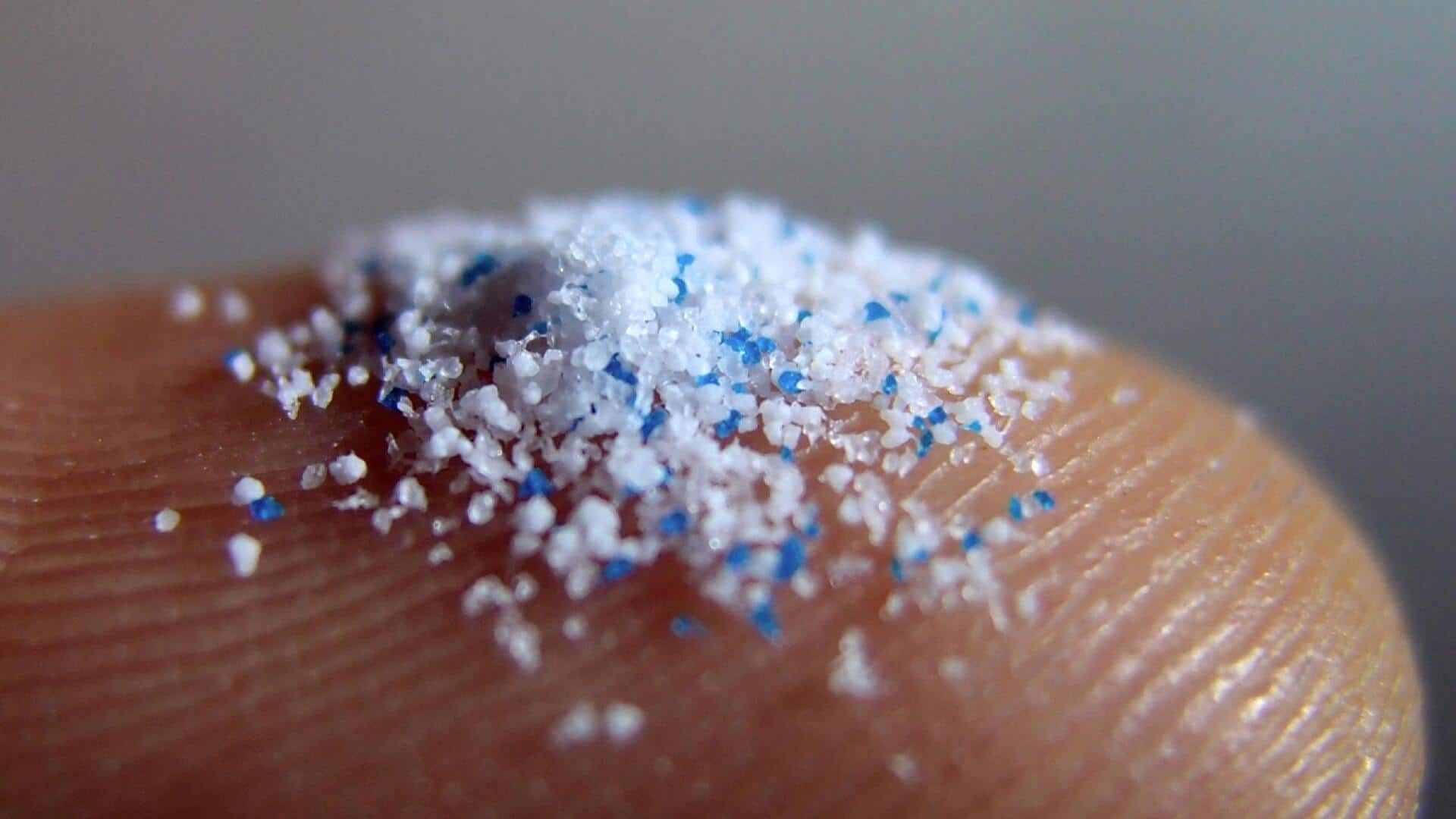
Are microplastics actually there in our bodies? Study raises doubts
What's the story
The discovery of microplastics in the human body has been questioned by some scientists, who believe that the findings were likely due to contamination and false positives. The debate was sparked by a widely reported study that claimed an increase in micro- and nanoplastics (MNPs) in brain tissue from postmortems conducted between 1997 and 2024.
Critique
Study faces criticism for methodological flaws
The aforementioned study was criticized for its methodological flaws, including poor contamination controls and a lack of validation steps.
The criticism was published in a "Matters arising" letter in the same journal where the original study appeared.
Dr. Dusan Materic from Germany's Helmholtz Centre for Environmental Research, one of the authors of this letter, called the brain microplastic paper "a joke," citing fat as a known source of false positives for polyethylene.
Alternative explanation
Rising obesity levels could explain microplastic trend
Materic proposed that rising obesity levels might be an alternative explanation for the trend reported in the study.
He also expressed doubts over "more than half of the very high impact papers" reporting microplastics in biological tissue.
Professor Matthew Campen, senior author of the brain study, said they are still trying to understand potential human health impacts of MNPs as there is no established method for this research yet.
Misguidance risk
Concerns over potential misguidance due to flawed evidence
The growing global concern about plastic pollution could be misled by erroneous evidence on microplastics in humans, researchers warn.
This could lead to certain misguided regulations and policies, which would prove to be dangerous.
It could also give lobbyists for the plastics industry an opportunity to dismiss legitimate concerns as baseless.
Study challenges
Several studies reporting microplastics in human tissues challenged
The Guardian has found seven studies that have been challenged by researchers, publishing criticism in the respective journals.
A recent analysis flagged 18 studies that allegedly failed to consider some human tissue could produce measurements easily confused with those of common plastics.
These challenges highlight the need for more robust methods to detect and quantify microplastics in human tissues, given their small size and the limitations of current analytical techniques.
Study skepticism
Some studies on microplastics in human organs questioned
Other studies reporting MNPs in human organs have also been questioned.
One study had claimed patients with MNPs detected in carotid artery plaques, were at a higher risk of heart attacks and strokes than those without.
However, it was criticized for not testing blank samples taken in the operating room, which are used to measure background contamination levels.