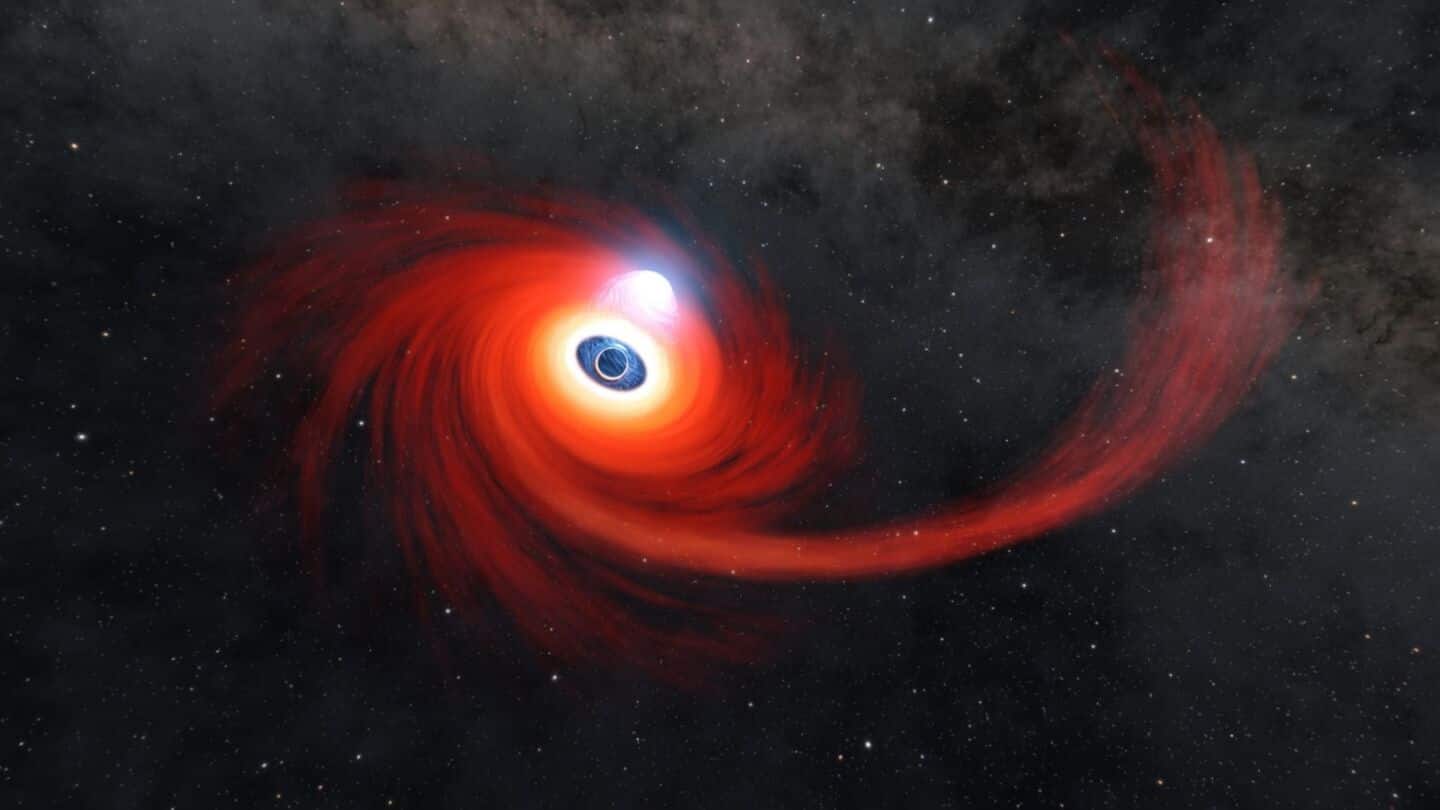
Astronomers discover MoM-BH-1, farthest 'black hole star' seen by JWST
Astronomers just found MoM-BH*-1, the farthest "black hole star" we've seen so far, dating back to less than 660 million years after the Big Bang.
Discovered with the James Webb Space Telescope's MoM survey, this rare "naked" "black hole star" is the best example yet of a black hole star and astronomers are fairly certain it exists in space on its own rather than inside a burgeoning galaxy.
Its light is helping scientists finally make sense of those mysterious "little red dots" the James Webb Space Telescope spotted in 2022.
MoM-BH-1 may merge in 100 million years
MoM-BH*-1 sits close to a young galaxy, and researchers think they'll merge in about 100 million years, possibly creating something like those puzzling red dots.
This discovery is giving scientists fresh clues about how early black hole stars might have powered up into quasars and served as "the central engines of baby quasars."