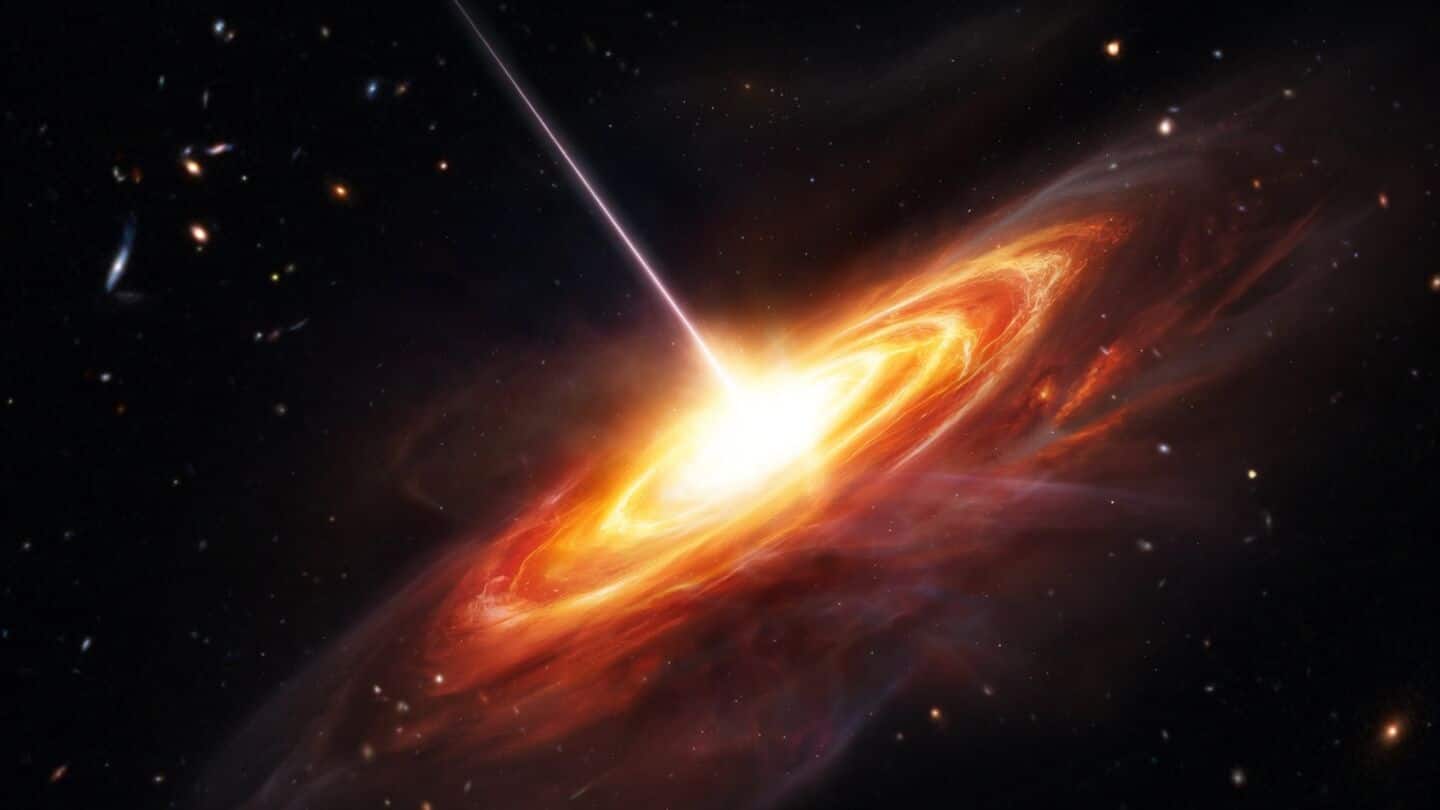
Astronomers find oldest quasar 670 million years after Big Bang
Astronomers just spotted the universe's oldest known quasar (basically, a cosmic lighthouse powered by a supermassive black hole) dating back to only 670 million years after the Big Bang.
This ancient quasar is so bright, it outshines one trillion suns, and its discovery is helping scientists figure out how giant black holes showed up so early in cosmic history.
Euclid telescope finds 31 distant quasars
The European Space Agency's Euclid telescope made this breakthrough possible, uncovering 31 distant quasars (including some 13 billion light-years away) that more than doubled what we knew about these early cosmic beasts.
Thanks to Euclid's sharp imaging, researchers are now getting fresh clues about how our universe evolved from its dark ages.
The findings landed in Astronomy & Astrophysics on July 6, 2026.