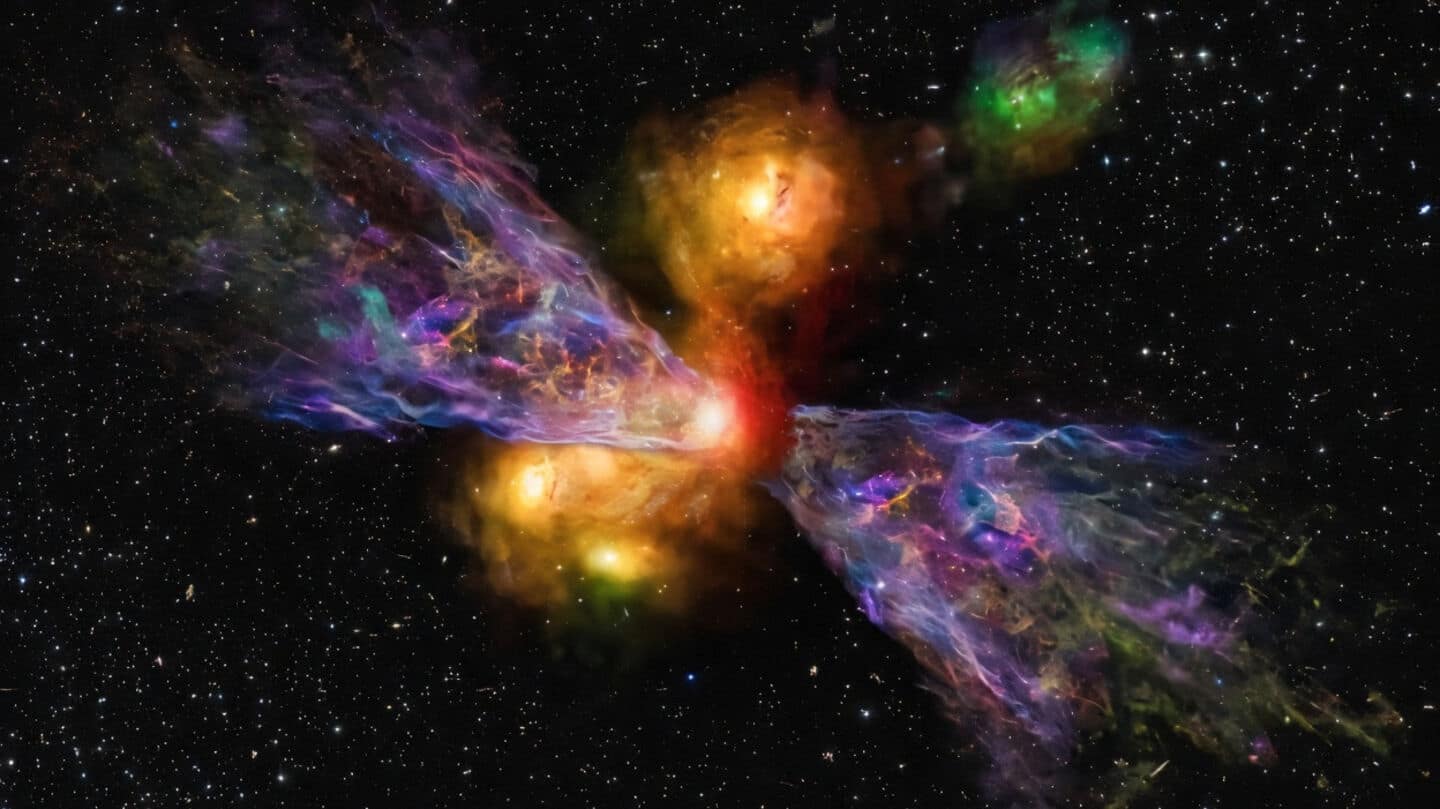
Astronomers using James Webb Space Telescope find winds quenching galaxies
Astronomers just found out that fierce galactic winds can basically shut down galaxies, which helps explain why so many "dead" galaxies popped up soon after the Big Bang.
Using the James Webb Space Telescope, they looked at a galaxy cluster called CRISTAL-02, seen about 1 billion years after the universe began and saw that cold gas needed for making new stars was being blown out, leaving the galaxy at risk of no longer creating stars.
Study finds 50 million-year galaxy shutdown
The study, published June 10, 2026, shows this wind-driven process could end star formation in just 50 million years—a cosmic blink.
Lead author Rebecca Davies shared, "If this rapid blowout continues, the galaxy could be dead in less than 50 million years, explaining the origin of the mysterious massive dead galaxies in the early universe," adding that almost half of early massive galaxies are interacting with other nearby galaxies.
The findings also highlight how galaxy mergers and supernova explosions helped shape what we see in space today.