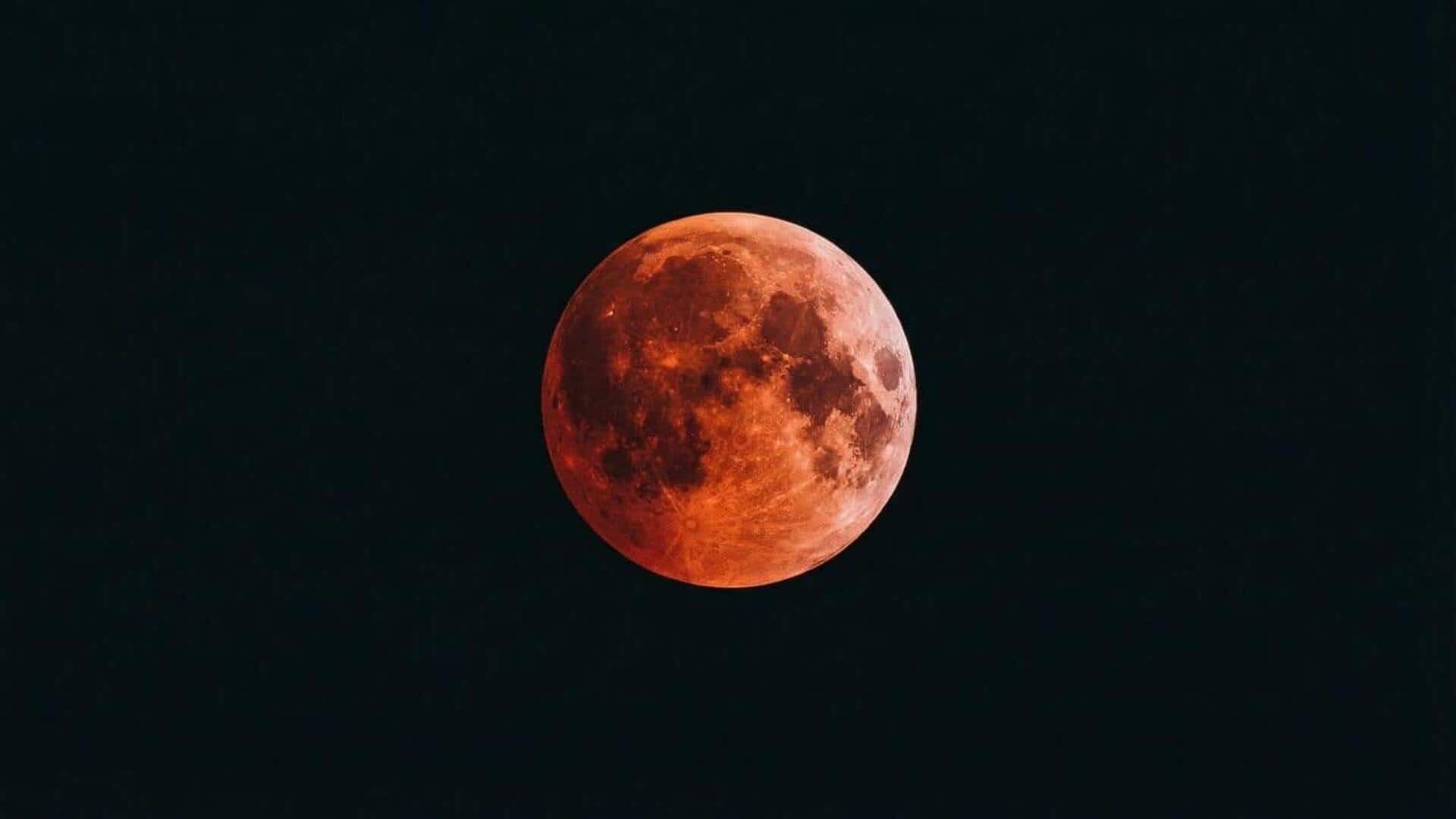
Blood Moon tonight: How, when to watch the lunar eclipse
What's the story
Tonight, a total lunar eclipse will transform the full moon into a stunning 'Blood Moon.' The celestial event will be visible to skywatchers across North America, Australia, New Zealand, and eastern Asia. It is estimated that over 40% of the world's population will witness at least some part of this unique phase.
Observation guidance
Best views in western North America, Australia
The best views of this lunar spectacle will be from the western half of North America, Australia, and the Pacific.
However, US skywatchers in eastern time zones will only catch a glimpse of the blood moon before it sets below the western horizon.
The peak of totality, when the moon is in Earth's shadow's deepest part, will occur at 11:33 GMT on March 3.
Viewing tips
Tips for watching the eclipse
To fully appreciate this celestial event, it's best to watch it before, during, and after totality. This way, you can see Earth's shadow take bites out of the moon.
The blood-red hue will appear at 11:04 GMT as it enters totality. This phase will last for about 58 minutes.
If clouds are a concern, check your local weather forecast and have an alternative viewing location ready.
Eclipse explanation
What is a Blood Moon?
A lunar eclipse occurs when Earth blocks sunlight from directly reaching the Moon.
During some eclipses, indirect sunlight colors the Moon in sunset hues.
This is why Dr. Rebecca Allen, an astrophysicist at Swinburne University, describes a Blood Moon as a "deep and coppery red."
The light refracted through Earth's atmosphere gives it this unique color, similar to how sunrises and sunsets can be pink or red.
Future events
Next total lunar eclipse on New Year's Eve
Total lunar eclipses occur every 18 months to three years. The next one will be on New Year's Eve 2028, visible from most of the world except for the Americas.
A partial eclipse is also expected on August 28, 2026. It will be best viewed from Africa and the Americas but won't be clearly visible from Australia and New Zealand.