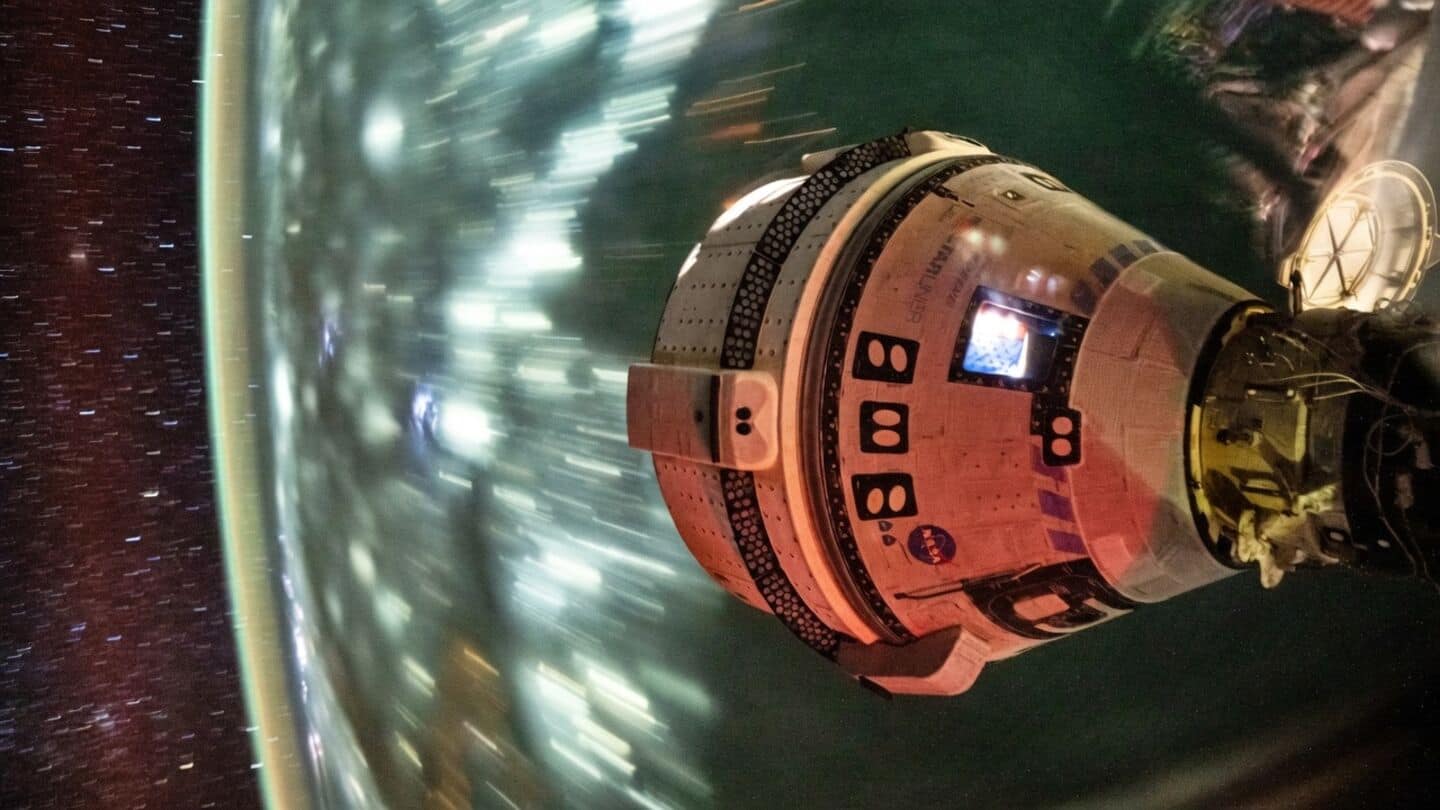
Boeing Starliner to fly uncrewed after Sunita Williams ordeal
What's the story
Boeing's Starliner spacecraft is slated for an uncrewed test flight in 2027. The decision comes after technical issues forced astronauts Sunita Williams and Butch Wilmore to stay at the International Space Station (ISS) for eight months in 2024. NASA and Boeing plan to launch Starliner-1 on a mission without crew members. This will be used as a demonstration of improvements made to the spacecraft's propulsion system before another crewed flight attempt.
Mission details
Uncrewed mission to validate spacecraft improvements
The Starliner-1 mission could take place as early as December 2026 or January 2027, depending on the completion of testing and certification requirements.
NASA plans to use this mission to gather critical flight data and determine if Starliner is safe for carrying astronauts again.
The agency currently aims to return astronauts to the spacecraft on Starliner-2 by 2028.
Flight challenges
Williams forced to stay at ISS for 8 months
The troubles with Starliner came during its first crewed flight in June 2024, when Williams and Wilmore traveled to the ISS aboard it.
The mission was originally expected to last some eight days. However, issues with the spacecraft's reaction control system thrusters raised doubts over its ability to safely return astronauts back on Earth.
NASA eventually decided to bring back Starliner without its crew in September 2024.
Investigation findings
NASA probe identified 61 recommendations for the failure
A NASA investigation into the Starliner failure identified 61 recommendations to address technical and program management issues.
The probe found that Starliner's service module thrusters operated outside their engineering qualification limits, with thermal conditions and design-related factors contributing to performance problems.
In response, Boeing has made thermal modifications to the spacecraft's service module, which NASA will evaluate during the uncrewed flight.
Future preparations
Changes in propulsion performance and alternative means of transportation
Boeing will also implement changes to thruster valves to address seal extrusion, which affected propulsion performance.
Other improvements include new crew module thrusters, upgraded batteries, and modifications to the parachute system.
NASA also plans to certify United Launch Alliance's Vulcan rocket for crewed Starliner missions after Atlas V rocket's final flight.
The agency intends to exercise options for a fifth and sixth Starliner mission to ISS as an alternative means of transporting astronauts into low Earth orbit.