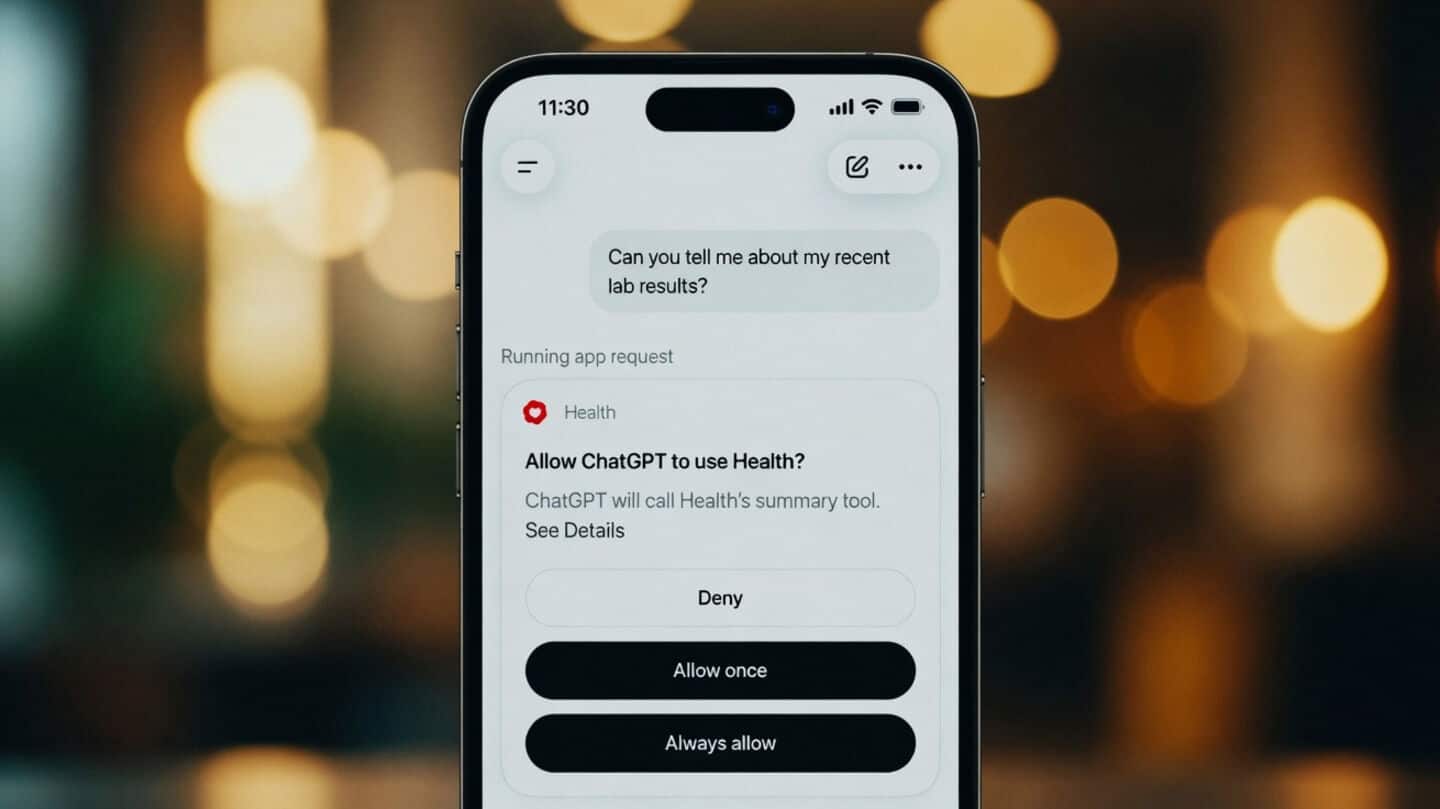
ChatGPT Health launches as OpenAI pushes deeper into healthcare
What's the story
OpenAI has made its controversial health assistant feature, ChatGPT Health, available to all US-based users. The move comes as part of the company's efforts to provide personalized health advice based on individual medical records and Apple Health data. However, the launch comes at a time when OpenAI is facing two lawsuits over its chatbot's provision of potentially harmful medical advice.
Feature details
Health data now informs all conversations
The ChatGPT Health feature, which was first introduced earlier this year to a small group of early users, has now been improved based on their feedback.
The new version integrates directly into the chat experience instead of being a separate space in the app.
This means that if you consent, your health information will inform not just your health-related inquiries but pretty much everything you ask the chatbot.
AI proficiency
ChatGPT Health powered by GPT-5.6 Sol for paid users
The feature now relies on GPT-5.6 Sol for paid users, OpenAI's latest flagship model. The company claims it is their "strongest model yet for health."
However, despite the advanced technology, OpenAI has cautioned that its AI can still make mistakes.
"We encourage people to verify important information and discuss medical decisions with their healthcare provider," the company said in a press release.
Legal challenges
Lawsuits over health advice
OpenAI is currently facing two high-profile lawsuits related to its chatbot's health advice.
In one case, the family of a 19-year-old who died from a drug overdose is blaming ChatGPT for advising their son to use Xanax to "smooth out" his high from Kratom, an herbal substance with opioid-like effects.
The family is not only seeking damages but also calling for a pause on the ChatGPT Health feature.
Second case
Pastor sues OpenAI over health claims
In a separate case, a Florida pastor has sued OpenAI, claiming that the health advice given by ChatGPT caused him to delay urgent care for a life-threatening pulmonary embolism.
Instead of advising him to seek medical help for the early warning signs of the condition, the chatbot allegedly told him to just trust that "God did not design your body to endlessly fail."