China's new satellite engine is better than US, European counterparts
What's the story
China has successfully tested a new satellite engine with an unprecedented operating life. The advanced technology, developed by the China Academy of Aerospace Propulsion Technology in Xian, is expected to boost the efficiency and reliability of launching large communications, military and deep-space spacecraft into their designated orbits. The upgraded engine can produce 750 newtons of thrust and was tested across five orbit-raising maneuvers during its maiden flight in late June.
Maiden mission
Engine originally designed for nearly 10 hours of operation
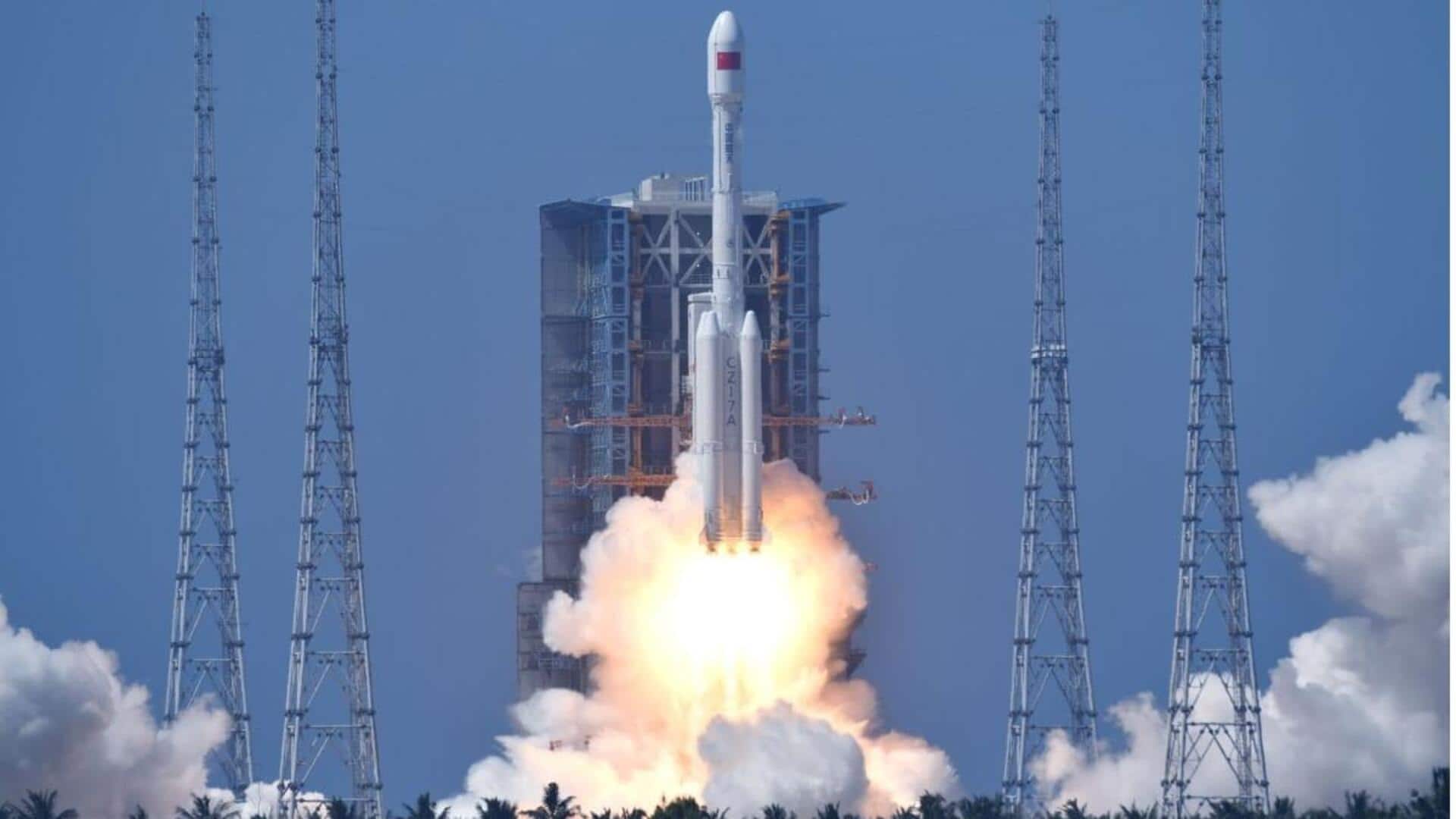
The new Chinese engine successfully placed the Communications Technology Experiment Satellite 26A into an orbit about 35,800km above Earth.
The engine was originally designed for nearly 10 hours of operation but exceeded expectations by running continuously for over 14 hours during testing.
This extended performance was made possible due to a special heat- and oxidation-resistant coating, as per Chinese media reports.
Performance comparison
How China's engine outperformed its US and European counterparts
China's new satellite engine has outperformed its US and European counterparts in terms of operational longevity.
The leading engines used for placing spacecraft into their final orbit after launch, such as the US-made R-42DM and Europe's Leros-1B, are usually designed to run for some seven hours.
However, China's engine managed to operate for over double that time without compromising on performance.