China's Tianwen-2 reaches Earth's quasi-moon for sample mission
What's the story
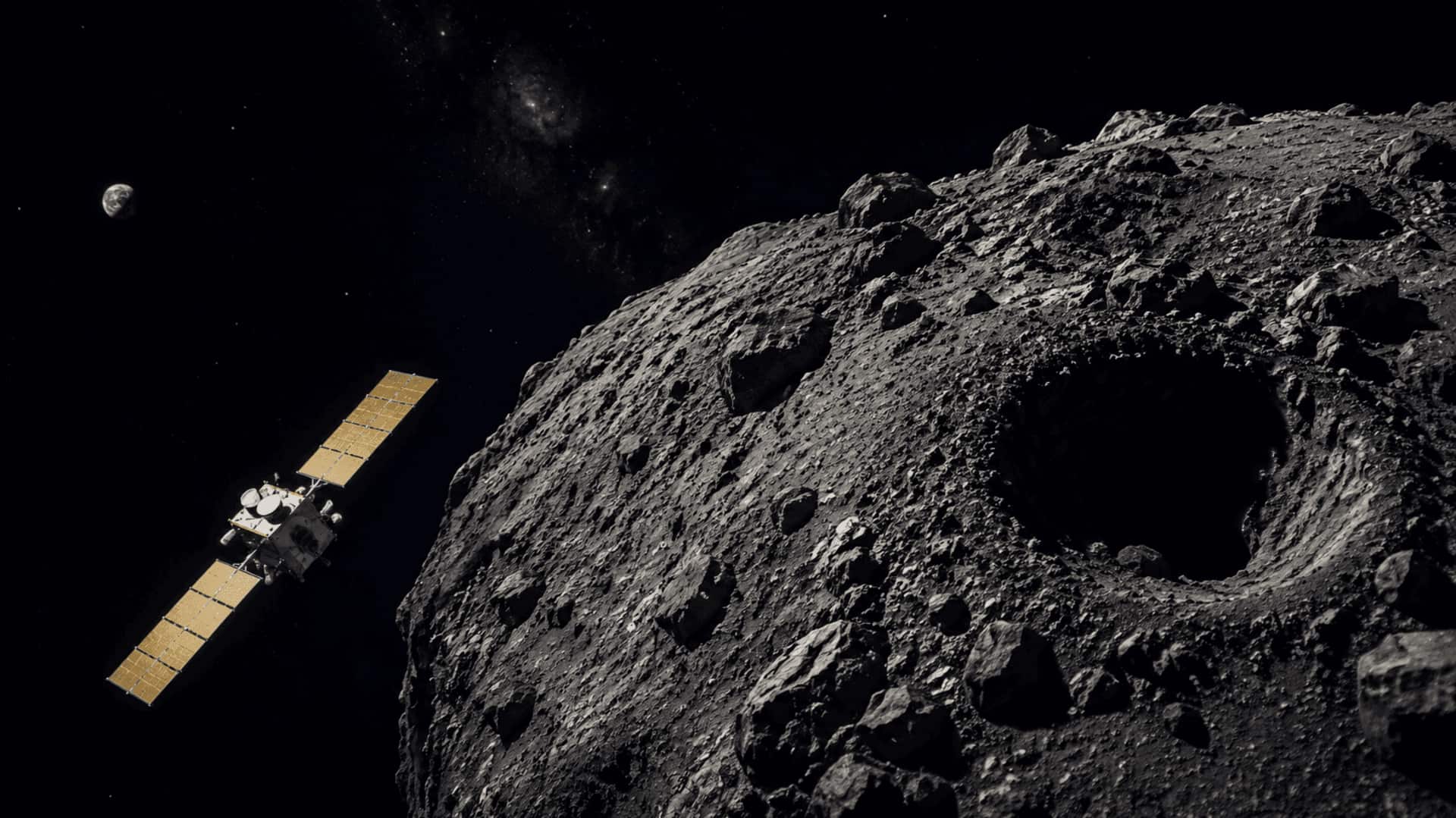
China's Tianwen-2 spacecraft has successfully reached Kamo'oalewa, a small asteroid that orbits the Sun in tandem with Earth. The China National Space Administration (CNSA) announced the spacecraft's arrival yesterday, marking the end of its one-billion-kilometer journey. Launched on May 29, 2025, Tianwen-2 took 400 days to get close to this oblong rocky body at a distance of about 20km.
Exploration goals
Probe will conduct sample collection, remote sensing observations
The arrival at Kamo'oalewa marks the start of Tianwen-2's scientific exploration.
The probe will now land on the asteroid, collect surface material samples, and conduct remote sensing observations for several months.
These efforts are aimed at helping scientists on Earth understand the composition and origin of this unique space rock.
Lunar connection
What do we know about Kamo'oalewa?
Discovered in 2016, Kamo'oalewa is one of seven known quasi-moons that orbit near Earth.
The asteroid is about 66 feet (20m) wide and its composition matches that of lunar rocks collected during NASA's Apollo missions.
This has led researchers to speculate that it could be a fragment of the Moon, possibly ejected by an ancient impact event.
Technological prowess
Tianwen-2 equipped with 11 scientific instruments
The Tianwen-2 spacecraft carries 11 scientific instruments for studying and extracting samples from asteroids.
These include cameras, spectrometers, a magnetometer, sounding radar, particle analyzers, and laser navigation sensors.
The data collected will provide insights into the shape, composition, and internal structure of Kamo'oalewa.
Mission timeline
When will Tianwen-2 return samples to Earth?
CNSA expects Tianwen-2 to return its samples to Earth in April 2027.
The spacecraft will drop off a capsule filled with surface material on its way to its second target, comet 311P/PANSTARRS.
This destination, located in the main asteroid belt, is expected to be reached by 2035.
China's first asteroid return mission could uncover the asteroid's origins and hand scientists a pristine piece of lunar history.