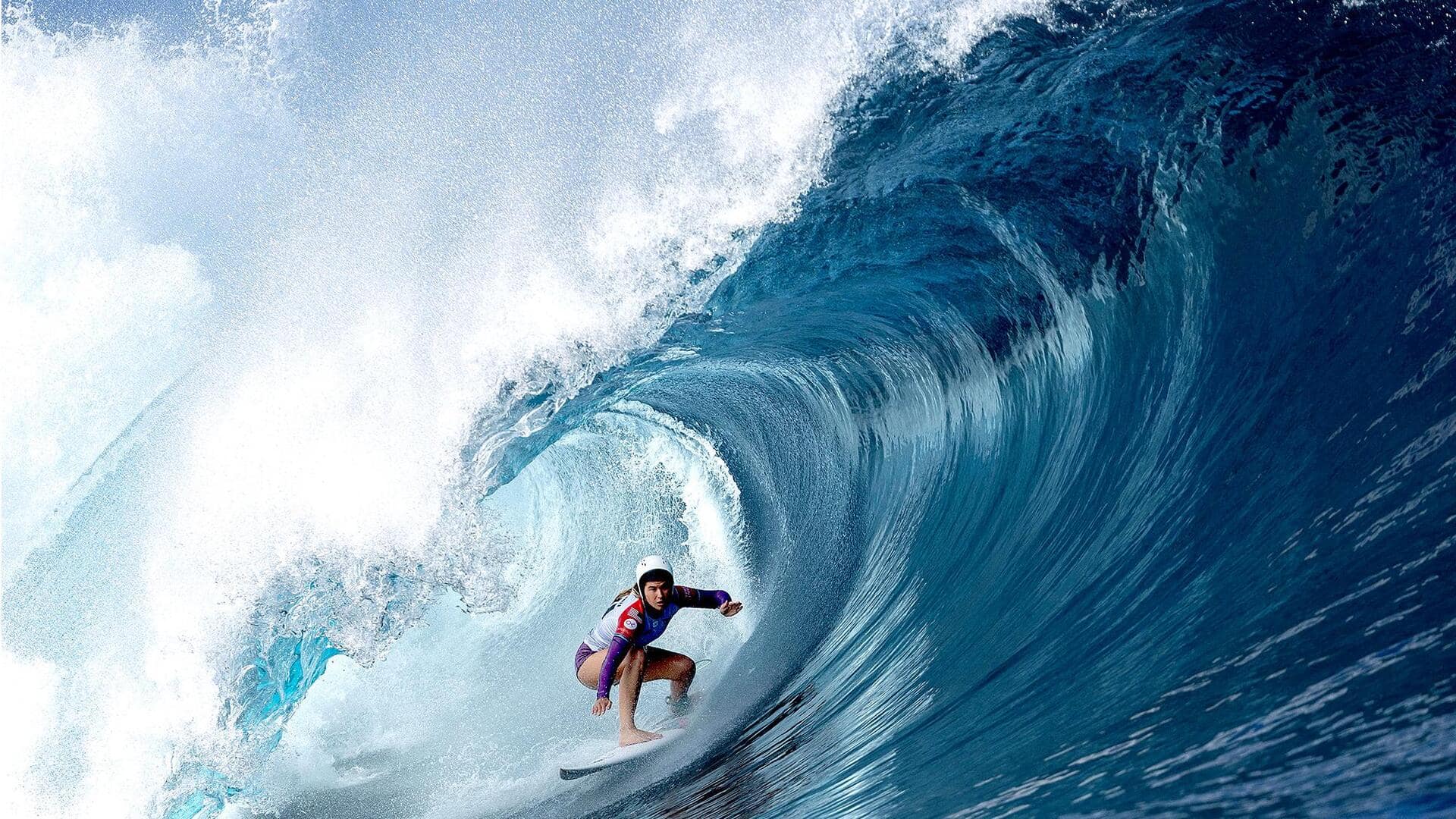
Surfing waves might become a thing of the past: Study
What's the story
The climate crisis is posing a major threat to some of the world's most popular surf breaks. A new study has found that rising sea levels and coastal developments are submerging or destroying these iconic waves. The research analyzed dozens of famous waves in World Surfing Reserves (WSR) and found that over three-quarters are at high risk due to changing tide levels, hardened shorelines, and shifting sands.
Economic implications
Impact on local communities
The changing surf breaks not only affect surfers but also the communities that rely on the multi-billion-dollar surf economy.
These communities are often located in areas with few other economic opportunities.
The study identified several high-risk waves, including Croyde beach's "bombing barrels" in North Devon, UK; Noosa's point breaks in Australia; and Oriente Salvaje in El Salvador and California's Santa Cruz such as Sewer Peak and Wind and Sea.
Wave formation
Surf breaks are unique ocean phenomena
The best surfing waves are formed by complex interactions of sea-floor topography, swell direction, and tide.
Dan Reineman, an associate professor at California State University Channel Islands and a co-author of the study, described surf breaks as "incredibly unique oceanographic phenomena."
He explained that they are sensitive to changes due to their intricate nature.
Global warming is raising sea levels and altering rainfall patterns that impact sediment movement, potentially disrupting this delicate balance and destroying waves.
Conservation efforts
Local surfers' knowledge can help protect waves
The researchers believe that the expert local knowledge of surfers could be leveraged to help protect these endangered waves.
Trent Hodges, a co-author of the study and senior programs manager at Save the Waves Coalition, said, "Climate change will impact surf breaks all over the world in different ways."
He added that when a wave changes, it often indicates broader changes happening on the beach.
Study findings
Thousands of other surf waves at risk
The study, published in the journal Climatic Change, warns that climate change and coastal management pose major threats to the future viability of many globally significant surf breaks.
This could have dire consequences for the diverse local communities, cultures, and economies they support.
Nearly 200 local experts studied 57 surf breaks across eight countries as part of this research.
The researchers found that thousands of other surf waves worldwide are at similar risk from climate change.