FBI creates replica town to simulate real-world cyberattacks
What's the story
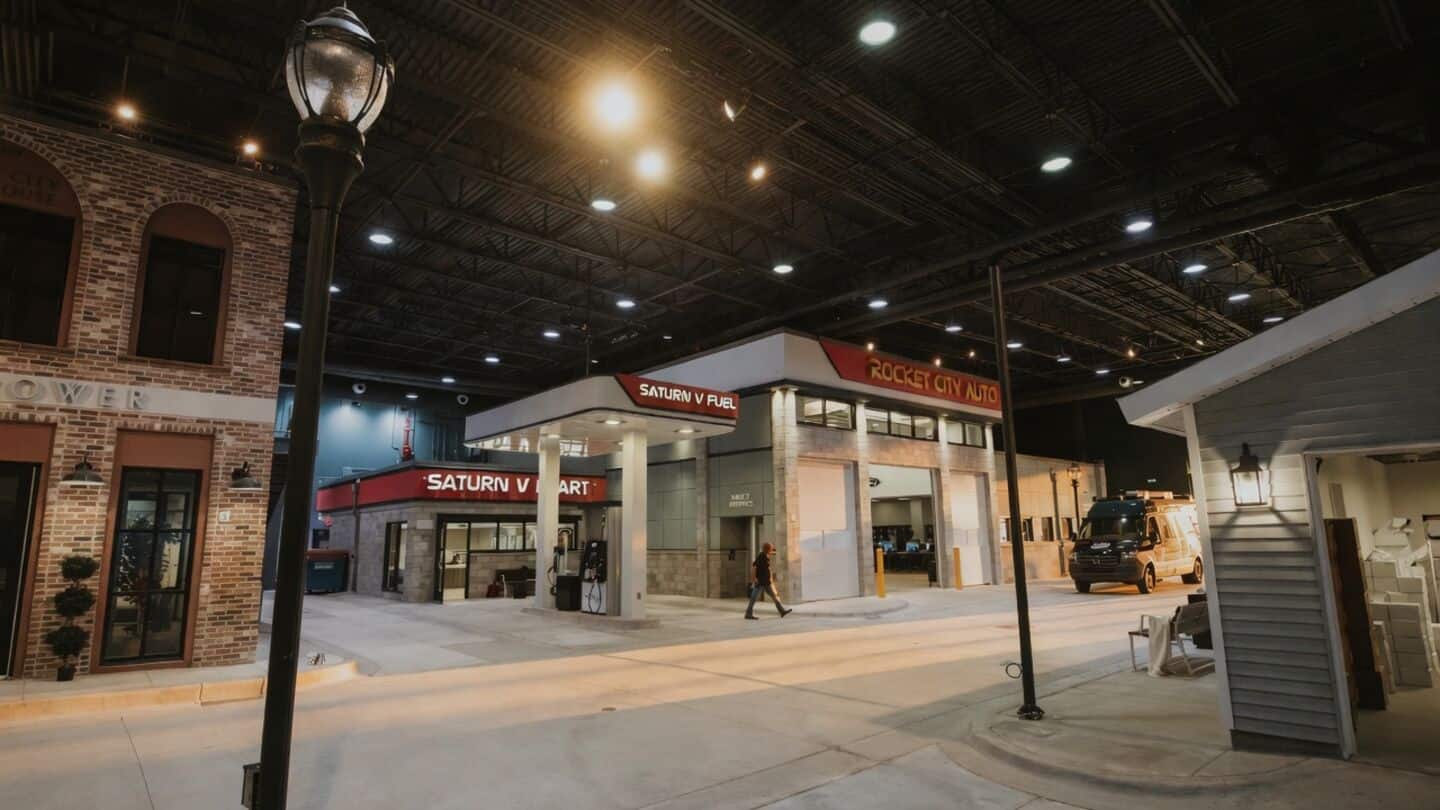
In an initiative, the Federal Bureau of Investigation (FBI) has created a 22,000-square-foot replica town on its Huntsville, Alabama campus. The facility, called the Kinetic Cyber Range, was opened in February 2025 and is aimed at training law enforcement officers to simulate and investigate real-world cyberattacks. It features fully furnished houses, a hotel, a gas station, and a grocery mart among other things.
Training ground
Training in simulated community
The Kinetic Cyber Range is designed to replicate a real US community, complete with roads and traffic lights.
Since its opening, the facility has trained over 1,400 students, including FBI personnel and partners from other federal and local agencies.
Each part of this replica town is equipped with functional devices and systems that act as they would in a real community or business while preventing any simulated attacks from spilling out of the facility.
Advanced training
Simulating ransomware attacks
The Kinetic Cyber Range also features a data center with over 200 physical servers, some running Windows and others Linux.
This setup mimics corporate environments that investigators are likely to encounter when responding to a breach or executing a search warrant.
The facility also allows the FBI to simulate ransomware attacks and their real-world consequences, including high-pressure decisions that investigators have to make in such situations.
Forensic training
Controversial digital forensics training
The Kinetic Cyber Range also serves as a platform to train US investigators in digital forensics.
This involves cracking the cybersecurity defenses of encrypted modern devices to extract data, often for building a criminal investigation.
The tools used for this purpose are controversial as they exploit vulnerabilities that are never disclosed to device makers such as Apple or Google, defeating the protections those companies build in for their users.