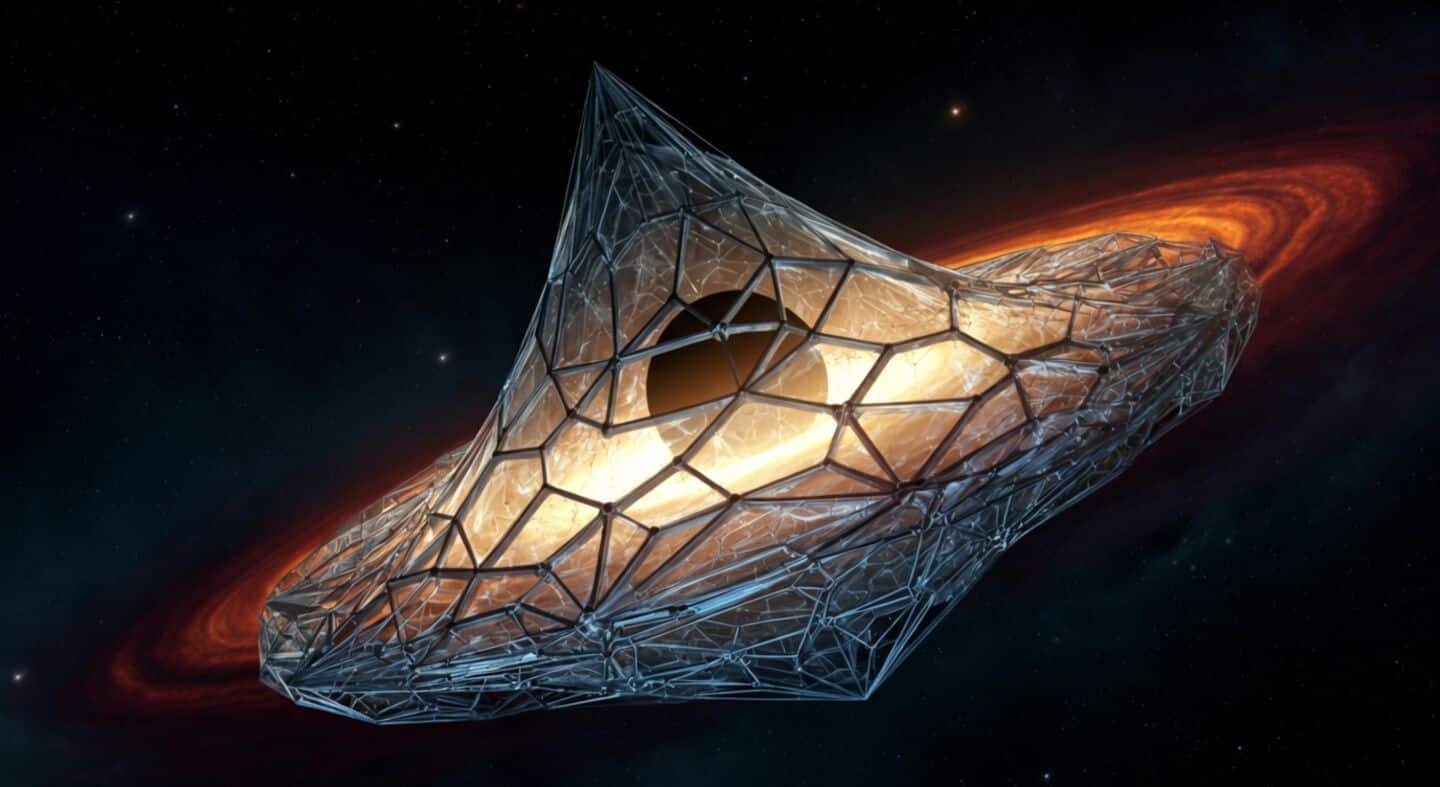
Goethe University Frankfurt, TU Wien show starless black hole formation
Technology
A team from Goethe University Frankfurt and TU Wien just solved a decades-old space mystery: how black holes can pop up without stars collapsing first.
Their new formula shows that space-time can organize itself into a super-sensitive space-time crystal. Add just a tiny bit of energy, and boom. A black hole forms.
Findings help explain primordial black holes
This breakthrough builds on Einstein's theory, showing that black holes can form from spacetime under specific conditions, even without stellar collapse.
The findings help explain how tiny, early-universe primordial black holes might have formed—some of which could be candidates for dark matter.
The research is also relevant to interpreting what LIGO and future observatories like Cosmic Explorer detect.