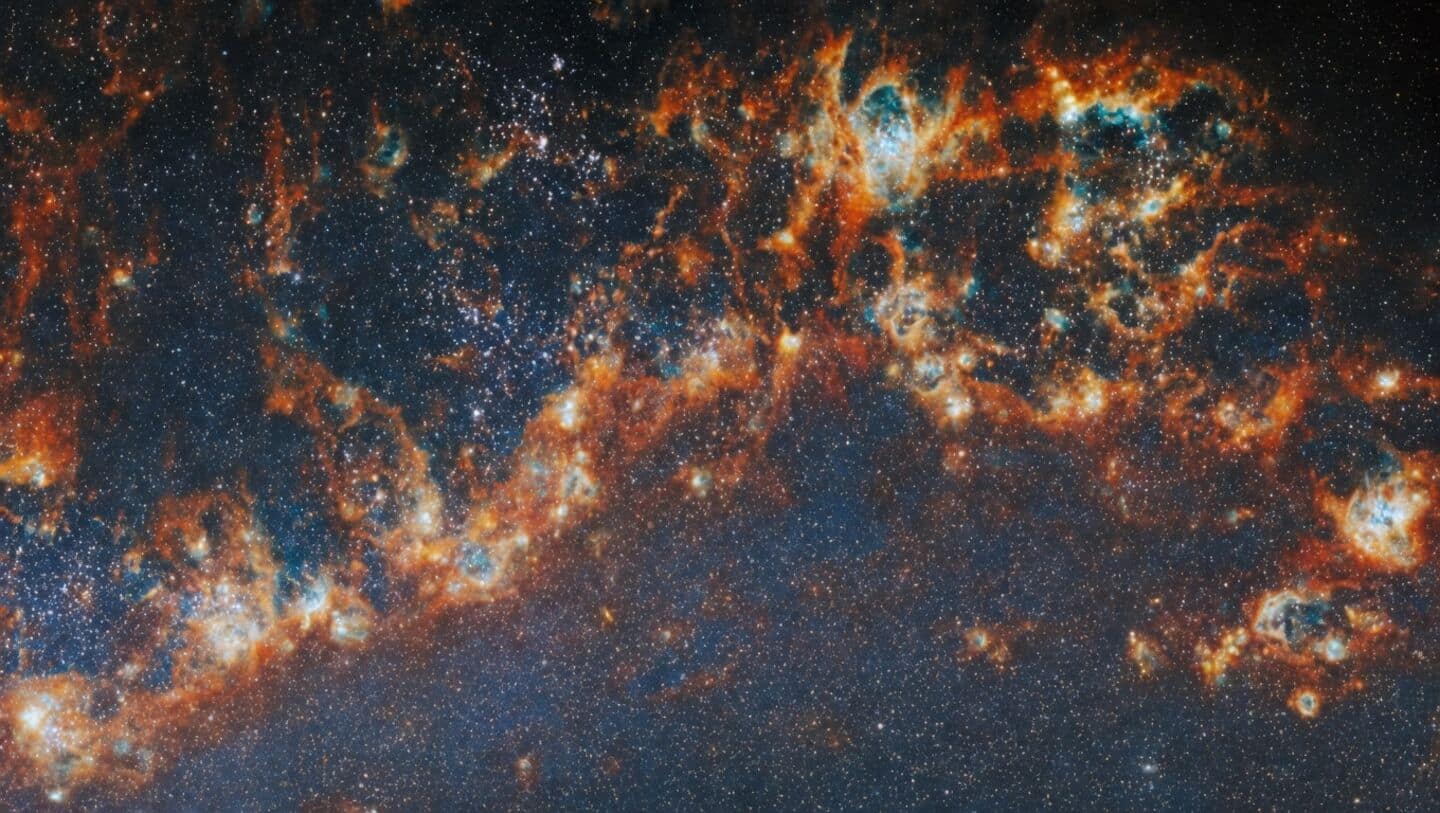
Hubble and James Webb reveal star clusters shaping galaxies
The James Webb Space Telescope and the Hubble Space Telescope just teamed up to show us how star clusters help build and shape galaxies.
By looking at nearly 9,000 young star clusters in four nearby galaxies, JWST's infrared eyes spotted hidden star-forming regions buried in cosmic dust, while Hubble mapped out the older clusters using visible light.
Giant clusters clear gas faster
Scientists followed these clusters from their dusty birth to maturity, learning how they influence galaxy structure along the way.
One cool find: giant star clusters clear out their gas clouds much faster than smaller ones, about 5 million years instead of 8 million years.
This process not only shapes new stars but also affects young planets by blasting away gas and dust with ultraviolet light.
The study's insights are now helping improve models of how galaxies evolve.