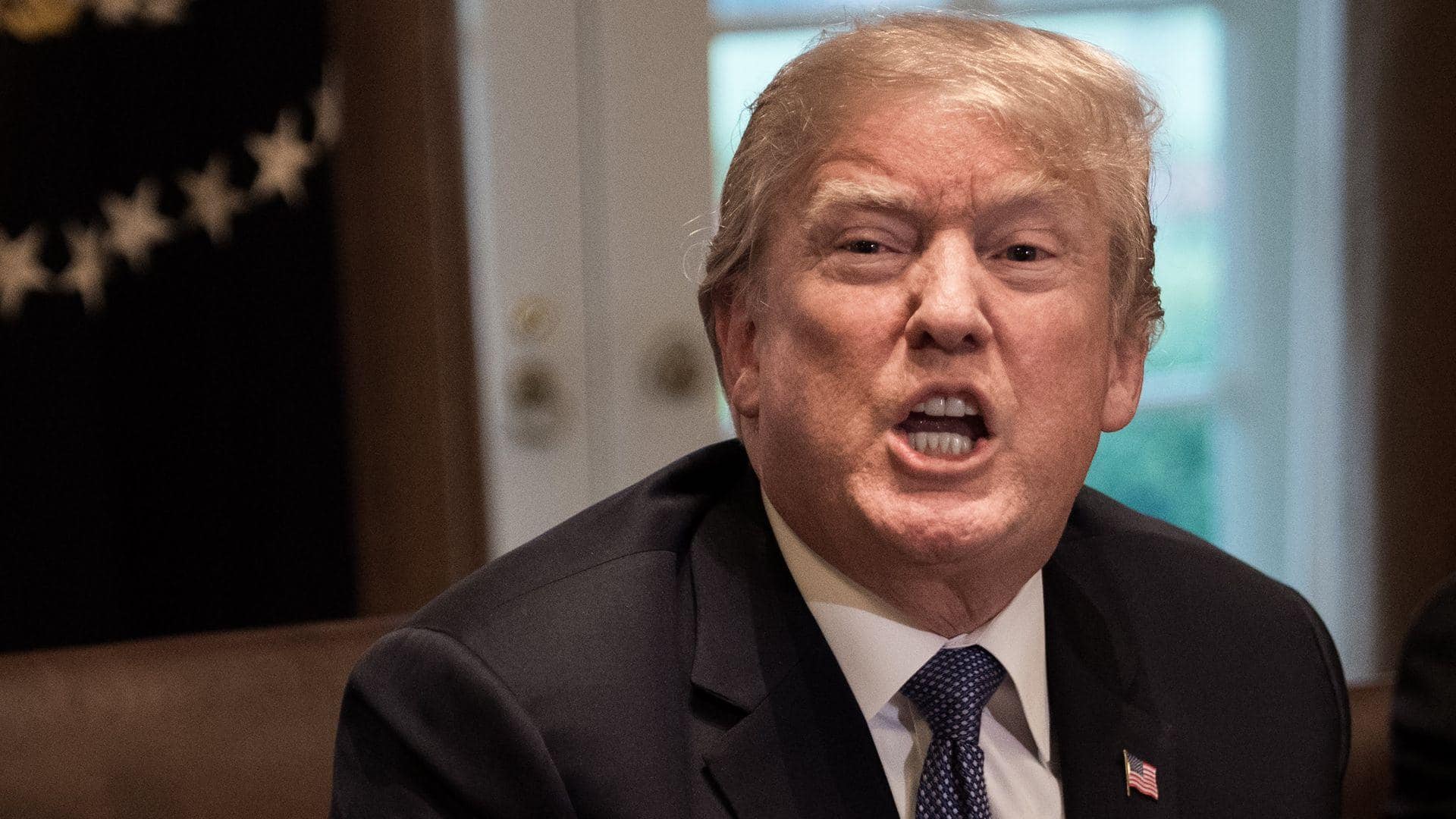
Trump calls Iran's ceasefire response 'totally unacceptable'
What's the story
United States President Donald Trump has rejected Iran's ceasefire response, which was sent through Pakistani mediators. The Iranian proposal sought negotiations for a permanent end to hostilities across the region, including Lebanon. Trump called the response "TOTALLY UNACCEPTABLE!" but did not elaborate further. The US proposal had included provisions to end hostilities, reopen the Strait of Hormuz, and limit Iran's nuclear program.
Diplomatic stance
US still pursuing diplomatic avenues
Despite the rejection, the United States is still pursuing diplomatic avenues.
US Ambassador to the United Nations Mike Waltz said Washington is giving diplomacy "every chance we possibly can before going back to hostilities."
Iranian state media reported that Iran's new supreme leader, Mojtaba Khamenei, has "issued new and decisive directives for the continuation of operations and the powerful confrontation with the enemies."
Escalating conflict
Recent drone attacks further strain fragile ceasefire
The fragile ceasefire has been further strained by recent drone attacks in Gulf waters and regional airspace.
A drone attack caused a small fire on a vessel near Qatar, while the United Arab Emirates and Kuwait reported drones entering their airspace.
The UAE shot down two drones, blaming Iran for the incident. No casualties were reported from these incidents.
Blockade and threats
US military blockades Iranian ports
The US military has also blockaded Iranian ports since April 13, claiming to have turned back 61 commercial vessels and disabled 14 others.
Trump has warned of resuming large-scale bombing if Tehran doesn't reopen the Strait of Hormuz and limit its nuclear activities.
A major sticking point in negotiations is Iran's stockpile of highly enriched uranium, more than 440 kilograms of uranium enriched up to 60% purity, which is close to weapons-grade level.
Security concerns
Iran warns against proposed maritime security initiative
Iran has also warned against a proposed French-British maritime security initiative in the Strait of Hormuz after hostilities end.
Iranian Deputy Foreign Minister Kazem Gharibabadi warned that any cooperation with US actions violating international law would be met with a decisive response.
French President Emmanuel Macron clarified that the initiative would not involve military deployment but an international mission to secure shipping lanes once conditions stabilize.