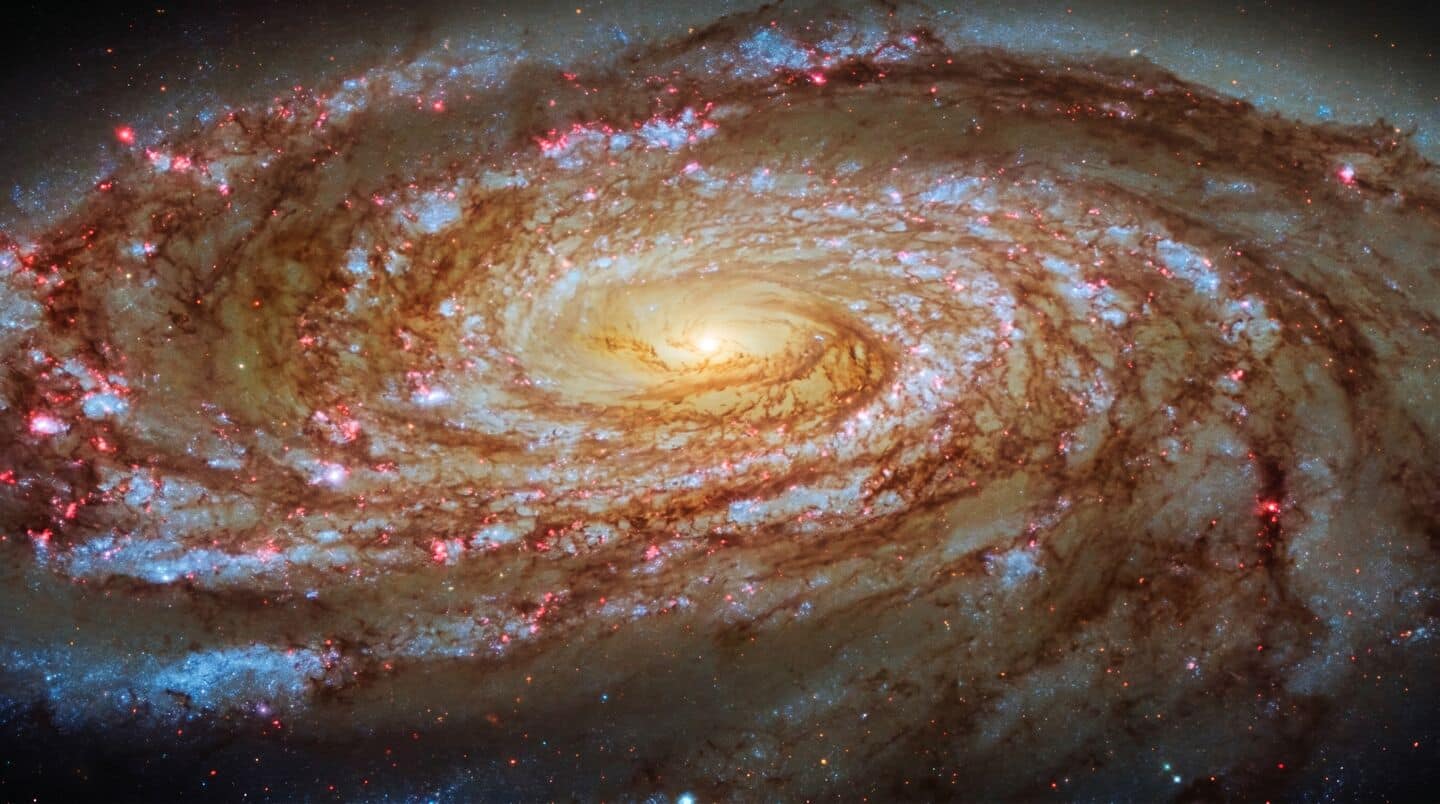
Hubble captures M88 with 100 million solar mass black hole
Technology
NASA's Hubble Space Telescope has snapped an incredible new image of Messier 88 (M88), a spiral galaxy about 63 million light-years away.
What's wild? At its core sits a supermassive black hole, 100 million times the mass of our Sun, gobbling up gas and dust while shooting out streams of material.
M88 losing its cold gas
M88 shines with old red stars at its center, wrapped in tight spiral arms full of colorful star clusters and thick dust clouds.
It's part of the Virgo Cluster, a massive group with more than 1,000 galaxies.
As M88 moves through this cluster, it's losing the cold gas needed for new stars, which means its star-making days could be numbered as it gets pulled closer to the cluster center over the next few hundred million years.