National Space Day: India celebrates achievements in space exploration
What's the story
India is celebrating National Space Day on August 23, in honor of the historic Chandrayaan-3 mission. The lunar expedition made India the first country to land on the Moon's south pole and the fourth globally to achieve a soft landing. To commemorate this achievement, Prime Minister Narendra Modi declared August 23 as National Space Day in India.
Lunar ambitions
ISRO invited to join NASA's Moon base program
The success of Chandrayaan-3 has opened new avenues for India in space exploration.
NASA has formally invited the Indian Space Research Organization (ISRO) to join its Moon Base program.
This invitation comes as a continuation of the partnership between the two countries under the Artemis Accords.
The collaboration marks a significant step toward building a permanent base near the Moon's south pole.
Solar and Mars missions
Aditya L1 mission launched to study the Sun
India's next major space mission, after the Moon, is the Sun.
The Aditya L1 mission is India's first dedicated solar study from some 1.5 million km away.
It has already shared over 27TB of data, helping scientists understand the Sun better.
In 2014, India successfully reached Mars on its first attempt with Mangalyaan, making it the first country to do so on its maiden try at such a complex interplanetary journey.
Space advancements
India's 1st Indian to travel to ISS
India achieved another milestone in space with the SpaDeX mission, which demonstrated autonomous docking and undocking in space.
This made India the fourth country to master this technology.
In 2025, Group Captain Shubhanshu Shukla became the first Indian to travel to the International Space Station (ISS) as part of NASA's Axiom 4 mission.
Shukla conducted seven ISRO-designed experiments studying microgravity effects on humans, plants, and materials.
Satellite launch
Other notable achievements since Chandrayaan-3 success
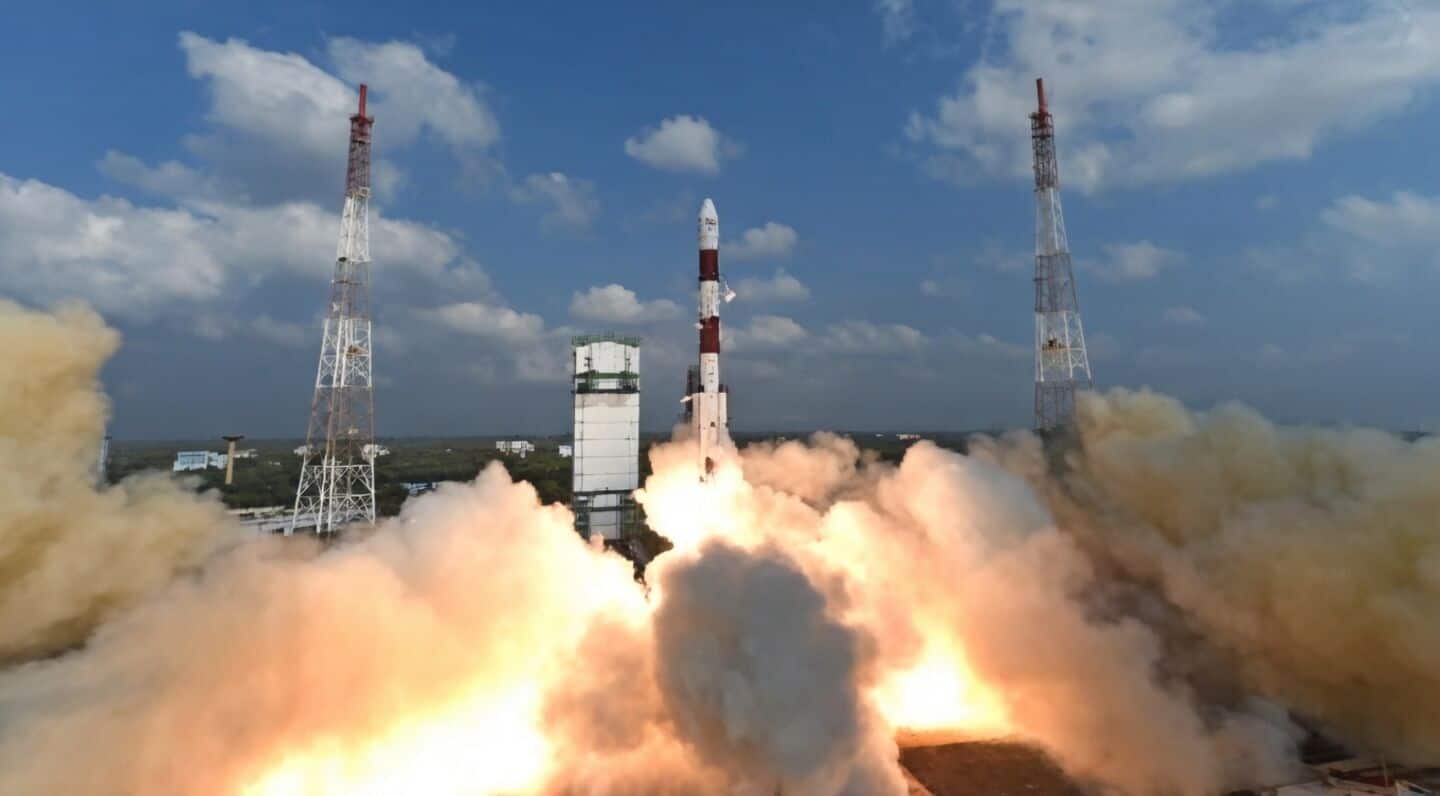
India set a world record by launching 104 satellites in a single mission with PSLV C37, including 101 international ones.
A joint NASA-ISRO mission, NISAR, was launched on July 30, 2025. It captures high-resolution images in all weather conditions for disaster management and climate monitoring.
Skyroot Aerospace became the first Indian private company to launch a rocket into Earth's lower orbit with Vikram-1.
Space vision
Future missions and plans for Indian space program
The Indian government has laid out a comprehensive plan for its space program, with major milestones such as launching the first module of the Bharatiya Antariksh Station (BAS) by 2028 and establishing the full BAS by 2035.
The plan also includes future lunar missions like Chandrayaan-4 and Chandrayaan-5, as well as a Venus Orbiter Mission (VOM) to study Venus's atmosphere, ionosphere, surface/subsurface, and its interaction with the Sun.