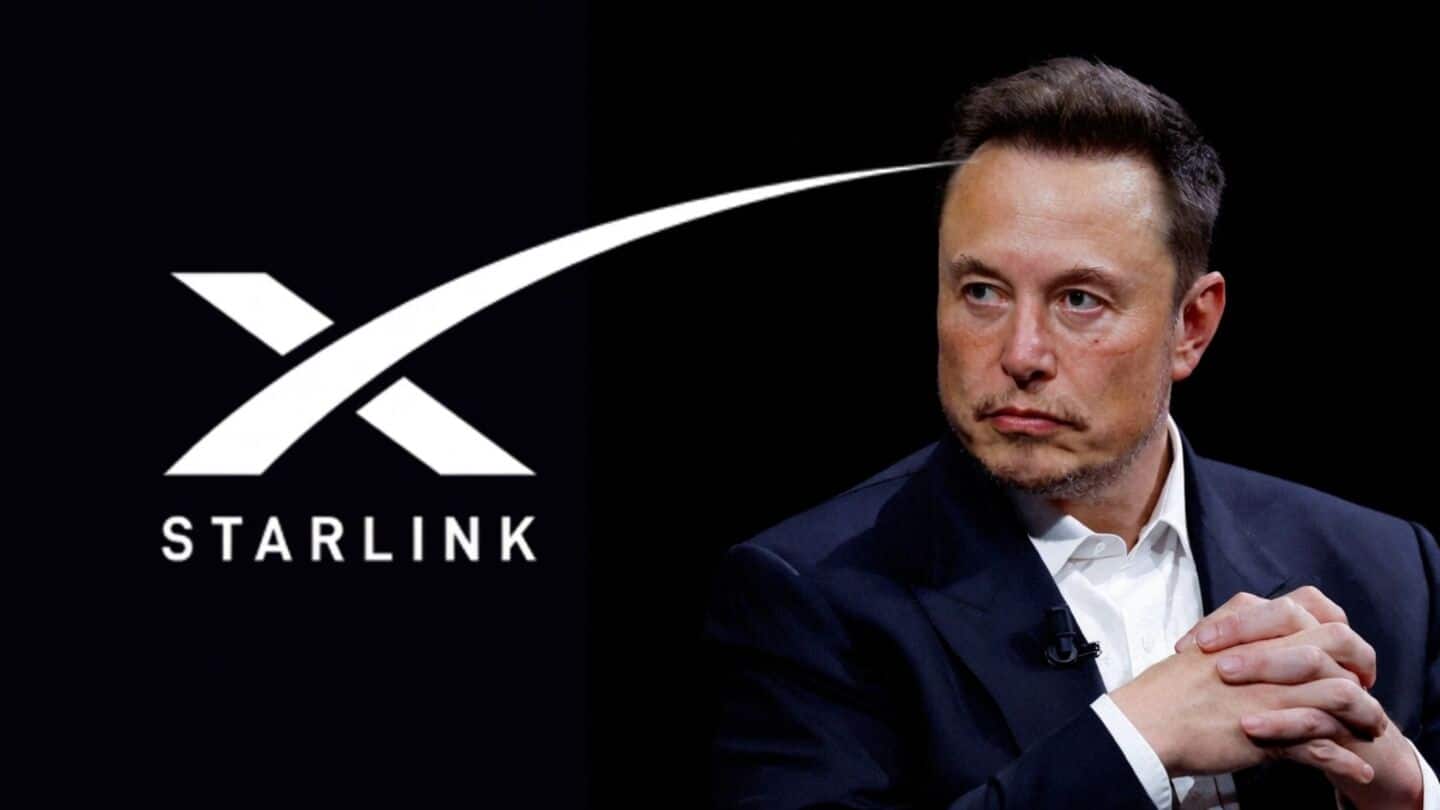
You can soon use Starlink's satellite internet services in India
What's the story
India is one step closer to launching satellite communication services, including Elon Musk's Starlink. The Digital Communications Commission (DCC) has approved most of the Telecom Regulatory Authority of India's (TRAI) recommendations on satellite spectrum, Moneycontrol reported. This paves the way for the Indian government to allocate spectrum to satcom companies for commercial operations in India.
Approval
DCC approved most of TRAI's recommendations
The DCC, the highest decision-making body under the Department of Telecommunications (DoT), approved most of TRAI's recommendations last week.
The decision recommends a spectrum usage charge of 5% of adjusted gross revenue (AGR) for satellite communication services.
However, operators serving rural and remote areas would have a lower effective charge of 4%.
This comes nearly eight months after TRAI responded to DoT's queries on satellite spectrum in December.
Charge
DoT rejected per-subscriber levy, subsidy for rural users
Originally, TRAI had recommended a 4% AGR spectrum usage charge and an additional levy of ₹500 per urban subscriber per year for non-geostationary orbit (NGSO) satellite services.
However, the DoT rejected this per-subscriber levy, saying it would be difficult to differentiate between rural and urban users.
The department also rejected a proposal to subsidize fixed satellite terminals for targeted rural/remote users through Digital Bharat Nidhi.
Clearance requirements
Security clearance still pending for commercial launch
Even with DCC's approval, security clearance is key to any commercial launch.
Global Mobile Personal Communication by Satellite license holders still need to conduct security demonstrations and address concerns raised by the Ministry of Home Affairs and other agencies.
Once approved, a single satellite constellation could provide only 10,000-20,000 connections in places like Delhi against 50 lakh broadband connections.
Investment
Starlink re-applies for Gen 2 constellation approval
Starlink's 100% foreign direct investment structure poses another challenge.
The company recently re-applied to India's space regulator, IN-SPACe, for approval of its Gen 2 constellation.
This includes nearly 30,000 low-Earth-orbit satellites with direct-to-device capability. Musk has been keen on launching Starlink in India.
Last month, he said on X that "Starlink would help the least served in India, especially in rural areas."