India's biggest privately developed Earth observation satellite loses contact
What's the story
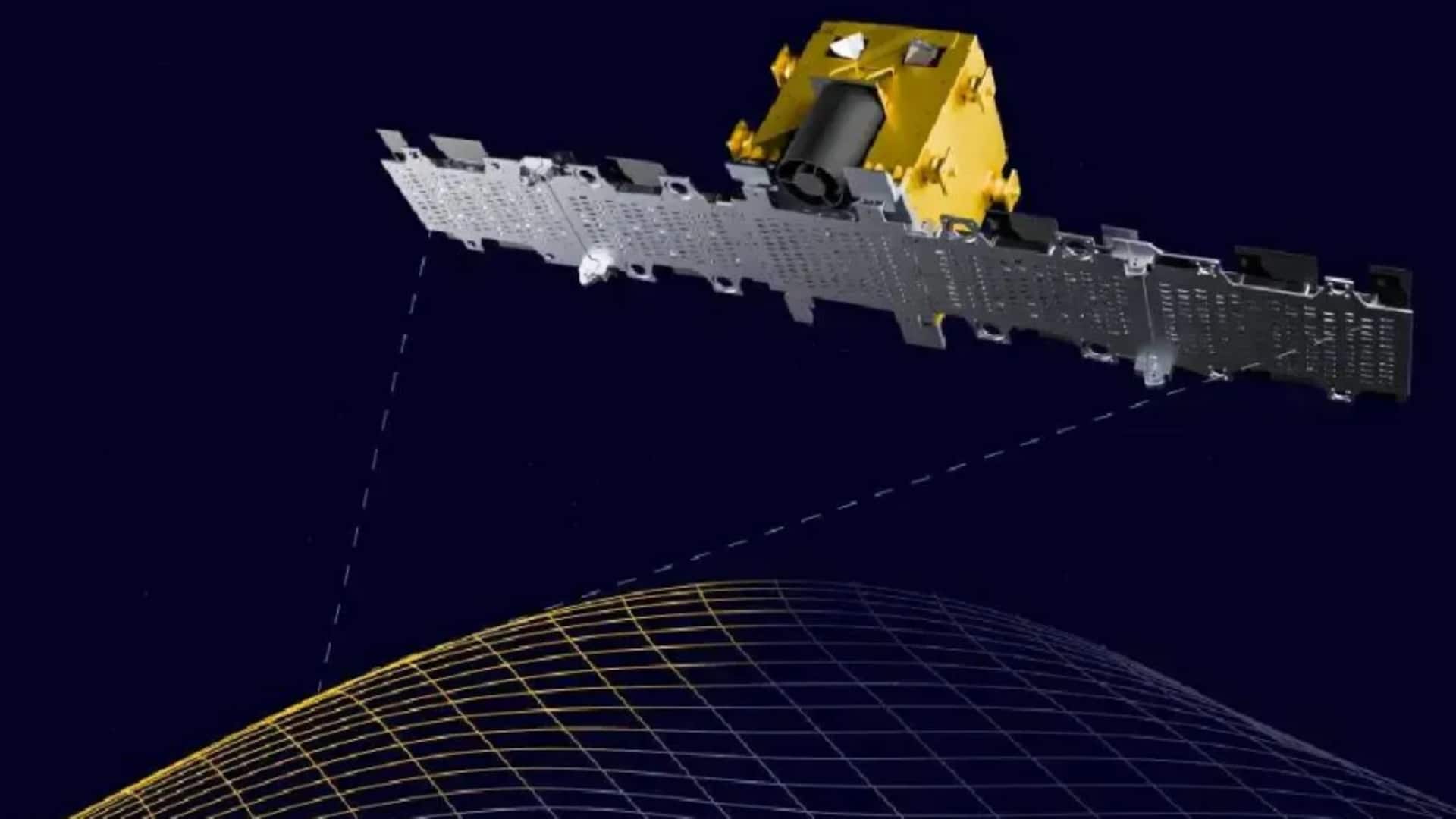
GalaxEye's Mission Drishti, the world's first OptoSAR satellite and India's largest privately developed Earth observation satellite, has lost contact with its Bengaluru-based start-up. The anomaly occurred during the final stage of the Launch and Early Orbit Phase (LEOP), following a geomagnetic solar storm. "Initial root cause analysis indicates that radiation effects associated with the event likely impacted a critical onboard system," GalaxEye said in an update today.
Communication breakdown
Recovery efforts ongoing, but likelihood low
After the solar storm, communication with Mission Drishti became intermittent before being lost altogether.
"While recovery efforts are ongoing, the likelihood of recovery currently appears low," GalaxEye said in its statement.
The satellite was launched on May 3 aboard a SpaceX Falcon 9 from California.
Despite these challenges, GalaxEye had previously reported that Mission Drishti had successfully completed most of its planned LEOP activities, and demonstrated critical technologies and operational processes during its active operating phase over a few weeks.
Satellite features
A look at Mission Drishti
Mission Drishti was world's first satellite to combine optical and synthetic aperture radar (SAR) capabilities.
It could "see" through clouds, darkness, and bad weather while also capturing conventional optical imagery.
The satellite was expected to add a new capability to India's Earth observation fleet.
GalaxEye CEO Suyash Singh had said after the launch that this would make it only the 16th remote sensing satellite available to India, placing it among a small group of spacecraft with strategic and security applications.
Future plans
GalaxEye to incorporate lessons into next-generation spacecraft architecture
Responding to the anomaly, Singh said the mission had provided invaluable engineering insights that would directly strengthen future missions.
He added, "Learning from the mission, we are accelerating our transition toward bringing a significant portion of our supply chain, manufacturing and satellite development processes in-house."
GalaxEye plans to incorporate lessons from Mission Drishti into its next-generation spacecraft architecture and launch two new OptoSAR satellites within 24 months.