
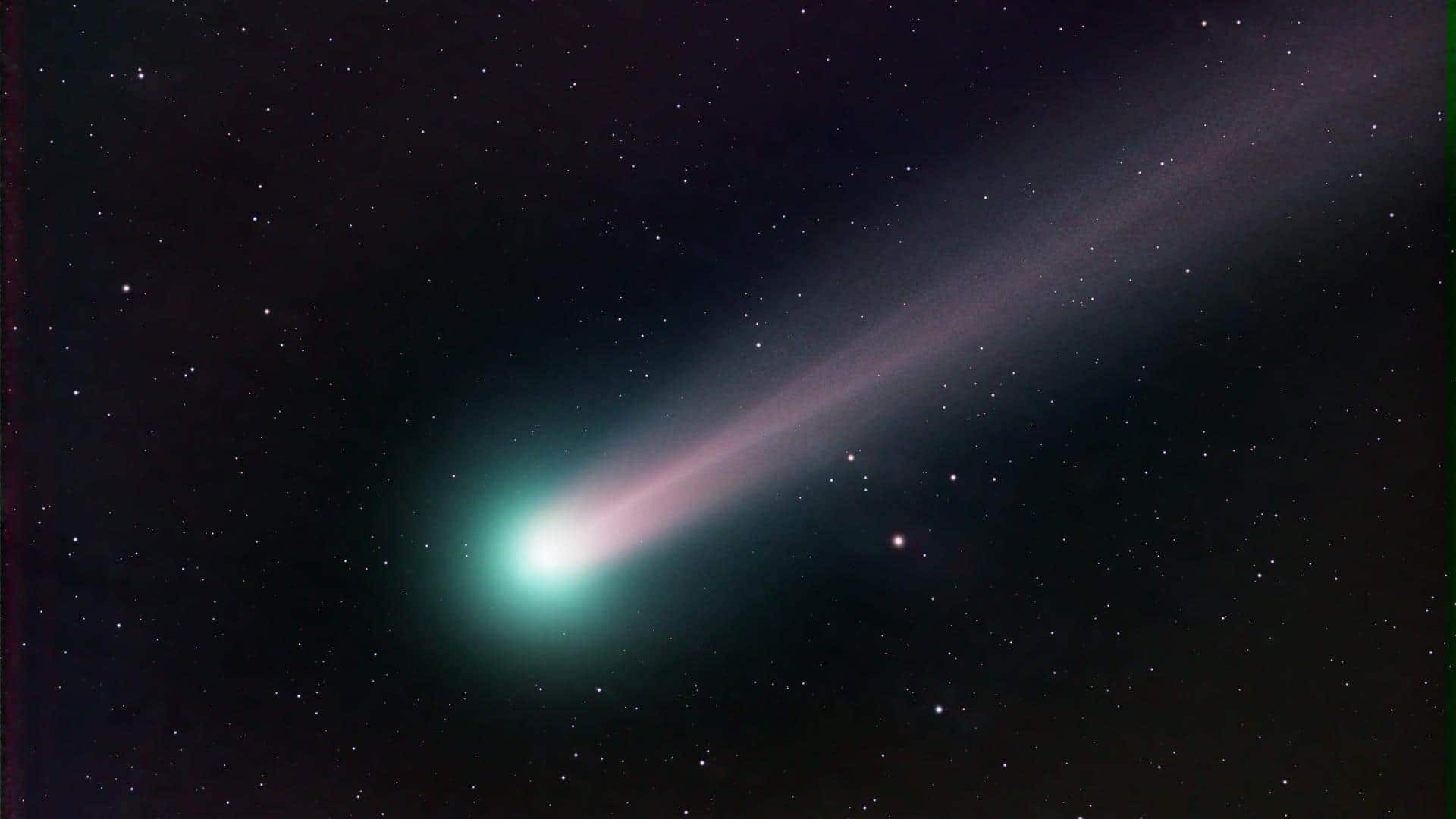
3I/ATLAS, rare interstellar comet, nears Earth this week
What's the story
Interstellar comet 3I/ATLAS is set to pass close to Earth on December 19. The celestial body was first spotted in mid-2025 by the ATLAS survey. It is only the third confirmed object from outside our solar system, and scientists are closely watching its trajectory as it approaches our planet. The flyby presents a unique opportunity to study material from beyond our solar system.
Comet characteristics
3I/ATLAS: A glimpse into interstellar space
3I/ATLAS is a comet with a bright coma and visible tail, typical of interstellar objects. It made its closest approach to the Sun in October this year. The comet's composition could provide insights into the chemistry of other star systems. However, it will be around 268.9 million kilometers away from Earth during its closest approach, which is scientifically close but poses no risk to our planet.
Astronomical significance
3I/ATLAS: A rare opportunity for scientific observation
Interstellar objects like 3I/ATLAS are extremely rare, with only two confirmed before. They carry material not formed in the solar system, giving scientists a unique chance to study distant material. The comet offers a once-in-a-lifetime observation opportunity that could provide new insights into distant planetary systems. European and American space agencies are collecting data on its behavior while citizen scientists are encouraged to contribute telescope observations.
Viewing tips
How to observe 3I/ATLAS from Earth
While 3I/ATLAS won't be visible to the naked eye, it can be tracked with telescopes. Astronomers with mid-sized telescopes may capture its bright coma and tail during local night hours away from city lights. Charts and ephemeris data from astronomy websites can help point telescopes accurately. After its flyby, the comet will move toward Jupiter where it will become fainter and harder to observe over time.