ISRO may send civilians to space in future Gaganyaan missions
What's the story
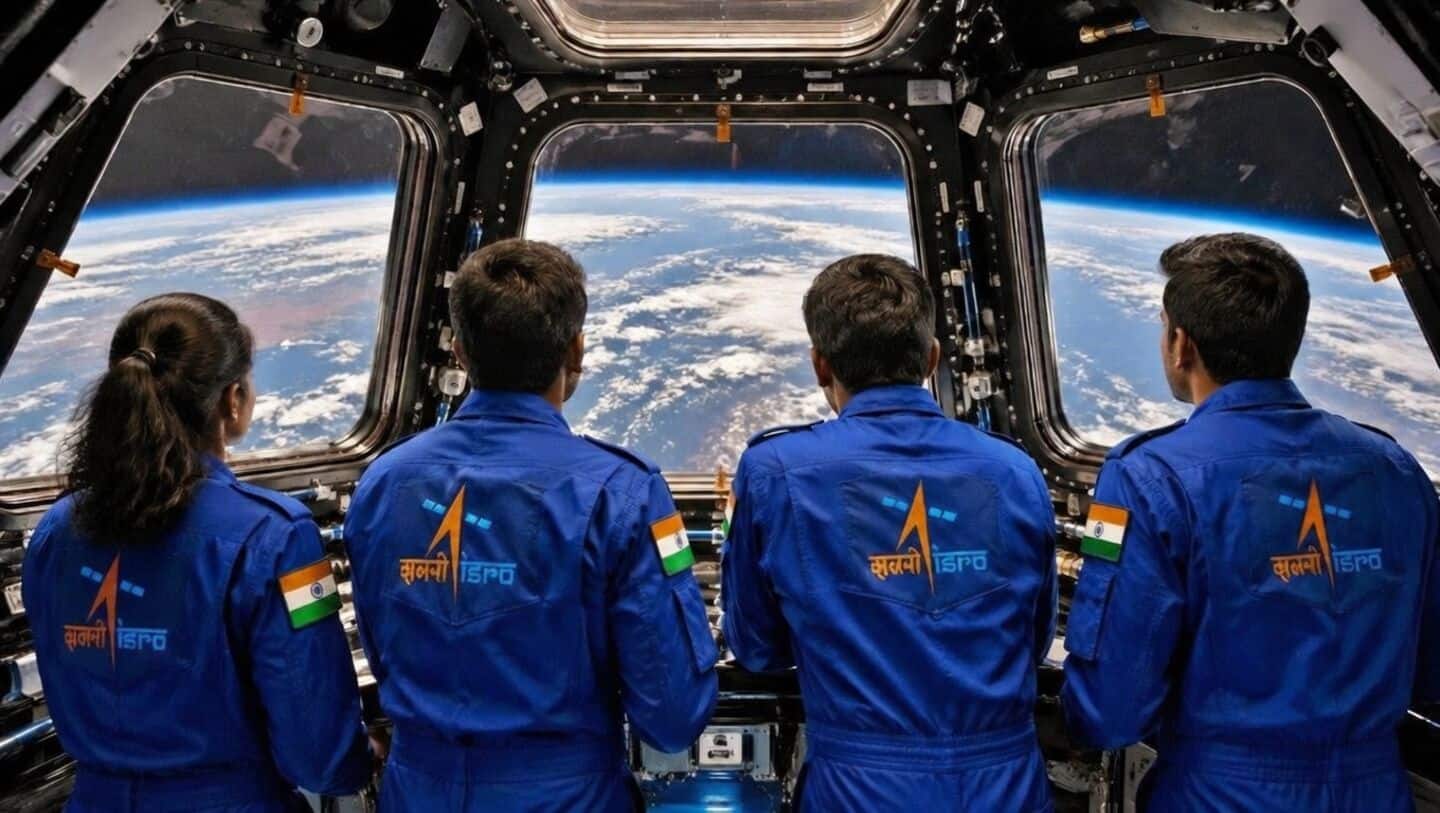
In a major development, the Indian Space Research Organisation (ISRO) is planning to open its astronaut corps to civilians. The move comes as part of the agency's long-term human spaceflight program. A committee within ISRO has recommended that the second batch of astronauts should be a mix of military and civilian candidates, The Times of India reported. This is a departure from the first batch selected for Gaganyaan mission, which was made up entirely of Indian Air Force test pilots.
Selection process
Proposed pool for 2nd batch likely to comprise 10 members
The proposed pool for the second batch of astronauts is likely to comprise 10 members.
This includes six mission pilots from military aviation backgrounds and four civilian specialists from STEM (science, technology, engineering, and mathematics) fields.
For this new batch, ISRO is also likely to widen its military intake by including combat helicopter pilots.
Strategic shift
Civilian astronauts to join mission crews from 4th Gaganyaan mission
The inclusion of civilians in the astronaut corps marks a major shift in ISRO's strategy.
The agency is now looking to expand its spacefaring program beyond just validating critical technologies for human spaceflight.
The long-term vision includes regular crewed missions, scientific research, and participation in long-duration missions aboard India's planned space station, the Bharatiya Antariksh Station.
However, civilian astronauts are not likely to fly immediately and shall join crews only from the fourth Gaganyaan mission onward.
Future plans
Mission frequency expected to increase over time
The expansion of the astronaut cadre is also linked to an expected increase in mission frequency.
Planning assumptions suggest that India might eventually conduct two human spaceflight missions annually, with astronauts possibly returning to space after a gap of about two years.
A full cycle of selection, training, and mission preparation is tipped to take around 4.5 years.
Expansion strategy
Future batches may be tilted toward civilian specialists
ISRO is also considering scaling up both the crew size and the number of astronauts.
From the seventh crewed mission onward, the number of astronauts per flight could increase from two to three, thanks to the upgrades to the Gaganyaan crew module.
Future batches might be heavily tilted toward civilian specialists, with the third batch possibly including 10 specialists and only two mission pilots.