James Webb finds evidence of massive early black hole formation
NASA's James Webb Space Telescope just shook up what we thought we knew about black holes.
Instead of slowly growing after stars collapse, some supermassive black holes might have formed huge and fast, in the early universe, even without big galaxies around them.
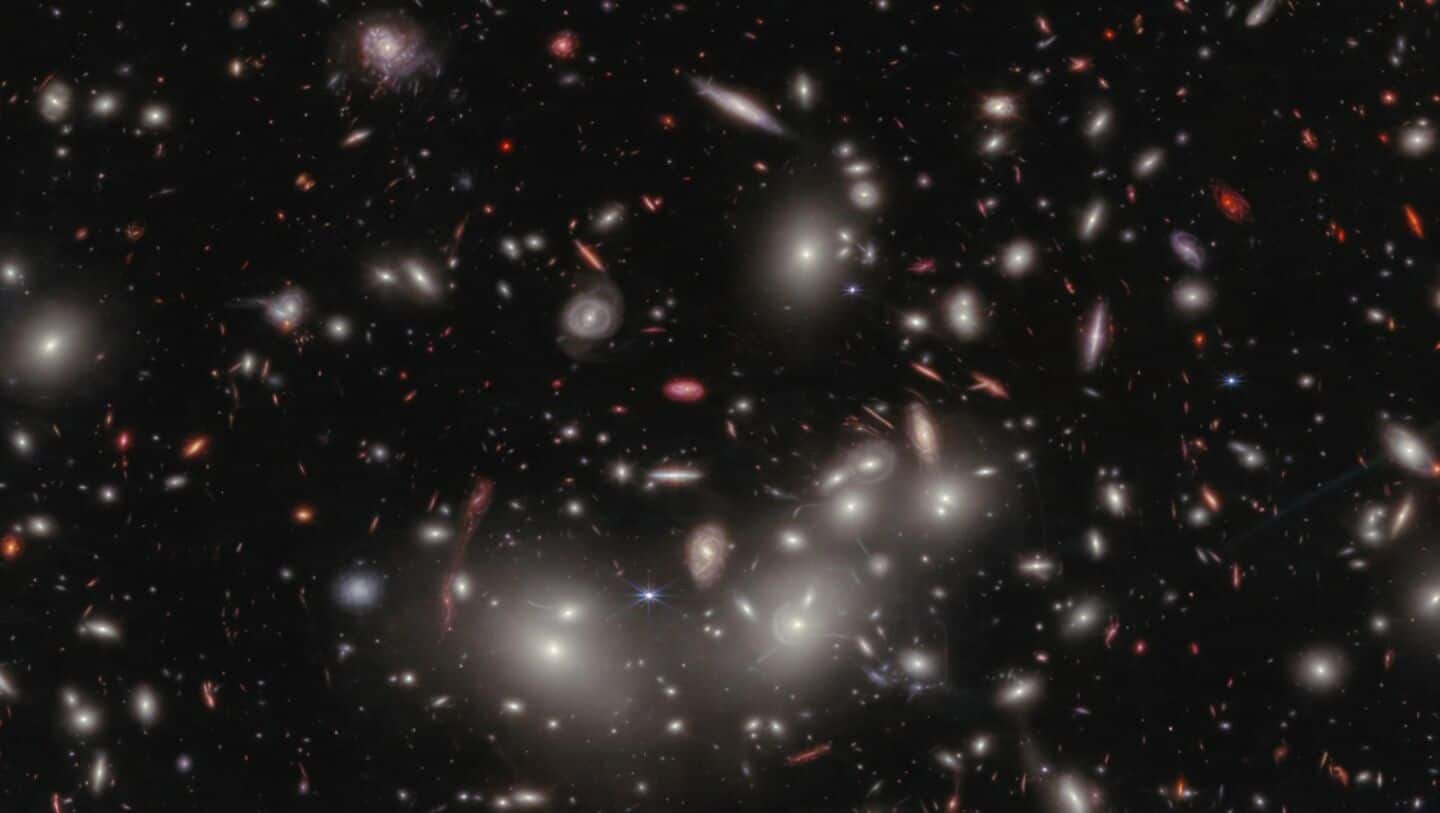
Scientists zoomed in on Abell2744-QSO1, a distant object from 700 million years post-Big Bang, using a galaxy cluster as a cosmic magnifier to study its hydrogen gas.
Abell2744-QSO1 black hole 50 million suns
Webb found a black hole at QSO1's center with about 50 million times the mass of our Sun, making up at least two-thirds of QSO1's total mass, which is way higher than usual.
The gas there was almost pure hydrogen and helium, showing things were pretty weird in the early universe.
These results seriously challenge old ideas about how black holes form and grow.