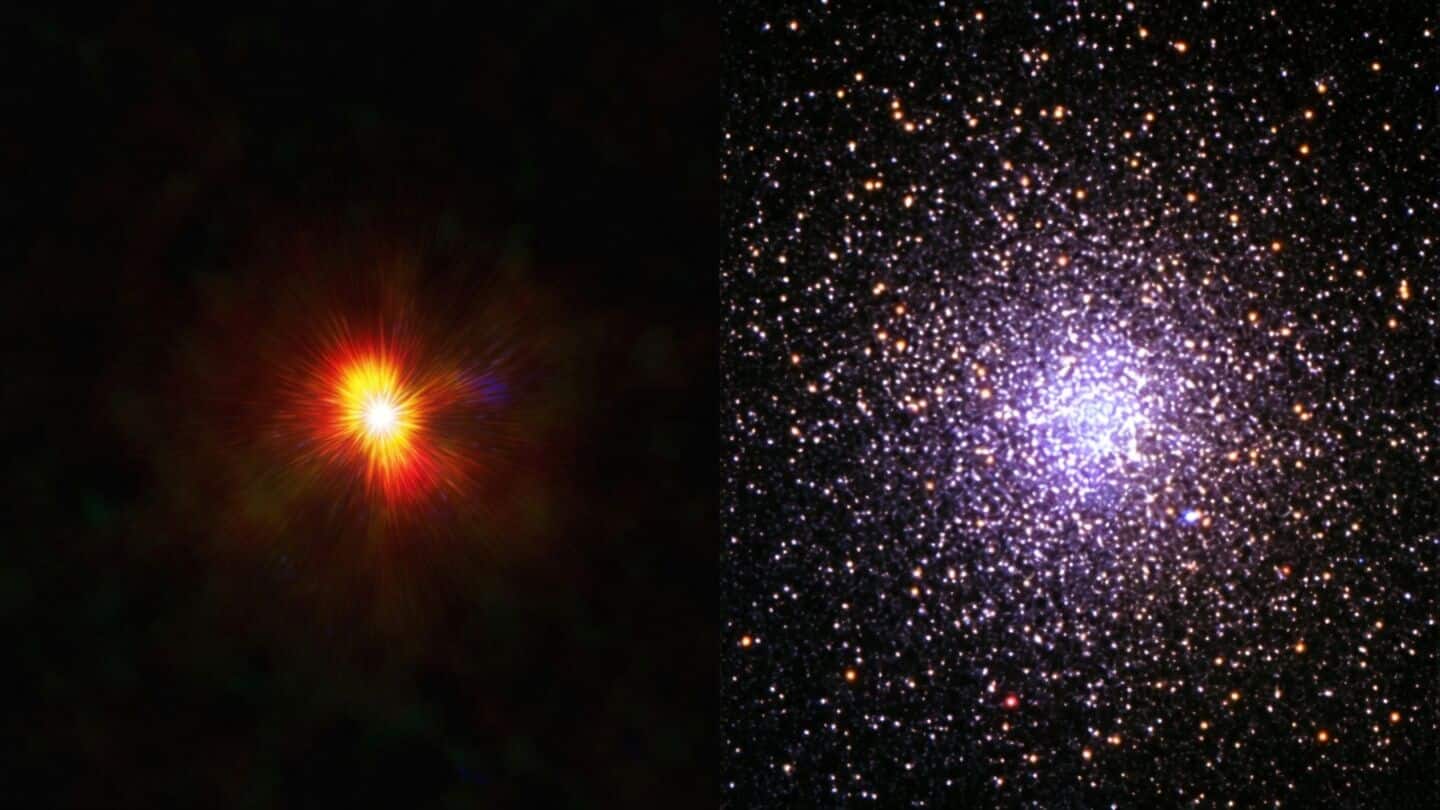
James Webb spots 'Little red dots' possibly forming globular clusters
Astronomers using the James Webb Space Telescope have spotted mysterious "Little Red Dots" from about 600 million years after the Big Bang.
Now, they think these dots could actually be the beginnings of globular clusters, the tightly packed star groups we see in galaxies today.
These dots disappear before the universe hits two billion years old, likely because their supermassive stars burn out fast.
Elemental signatures match globular cluster formation
Globular clusters are known for their unusual mix of elements like helium, nitrogen, and aluminum, thanks to intense fusion inside those early supermassive stars.
The study found that when and where these Little Red Dots show up matches what we'd expect if they're forming into globular clusters.
While it's not a sure thing yet, this discovery gives us a cool new clue about how some of the universe's oldest star groups came to be.
The research is up now as a preprint on arXiv.