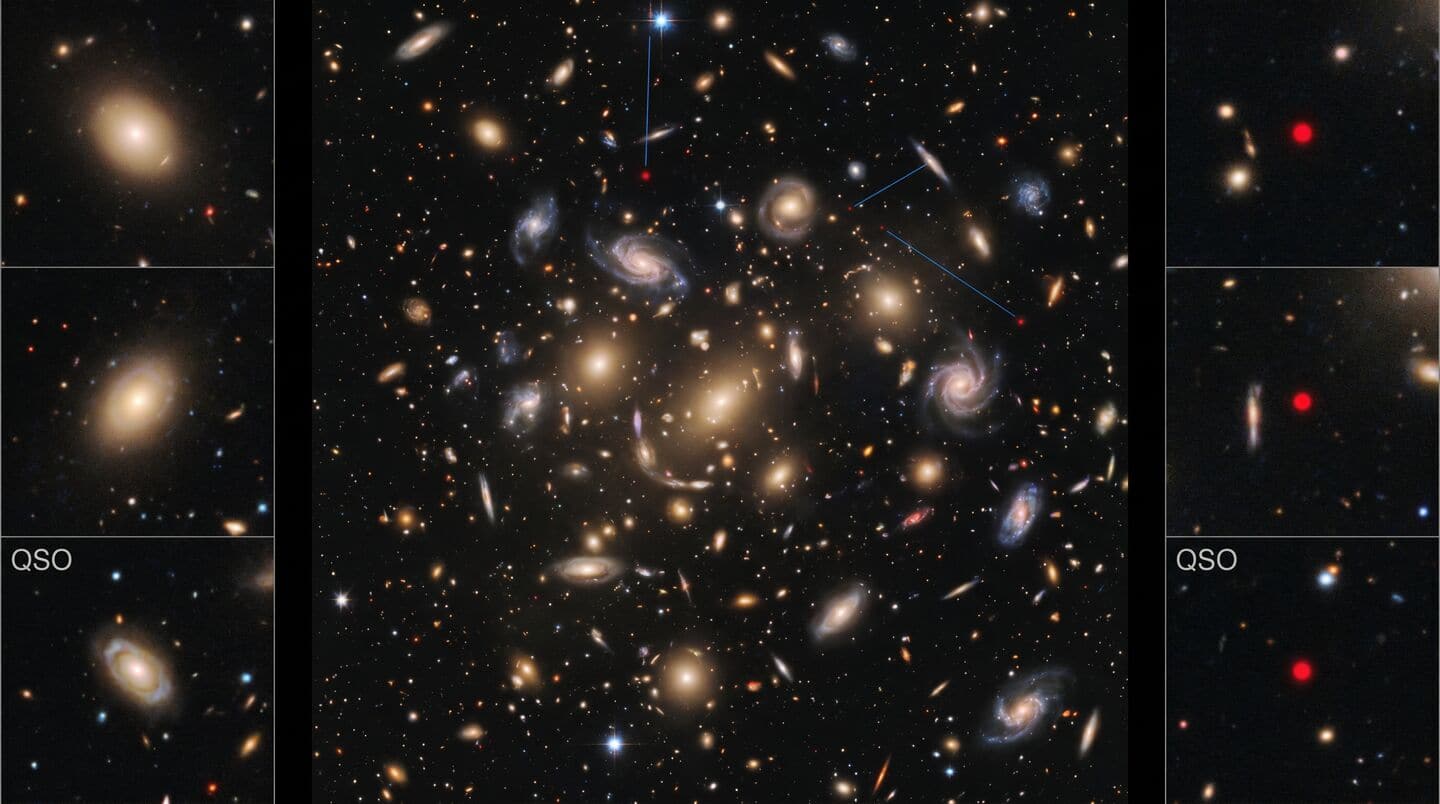
JWST finds supermassive Abell2744-QSO1 black hole before host galaxy formed
The James Webb Space Telescope (JWST) just found a supermassive black hole, Abell2744-QSO1, that existed only 700 million years after the Big Bang, way before its galaxy was fully formed.
This shakes up what scientists thought about black holes always forming inside mature galaxies.
Abell2744-QSO1 belongs to a group called little red dots, first seen by JWST in 2022.
Abell2744-QSO1 50 million solar masses puzzles researchers
Abell2744-QSO1 is massive, about 50 million times heavier than our sun, and makes up two-thirds of its galaxy's total mass, which is wildly higher than what we see today.
Researchers are not sure how it formed; it might not have come from collapsed stars like most black holes, but maybe from a huge gas cloud or something else entirely.
Studying more little red dots could help solve this cosmic mystery.