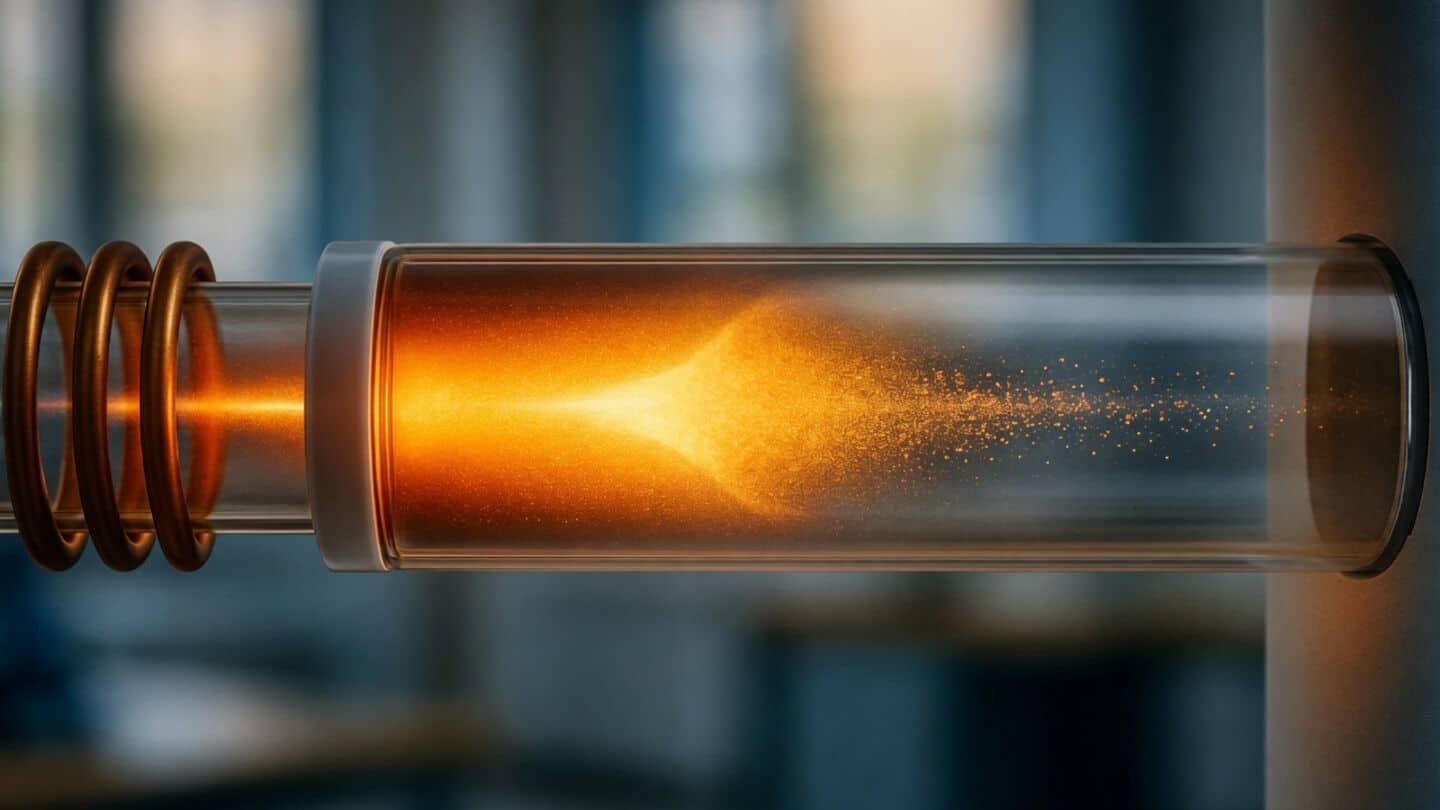
Lawrence Livermore scientists simulate fallout fireball conditions to study particles
Scientists at Lawrence Livermore National Laboratory have pulled off a pretty cool experiment: they simulated fallout-related conditions in the laboratory to see how key particles behave.
Using a plasma tube to mimic fireball conditions, they watched uranium, cesium, and cerium form tiny particles as things cooled down.
Their findings just dropped in Analytical Chemistry today.
Findings improve fallout particle models
The team tried two ways of cooling: one slow and steady, the other with a sudden temperature drop.
Turns out, uranium and cerium always condensed early (though their forms shifted a bit), but cesium was unpredictable and formed more complex compounds when cooled quickly.
This research helps scientists better understand how fallout particles act after a nuclear event, making models more accurate for future analysis.