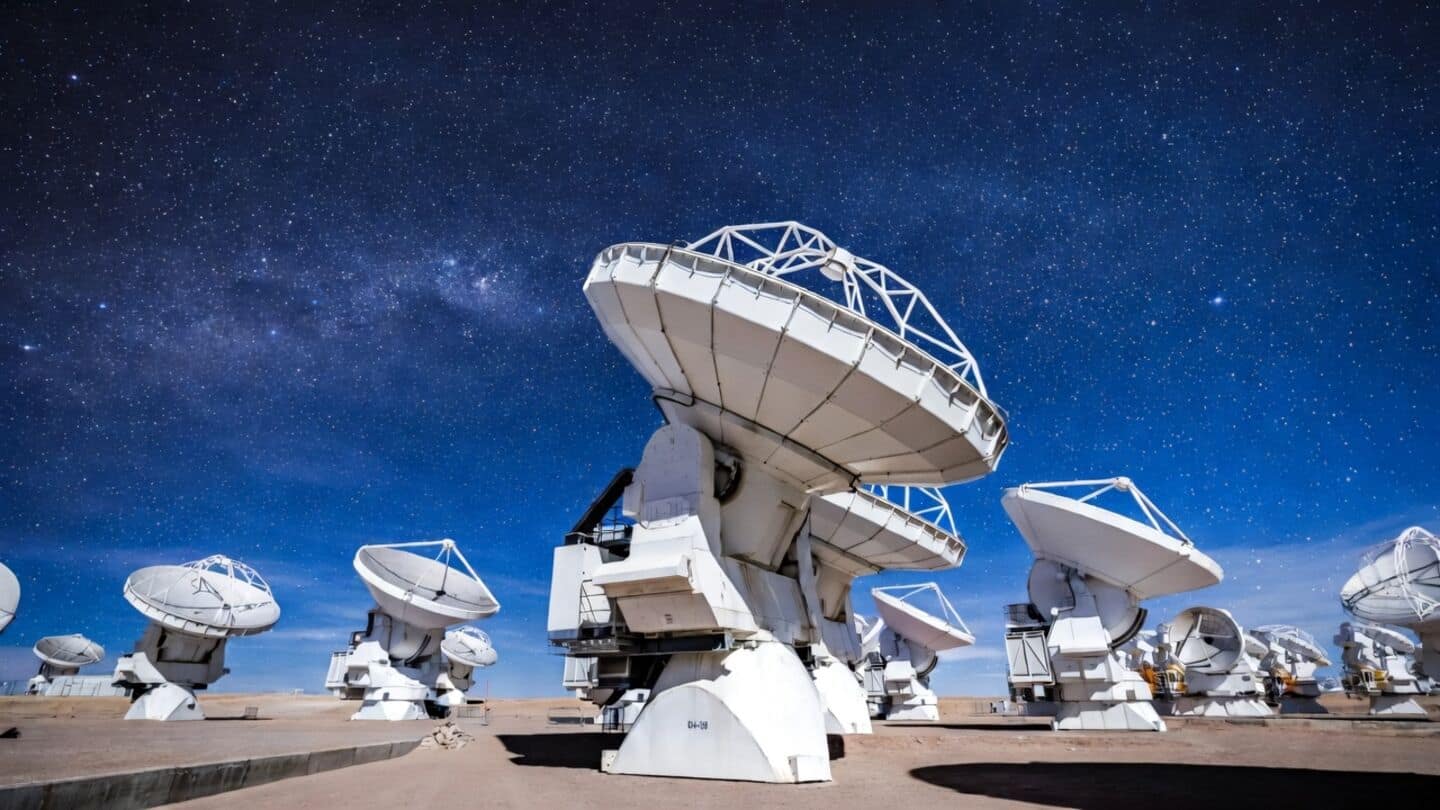
Louisa Mason leads ALMA reanalysis searching for technosignatures at 90-93GHz
SETI researchers are switching things up by searching for alien life in less-explored radio frequencies, way beyond the usual "water hole" range.
Led by astronomer Louisa Mason, the team reanalyzed archived data from the ALMA telescope, focusing on rarely-checked frequencies around 90 and 93 GHz.
These spots are often skipped in classic searches, so it's a fresh approach to hunting technosignatures.
ALMA Band 3 covers more stars
ALMA's Band 3 data turned out to cover more stars than anyone realized, giving scientists a bigger playground to scan for unusual signals.
The team also used Gaia space mission data to sharpen their search models.
No signs of aliens yet, but Mason says this method opens up new ways to use existing data and could help spot hidden clues in the future.
The findings were shared at a Royal Astronomical Society meeting on July 24, 2026.