Lunar eclipse next week: When, where, how to see it
What's the story
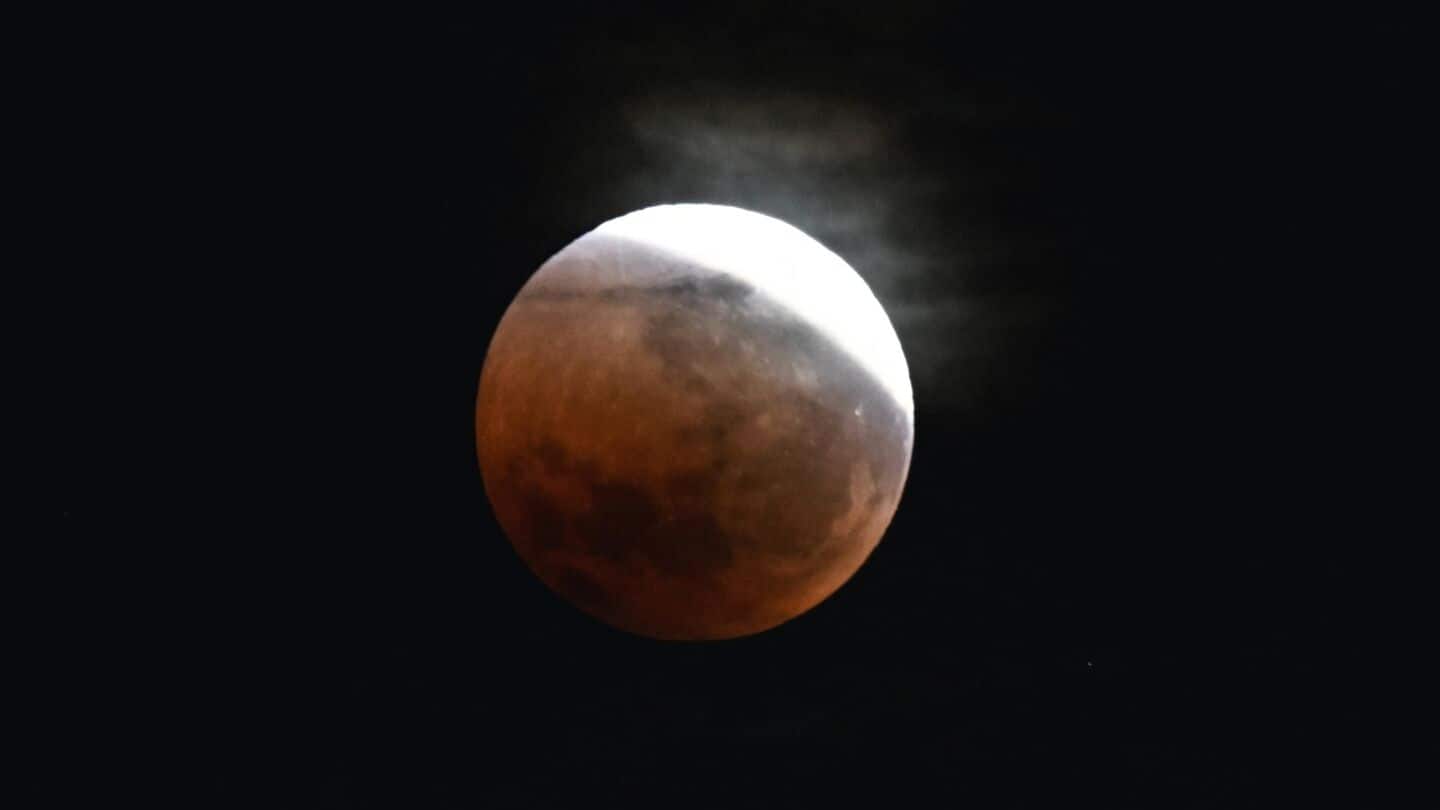
A partial lunar eclipse will take place on August 27-28, as Earth passes directly between the Sun and Moon during the full moon phase. This imperfect alignment will see our planet's intense inner shadow cover 96% of the visible face of our natural satellite. The event will be visible from North America, South America, Africa, and Europe.
Viewing details
Maximum eclipse will occur at 12:12am EDT on August 28
Stargazers on Earth's night side will see our planet's umbra (the darkest, innermost part of its shadow) slowly encroaching onto the Moon's surface starting at 10:33pm EDT on August 27 (02:33 GMT on August 28).
The massive shadow will continue to move across the crater-scarred landscape until it reaches maximum eclipse at 12:12am EDT on August 28 (04:12 GMT).
At this point, you may notice a reddish-orange hue on the Moon as sunlight refracted through Earth's atmosphere hits its surface.
Timing variations
Local timings will differ depending on your location
The phases of a lunar eclipse happen simultaneously for everyone on Earth's night side, where the lunar disk is visible.
However, local timings will differ significantly depending on your location on Earth.
For instance, in California, the maximum eclipse will occur just after midnight local time on August 27-28.
But in the UK, it won't be seen until just before sunrise on August 28 as it stays low above the southwestern horizon.
Equipment requirements
No special kit required to watch the celestial event
Unlike a solar eclipse, where there's a risk of eye damage from looking directly at the sun, no special kit is required to watch a lunar eclipse.
However, if you want to see Earth's shadow as it sweeps across the lunar disk in detail, a good pair of binoculars or telescope would be ideal.