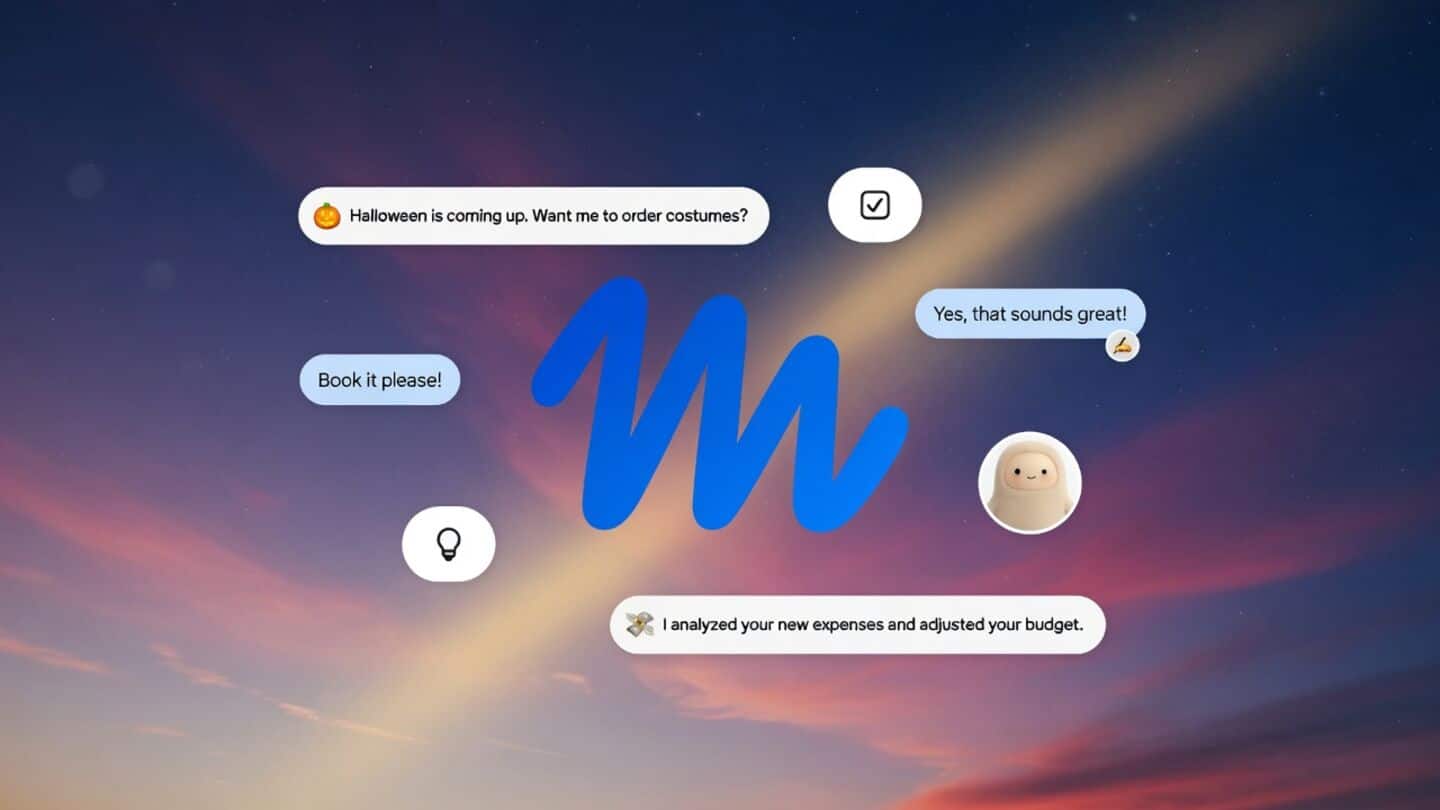
Meta launches AI agent that acts on your behalf
What's the story
Meta has launched Muse, its latest personal artificial intelligence (AI) agent designed to assist consumers with their daily tasks. The move comes less than two weeks after the company reached an $18 billion settlement in a lawsuit over social media's impact on consumers, particularly teens. Unlike traditional AI chatbots like ChatGPT that merely answer questions or serve as digital companions, Muse is designed to perform specific tasks for users.
AI capabilities
Muse connects with users' apps and services
To use Muse, users will have to share more personal information with Meta than ever before.
The AI agent connects with a user's apps and services used in their daily workflows, such as email, calendars, payments, health and fitness apps, smart home devices, dining services, and shopping platforms.
The idea is to create an AI that can do things for you rather than just answering questions or serving as a digital companion in the ChatGPT era.
AI tasks
AI agent can send emails and book travel
Muse can perform a variety of tasks, including sending emails, booking travel, filling out forms, and creating plans.
It can also convert recipe reels into grocery lists, send party invitations, and make purchases using Link by Stripe for checkout.
This service provides purchase protections to allay fears of letting an AI check out on their behalf.
Users can choose which apps and services they want to connect with Muse one at a time for transparency.
AI access
Availability and subscription plans
Muse will be available on the web at muse.ai, iOS and Android apps, and WhatsApp chats. It will also come to Meta's AI glasses soon.
While the service is free to use, subscription plans will kick in as usage increases. Two paid plans are available at launch: Power at $20/month and Maximum at $100/month.
Both subscriptions offer more usage for handing off everyday tasks, but Meta expects most people to stick with the free tier.
AI safeguards
Meta claims Muse is secure
Meta claims that Muse runs on its own "dedicated, secure computer with its own browser," Muse Secure VM, which provides various privacy, safety, and security protections over customers' data.
The company says a separate Sentinel agent runs on the same virtual machine but is kept apart from Muse at the system level.
This means that Muse won't have visibility into people's passwords or payment methods.
Trust issues
Will consumers trust Meta?
Despite its security measures, it remains to be seen if Meta has enough consumer trust for Muse to succeed.
The company has a history of privacy-related violations, including deceiving consumers by making their private information public without approval.
In 2019, the FTC penalized Facebook in a then record-breaking $5 billion settlement over eight separate privacy-related violations.