What's Project Zenith, Microsoft's distraction-free Windows for local AI development?
What's the story
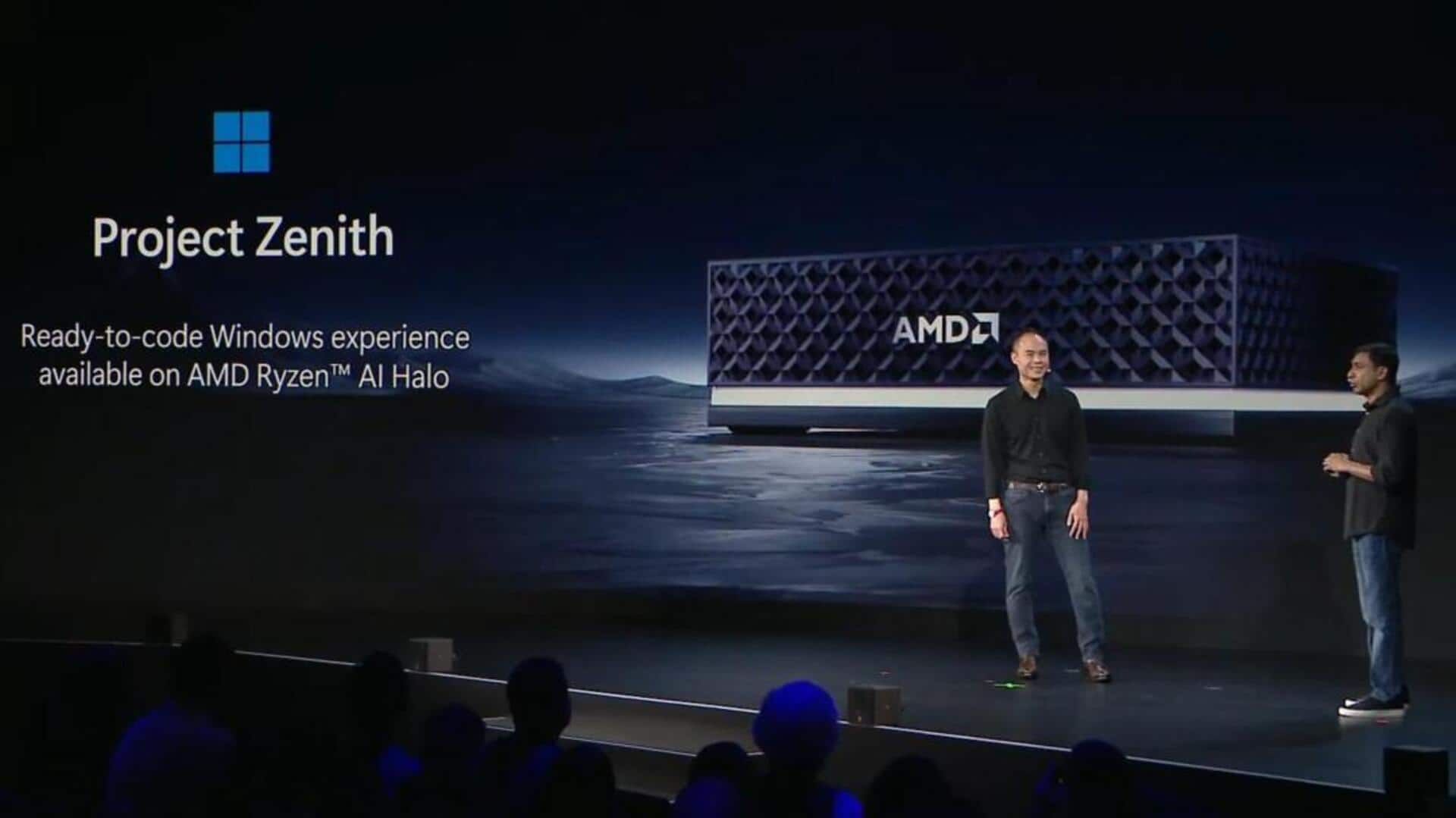
Microsoft has announced Project Zenith, a new initiative aimed at providing a "ready-to-code distraction free Windows experience." The project is specifically designed for powerful developer hardware with 64GB RAM and ample memory bandwidth. It will first be available on AMD's Ryzen AI Halo mini-desktop, with plans to expand to more devices later. The focus of this initiative is clearly on local AI development, especially as cloud AI token costs start to rise.
Developer focus
Project Zenith will allow unmetered local model usage
Logan Ayer, CVP of Windows Platform at Microsoft, said Project Zenith will allow developers to "run 30B+ parameter models locally and unmetered."
The main aim is to simplify the Windows experience and make it more like Linux.
Ayer also revealed that Project Zenith will come with pre-installed tools for multiple languages and runtimes, making it more developer-friendly from the start.
Customization options
Not about prescribing a single workflow
In a blog post, Ayer emphasized that "Project Zenith is not about prescribing a single workflow."
He stressed the importance of allowing developers to configure and personalize their environment around their preferred tools, languages, and frameworks.
The idea behind this project is to start from a better baseline with settings and tools that developers often use first.
Preconfigured setup
Devices will come with pre-installed developer tools
Project Zenith devices will come with a preconfigured Windows setup for development and a set of tools curated for what developers reach for first.
These include Visual Studio Code, GitHub Copilot, PowerToys, WinAppCLI, and Windows Dev Skills.
The File Explorer has also been configured to show file extensions, hidden files, and the full path in the title bar.
Availability
More devices are expected to be launched soon
AMD recently unveiled the first Project Zenith device, a mini PC powered by Ryzen AI Halo chips.
More such devices are expected to be launched in the coming months with different silicon configurations.
These changes are part of Microsoft's ongoing efforts to improve Windows 11 and make it more user-friendly by default on every installation.