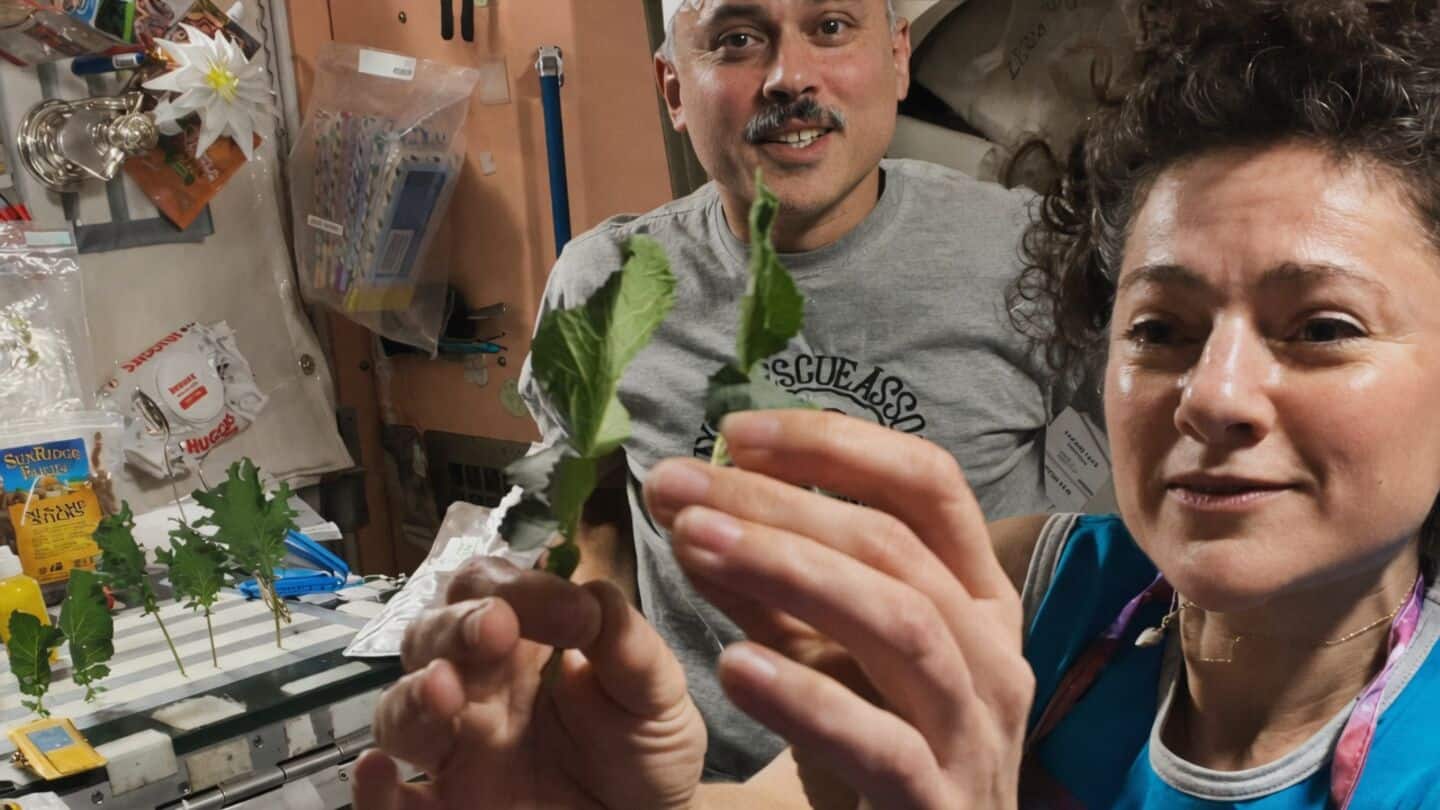
Indian-origin astronaut Anil Menon harvests kale, wasabi mustard on ISS
What's the story
Indian-origin NASA astronaut Anil Menon has taken on the role of a space farmer. In a recent video from the International Space Station (ISS), he and his colleague Jessica Meir can be seen harvesting and cooking fresh kale and wasabi mustard greens. The vegetables were grown over a month as part of NASA's efforts to create sustainable food production systems for deep-space missions.
Twitter Post
Take a look at the clip
Chez ISS - Cooking on @Space_Station with @Astro_Jessica and Anil
— Anil Menon (@astro_anil) August 17, 2026
On this episode we give you farm to table, simple, and delicious. This Kale and Wasabi Mustard was grown on ISS over one month. We harvested several leaves and put them to the test. It might be the best meal we… pic.twitter.com/Oq9narSiu9
Culinary adventure
Meal possibly the best on ISS
The video, titled "Chez ISS, Cooking on Space Station with Jessica and Anil," shows a true "farm-to-table" experience in orbit.
After harvesting several leaves from their space-grown crops, the duo cooked a meal that Menon said was possibly the best food they had ever prepared on the station.
The harvest was made possible by NASA's Veggie plant growth system, which studies how crops can be grown in microgravity conditions.
Nutritional benefits
Fresh veggies boost morale, nutrition
The successful growth of kale and wasabi mustard shows how astronauts can enhance their packaged food with fresh produce.
This not only improves nutrition but also boosts morale during long missions.
Fresh vegetables are a source of essential vitamins and antioxidants that can deteriorate in stored food over time.
Space agriculture is an increasingly vital area of research as agencies gear up for potential months- or years-long missions away from Earth.
Appreciation
Veggie team's guidance appreciated
In the video, Menon thanked the NASA Veggie team for their guidance through the growth process.
He said their simple skills could help provide food for future space travel.
The successful cultivation of these crops in space is a significant step toward reducing dependence on supply missions and ensuring astronauts' physical and mental well-being during long-duration missions.